10 Software Books That Separate Experts from Amateurs
Ken Schwaber, Hilary Mason, and Joel Spolsky recommend these Software Books to elevate your coding and engineering skills.
Updated on June 22, 2025·We may earn commissions for purchases made via this page
10 of 10 books have Kindle versions
We're launchingLaunching on Product Hunt today 🎉We just launchedJust launched on Product Hunt 🎉
Modelpeers, from the BookAuthority teamFrom the BookAuthority team: Modelpeers, a free way to follow AI models and agents like you follow people. We'd love your support.
What if the books you choose to read could make the difference between writing code that just works and software that lasts? Software development is evolving rapidly, yet the foundations remain crucial. Ken Schwaber, co-creator of Scrum, and Hilary Mason, a renowned data scientist, both turn back to certain texts to ground their practice. Joel Spolsky, co-founder of Stack Overflow, also highlights foundational books that shaped his approach to software craftsmanship.
Ken Schwaber calls The Pragmatic Programmer a key step toward professionalism, emphasizing disciplined craftsmanship. Hilary Mason finds joy in Automate the Boring Stuff with Python for its practical wins that turn tedious tasks into automation triumphs. Joel Spolsky champions classic principles that keep developers grounded amid technological change.
While these expert-curated books provide proven frameworks, readers seeking content tailored to their specific skill level, goals, or professional domain might consider creating a personalized Software book that builds on these insights and fits your unique learning path.
Ken Schwaber, co-creator of Scrum and founder of Scrum.org, emphasizes the importance of a pragmatic yet disciplined approach for professional software delivery. Having witnessed how lack of discipline leads to unstable products, he recommends this book as a crucial step toward professionalism: "To participate in the next generation of professional product delivery you have to be pragmatic but disciplined." This perspective reshaped how he views effective software craftsmanship. Alongside him, Kent Beck, author of Extreme Programming Explained, praises the book for its thoughtful and aspirational tone that inspires continuous improvement in programming practice.
“To participate in the next generation of professional product delivery you have to be pragmatic but disciplined. Otherwise, you are fated to be ungrounded dreamers whose products endanger people and whose ideas never become successfully integrated into the world. Andy and Dave described a pragmatic but disciplined approach which is a key step towards professionalism.”
David Thomas and Andy Hunt are internationally recognized as leading voices in the software development community. They consult and speak around the world. Together, they founded the Pragmatic Bookshelf, publishing award-winning, leading-edge books for software developers. They were two of the authors of the Agile Manifesto. David currently teaches college, turns wood, and plays with new technology and paradigms. Andy writes science fiction, is an active musician, and loves to tinker with technology. But, most of all, they’re both driven to keep learning.
The Pragmatic Programmer, written by David Thomas and Andy Hunt, emerged from their extensive experience consulting and educating within the software community, seeking to reshape how developers approach their craft. You’ll explore how to fight software rot, write flexible code, and embrace continuous learning, with clear advice on avoiding pitfalls like duplicating knowledge and programming by coincidence. Practical chapters cover topics such as concurrent code challenges, security, and effective testing, making it ideal for both new coders and seasoned programmers aiming to refine their skills. If you want to deepen your understanding of software craftsmanship and take responsibility for your professional growth, this book offers a grounded, thoughtful path forward.
Hilary Mason, a data scientist and founder known for her work with Hidden Door and Fast Forward Labs, values this book for how it captures programming's joy in practical wins. After years working with complex data, she appreciates how it breaks down automation into accessible steps, remarking, "The best part of programming is the triumph of seeing the machine do something useful. Automate the Boring Stuff with Python frames all of programming as these small triumphs; it makes the boring fun." This perspective helped her see programming not as abstract code but as a toolkit for solving everyday problems efficiently. Similarly, Mashable highlights its usefulness for office workers and academics automating spreadsheets and documents, underscoring the book's wide practical appeal.
“The best part of programming is the triumph of seeing the machine do something useful. Automate the Boring Stuff with Python frames all of programming as these small triumphs; it makes the boring fun.”
Al Sweigart is a professional software developer who teaches programming to kids and adults. Sweigart has written several bestselling programming books for beginners, including Automate the Boring Stuff with Python, Invent Your Own Computer Games with Python, Cracking Codes with Python, and Coding with Minecraft (all from No Starch Press).
When Al Sweigart discovered the frustration of repetitive computer tasks, he wrote this book to show you how to use Python to automate them efficiently. You’ll learn specific skills like scraping web data, manipulating Excel and CSV files, sending automated emails, and handling PDFs, all explained clearly for complete beginners. The book’s step-by-step projects, such as automating spreadsheet updates or renaming files, make programming accessible even if you’ve never coded before. If you want to save time by letting your computer handle tedious chores, this practical guide is tailored for you, especially if you're new to software development and eager to build useful automation tools.
This AI-curated guide to Python projects provides actionable methodologies tailored to your programming background and project goals. Created after you specify your areas of interest, it bridges the gap between learning syntax and applying skills in real-world scenarios. The book emphasizes customized project workflows that align with your experience, helping you develop practical software solutions efficiently.
TailoredRead AI creates personalized nonfiction books that adapt to your unique background, goals, and interests. Instead of reading generic content, you get a custom book written specifically for your profession, experience level, and learning objectives. Whether you're a beginner looking for fundamentals or an expert seeking advanced insights, TailoredRead crafts a book that speaks directly to you. Learn more.
This personalized Python Project Guide provides a tailored framework for developing practical software applications through hands-on projects. It focuses on project-based learning methodologies that adapt to your proficiency level and specific goals, whether you're aiming to build web apps, automate tasks, or explore data visualization. The book cuts through irrelevant generalities, delivering targeted strategies for structuring, coding, and troubleshooting real-world Python projects. It addresses key areas such as project planning, modular design, and debugging techniques with a tailored approach that fits your context and accelerates skill acquisition. This guide serves as a pragmatic bridge between theoretical Python concepts and effective application development.
Brian Leroux, cofounder at Begin and recognized AWS Serverless Hero, discovered this book while exploring deeper insights into software craftsmanship. Facing challenges in defining software engineering clearly, he found Farley's work to offer the best perspective yet, calling it a "brilliant read" that dovetails perfectly with his understanding of the craft. This book reshaped his thinking about the discipline, emphasizing empirical and iterative approaches. Alongside him, Glenn Vanderburg, Director of Engineering at Nubank, highlights how Farley's techniques reflect the realities of skilled practitioners, valuing discipline without rigidity, focused on producing working code efficiently.
Cofounder @begin; AWS Serverless Hero; Web Developer
“Brilliant read by @isntitvacant exploring our craft dovetails nicely with Dave Farley's book which I feel is the best insight we have to define the term 'software engineering'” (from X)
David Farley, founder and consultant for Continuous Delivery Ltd., has been a programmer, software engineer, and systems architect since the early days of modern computing. He has shaped ground-breaking approaches that have transformed how developers and teams work. With Jez Humble, Farley coauthored the best-seller Continuous Delivery. As Head of Software Development for the London Multi Asset Exchange (LMAX), he built one of the world's fastest financial exchanges. One of the earliest adopters of agile techniques employing iterative development, continuous integration, and high levels of automated testing, he also coauthored the Reactive Manifesto. Dave also runs the popular and highly successful 'Continuous Delivery' YouTube channel.
What if everything you knew about software engineering was wrong? David Farley challenges common assumptions by focusing on managing complexity and fostering continuous learning rather than rigid processes. You’ll gain insight into choosing tools wisely, evaluating progress beyond legacy code, and embracing empiricism to build better, faster software. The chapters on incremental progress and balancing rigor with flexibility offer tangible frameworks you can apply immediately. This book is best suited for software professionals seeking to improve their craft with durable principles rather than quick fixes.
Vlad Khononov brings over 20 years of software engineering and architecture experience to this book. His background as a webmaster turned chief architect, along with his active role as a public speaker and consultant on domain-driven design and microservices, grounds the book in practical expertise. Vlad’s work helping companies untangle complex domains and legacy systems fuels the insights here, making it a valuable resource for anyone looking to connect software design closely with business strategy.
Vlad (Vladik) Khononov is a software engineer with over 20 years of industry experience, during which he has worked for companies large and small in roles ranging from webmaster to chief architect. Vlad maintains an active media career as a public speaker, blogger, and author. He travels the world consulting and talking about domain-driven design, microservices, and software architecture in general. Vlad helps companies make sense of their business domains, untangle legacy systems, and tackle complex architectural challenges. Vladik lives in Northern Israel with his wife and an almost-reasonable number of cats.
When Vlad Khononov first rethought the connection between software architecture and business goals, he challenged the usual tech-first mindset. Drawing from over two decades as a software engineer and architect, Vlad guides you through domain-driven design (DDD) as a way to deeply understand business domains and align your software accordingly. You’ll learn to analyze a company’s strategy, decompose systems into bounded contexts, and coordinate teams to build software that truly supports business needs. This book suits software developers and architects eager to bridge the gap between code and business strategy without getting lost in abstract theory.
Eric Matthes is a high school science and math teacher in Alaska who has been programming since he was five years old. His deep experience in education and software development led him to write a book that demystifies programming for newcomers by focusing on practical projects. Python Crash Course offers a clear and engaging path for you to start coding and quickly build useful applications, reflecting Matthes’ commitment to making programming accessible and effective for learners of all backgrounds.
Eric Matthes is a high school science and math teacher living in Alaska, where he teaches an introductory Python course. He has been writing programs since he was five years old. Eric currently focuses on writing software that addresses inefficiencies in education and brings the benefits of open source software to the field of education. In his spare time he enjoys climbing mountains and spending time with his family.
Eric Matthes is a high school science and math teacher who has been programming since childhood, bringing a hands-on educational approach to this third edition of Python Crash Course. You’ll start by mastering fundamental programming concepts such as variables, classes, and loops, with each chapter offering exercises to reinforce clean coding habits. The book guides you through creating projects like a Space Invaders–inspired arcade game and data visualizations using libraries like Matplotlib and Plotly, ending with deploying a simple web app built with Django. It’s designed for anyone eager to write real Python programs quickly, especially beginners who appreciate learning by doing rather than abstract theory.
This AI-tailored book on Python automation develops a systematic approach with frameworks that adapt to your specific daily workflow. The content adjusts based on your scripting experience and task automation goals to address the nuanced challenges you face. Created after you specify your areas of interest and proficiency, the guide balances foundational Python knowledge with practical implementation strategies. It provides targeted solutions for automating routine processes, enhancing your productivity through tailored scripting techniques.
TailoredRead AI creates personalized nonfiction books that adapt to your unique background, goals, and interests. Instead of reading generic content, you get a custom book written specifically for your profession, experience level, and learning objectives. Whether you're a beginner looking for fundamentals or an expert seeking advanced insights, TailoredRead crafts a book that speaks directly to you. Learn more.
2026·50-300 pages·Software, Task Automation, Python Basics, Workflow Optimization, Script Development
This personalized book offers a tailored approach to automating routine tasks using Python scripting, focusing on practical frameworks that align with your workflow and proficiency level. It provides methodologies for identifying repetitive processes, designing efficient Python scripts, and integrating automation seamlessly into daily operations. The content cuts through irrelevant advice by fitting your specific industry context and goals, addressing challenges unique to your environment. It explores scripting strategies for file management, data handling, and task scheduling, emphasizing adaptable solutions that evolve with your needs. By focusing on implementation, it bridges foundational Python concepts with targeted automation techniques for tangible productivity gains.
Andrew Hunt is an expert consultant blending traditional techniques with cutting-edge technology across diverse industries from telecommunications to medical imaging. His experience shaped this book to address the growing complexity in software by focusing on pragmatic, effective programming methods. This practical guide helps you write code that is maintainable and adaptable, reflecting Andy's unique background and commitment to solving real challenges faced by developers.
Andrew Hunt is an avid woodworker and musician, but, curiously, he is more in demand as a consultant. He has worked in telecommunications, banking, financial services, and utilities, as well as in more exotic fields, such as medical imaging, graphic arts, and Internet services. Andy specializes in blending tried-and-true techniques with leading-edge technologies, creating novel--but practical--solutions. Andy owns his own consulting business in Raleigh, North Carolina.
When Andrew Hunt and David Thomas first realized that software development was becoming fragmented by excessive specialization, they crafted a book that refocuses on the fundamentals of crafting reliable, adaptable code. You’ll gain concrete skills like fighting software rot, avoiding duplicated knowledge, and using contracts and assertions to bullet-proof your programs. The book also dives into capturing real requirements and automating testing to improve precision. Its self-contained chapters, filled with practical examples and analogies, make it approachable whether you’re just starting or have years of experience, helping you build maintainable software that truly delights users.
Nicholas C. Zakas, a well-known software developer and creator of ESLint, highlights this book as a perfect resource for Linux beginners aiming to grasp the command line quickly. During his extensive coding career, he found that the book doesn't just list commands but explains the theory behind how they connect, which reshaped his understanding of Linux. As he puts it, "This is exactly what a Linux beginner needs to get up to speed quickly. The book goes beyond simply walking through all of the command line utilities, and ventures into the realm of theory and how things work together." This insight helped him appreciate the command line not just as a tool but as an ecosystem, enriching his approach to software development.
“This is exactly what a Linux beginner needs to get up to speed quickly. The book goes beyond simply walking through all of the command line utilities, and ventures into the realm of theory and how things work together.”
William Shotts has been a software professional for more than 30 years and an avid Linux user for more than 20 years. He has an extensive background in software development, including technical support, quality assurance, and documentation. He is also the creator of LinuxCommand.org, a Linux education and advocacy site featuring news, reviews, and extensive support for using the Linux command line.
After decades of software development and Linux expertise, William Shotts offers a thorough introduction to the Linux command line that goes far beyond a simple utility walkthrough. You’ll learn core skills like file management, shell scripting, and text processing, along with the underlying philosophy connecting these tools to Unix traditions. Chapters on Vi editing and process management deepen your practical grasp, making it ideal if you want to move past graphical interfaces and understand your system’s inner workings. This book suits beginners who want a strong foundation as well as intermediate users aiming to sharpen their command line fluency.
Ben Goldacre, a doctor and academic at Oxford’s Centre for Evidence-Based Medicine, found this book insightful during his examination of collaborative technical fields, noting, "I've read the first half, this book is an excellent thoughtful description of the culture / practice of open source software projects, interesting to me as relevant to other forms of mass technical collaboration." The book helped him see parallels between open source software and fields like health data science where sharing is less common. Similarly, Stephan Livera, a Bitcoin podcaster and tech entrepreneur, also endorses the book, underscoring its relevance to creators navigating complex digital ecosystems.
“I've read the first half, this book is an excellent thoughtful description of the culture / practice of open source software projects, interesting to me as relevant to other forms of mass technical collaboration (like health data science where not sharing code is somehow ok!)” (from X)
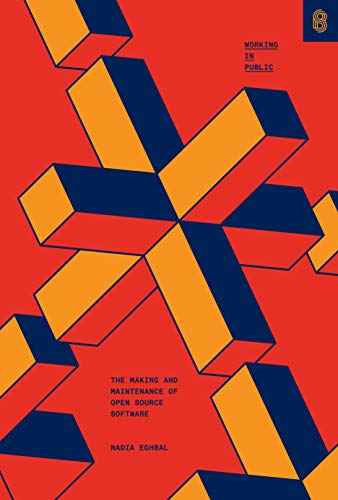
Nadia Eghbal is a writer and researcher who explores how the internet enables individual creators. From 2015 to 2019, she focused on the production of open source software, working independently and at GitHub to improve the open source developer experience. She is the author of Roads and Bridges: The Unseen Labor Behind Our Digital Infrastructure, published by the Ford Foundation, where she argued that open source code is a form of public infrastructure that requires maintenance.
2020·256 pages·Software, Open Source, Collaboration, Community Building, Digital Infrastructure
Nadia Eghbal, a researcher with years of experience at GitHub, wrote this book after deeply exploring how open source software development shapes our digital landscape. You learn about the lifecycle of open source projects, including the unseen maintenance work and the evolving role of individual creators in online communities. For example, she discusses how platforms like GitHub and social media redefine collaboration and audience interaction, providing insights into the costs and structures behind software many depend on. If you want to understand the social and technical dynamics behind open source and creator culture, this book offers a clear, grounded perspective.
James Holler has been an IT consultant for over twelve years, developing his expertise by helping corporate clients navigate the complexities of Microsoft Office software. His passion for teaching and simplifying technology led him to write this detailed guide, aiming to empower anyone who uses Office programs daily to work more efficiently and confidently. His background directly informs the book's accessible language and focus on practical skill-building across nine Office applications.
James Holler has been an IT consultant in the corporate field for the last twelve years. Years in which countless readings honed his passion for ever-changing computing to keep up with the best software updates. During his advisories, James realizes how often programs such as Excel, PowerPoint, or OneNote are used by employees of companies across America superficially, leading to a significant waste of time and energy and resulting in avoidable mistakes. His penchant for teaching, coupled with his passion for reading, convinced James to write books to help those trying to improve their skills in the workplace through the use of the many programs in the Office suite. He initially focused on writing books about the most common programs, such as Word, Excel, and PowerPoint. He then responded to the growing demand from his readers who wanted to learn how to use all the programs in the Office suite by writing a total of 9 books containing all the information needed to master the programs and use them like a true professional. In all his books, James adopts simple language that any reader can understand to enable anyone who sits at a desk every day and has to deal with seemingly complex programs to be empowered to carry out any task with total simplicity.
Unlike most software guides that skim the surface of Microsoft Office tools, James Holler's book digs deep into the practical use and hidden features of nine major Office 365 programs, including Excel, Word, and Teams. Drawing from over a decade as an IT consultant, Holler noticed how many users waste time due to superficial knowledge, so he crafted this extensive manual to help you unlock the full potential of these applications. You’ll learn not just basic functions but also shortcuts, program differences, and when to choose each tool for specific tasks, with clear explanations suited for beginners and advanced users alike. This book is especially beneficial if you aim to improve workplace efficiency and eliminate repetitive errors.
Cory Althoff is an executive and author whose work includes The Self-Taught Programmer and The Self-Taught Computer Scientist. After graduating from Clemson University with a major in political science, he taught himself to program, eventually becoming a software engineer at eBay. His books have been translated into eight languages, and he has been featured in publications like Forbes and CNBC. Cory is a senior vice president at CompTIA, the leading IT certification provider for the global technology industry and its workforce.
Cory Althoff draws from his journey teaching himself programming to becoming a software engineer at eBay and later an executive at CompTIA. You’ll learn not only Python coding but also critical tools and concepts often missing from formal education, like Git, Bash, and core computer science fundamentals. The book breaks down professional programming into five clear sections, guiding you from your first line of code to acing technical interviews. If you’re aiming to transition from hobbyist to professional developer, this guide lays out what truly matters beyond syntax—teamwork, best practices, and career readiness.
The best Software books and more, in your inbox each week. No account needed.
Conclusion
These 10 books converge on themes of practical craftsmanship, continuous learning, and bridging theory with real-world software challenges. If you're new to programming, starting with Python Crash Course and Automate the Boring Stuff with Python can give you hands-on skills quickly. For architects and engineers focused on systems and business alignment, Learning Domain-Driven Design and Modern Software Engineering offer nuanced guidance.
Rapidly integrating these insights into your workflow? Combine The Pragmatic Programmer with The Linux Command Line to build both your soft skills and technical fluency. Open source enthusiasts will appreciate Working in Public to navigate community dynamics.
Once you've absorbed these expert insights, create a personalized Software book to bridge the gap between general principles and your specific situation. Your next breakthrough might just be a tailored read away.
Frequently Asked Questions
I'm overwhelmed by choice – which book should I start with?
Start with Python Crash Course if you're new to programming; its hands-on projects build confidence quickly. If automation interests you, Automate the Boring Stuff with Python offers immediate practical value. These lay a solid foundation before you dive into more advanced topics.
Are these books too advanced for someone new to Software?
Not at all. Several books like Python Crash Course and Automate the Boring Stuff are designed for beginners. Others, such as Modern Software Engineering, suit experienced developers seeking to refine their craft. You can pick based on your current level.
What’s the best order to read these books?
Begin with practical programming like Python Crash Course, then explore automation with Automate the Boring Stuff. Next, deepen architectural understanding with Learning Domain-Driven Design and Modern Software Engineering. Sprinkle in The Pragmatic Programmer throughout to hone craftsmanship.
Should I start with the newest book or a classic?
Both have value. Classics like The Pragmatic Programmer remain relevant for timeless principles. Newer books, such as Modern Software Engineering, emphasize current practices. A blend helps balance foundational knowledge with evolving trends.
Do these books assume I already have experience in Software?
Some do, like Learning Domain-Driven Design and Modern Software Engineering, which target practicing developers and architects. Others, like The Self-Taught Programmer, welcome self-learners at all stages, guiding them from basics to professional skills.
How can I apply these expert books to my unique software goals?
Great question! While these books offer solid frameworks, personalized content can focus on your specific goals, skill level, and profession. Consider creating a personalized Software book to complement these insights with tailored guidance that fits your journey perfectly.
📚 Love this book list?
Help fellow book lovers discover great books, share this curated list with others!