19 Space Books That Separate Experts from Amateurs
Curated by Piers Morgan, Simon Winchester, and Walter Isaacson to deepen your Space knowledge
Updated on June 28, 2025·We may earn commissions for purchases made via this page
10 of 19 books have Audiobook versions
We're launchingLaunching on Product Hunt today 🎉We just launchedJust launched on Product Hunt 🎉
Modelpeers, from the BookAuthority teamFrom the BookAuthority team: Modelpeers, a free way to follow AI models and agents like you follow people. We'd love your support.
What if the vastness of space wasn't just a backdrop for sci-fi fantasies but a realm where human ingenuity and cosmic mysteries collide every day? Space continues to captivate, challenge, and inspire, not only because of what lies beyond but for what it reveals about our own place in the universe.
Simon Winchester, renowned for chronicling technological triumphs, found himself riveted by the gritty, real-life drama of SpaceX's early days in Liftoff, witnessing the blend of engineering brilliance and human determination. Meanwhile, Piers Morgan, known for his broad cultural insights, praises Limitless for opening a window into the astronaut experience aboard the ISS. Walter Isaacson and Karen Nyberg, a NASA astronaut, also weigh in, highlighting books that blend science, personal stories, and cosmic wonder.
While these expert-curated books provide proven frameworks to grasp the complexities of space, readers seeking content tailored to their specific interests—whether career paths, scientific depth, or exploration themes—might consider creating a personalized Space book that builds on these insights and suits your unique journey.
Simon Winchester, a New York Times bestselling author known for his deep explorations of history and technology, found himself captivated by Eric Berger’s account of SpaceX’s early days. He highlights "the elegant brilliance of the engineering that allows today’s space rockets to land themselves back on earth—or at sea—right way up, and on target to the inch," underscoring how this book reveals not just the technical feats but the human determination behind them. Winchester’s experience in chronicling complex histories brings weight to his praise, making his endorsement particularly relevant for those fascinated by the intersection of innovation and perseverance. Complementing this, Walter Isaacson calls it "a colorful page-turner," capturing the narrative’s engaging style that draws you into SpaceX’s rollercoaster journey.
“The elegant brilliance of the engineering that allows today’s space rockets to land themselves back on earth—or at sea—right way up, and on target to the inch, is all the doing of the teams assembled by Elon Musk—and the story of how he did it, and how for sure he will get us to Mars whether we like it or not, is told in appropriately stellar fashion by Eric Berger in a book that held me captive, in earth orbit, from prologue to epilogue, countdown to splashdown.” (from Amazon)
Eric Berger is the senior space editor at Ars Technica, covering everything from new space to NASA policy. He has an astronomy degree from the University of Texas and a master's in journalism from the University of Missouri. Previously, he worked at the Houston Chronicle for 17 years, where the paper was a Pulitzer Prize finalist in 2009 for his coverage of Hurricane Ike. A certified meteorologist, Eric founded Space City Weather and lives in Houston.
During his years covering space policy and new space ventures for Ars Technica, Eric Berger discovered the untold story of SpaceX's precarious beginnings. This book takes you deep into the nail-biting early attempts to launch the Falcon 1 rocket against daunting odds, revealing the technical challenges and personal sacrifices behind each launch. You’ll gain insight into startup dynamics in aerospace, the interplay between visionaries like Elon Musk and engineering teams, and the fierce competition with legacy aerospace giants. If you're intrigued by how innovation unfolds in high-stakes environments or want a vivid account of the aerospace startup grind, this book lays it out clearly and candidly.
Andrew Maynard, an Arizona State University professor known for his futuristic insights, found this book during his exploration of space communication. He notes, "Kellie Gerardi’s Not Necessarily Rocket Science is a unique and compelling guide to living in this age of space exploration, and one that will appeal to anyone who’s dreams are larger than the limitations others try to wrap them in." His admiration for Gerardi’s humanity and informed perspective highlights how the book reshaped his understanding of what it means to be truly engaged in the space age. Alongside him, Lucy Hawking, author of George's Secret Key to the Universe, praises Gerardi as one of the best ambassadors for spaceflight today, reinforcing the book’s relevance for those passionate about the stars.
“Kellie Gerardi’s Not Necessarily Rocket Science is a unique and compelling guide to living in this age of space exploration, and one that will appeal to anyone who’s dreams are larger than the limitations others try to wrap them in. Gerardi is informed, inspiring, and full of humanity, as she takes readers on a personal journey into what it means to be a fully signed-up member of the space age. A must-read for space-dreamers everywhere!” (from Amazon)
Kellie Gerardi is an aerospace and technology professional, a popular science communicator, and a commercial astronaut flying to space on a dedicated research mission with Virgin Galactic. Kellie is the author of Not Necessarily Rocket Science and the children’s picture book series Luna Muna. Kellie lives in Jupiter, Florida, with her husband and their daughter Delta V. You can follow her adventures on social media @kelliegerardi.
2020·264 pages·Space, Aerospace Industry, Mars Exploration, Women In Science, Space Training
While working as an aerospace professional and aspiring astronaut, Kellie Gerardi noticed a gap between public perceptions of space and the realities of working in the space industry. In this engaging guide, she shares firsthand experiences from training for Mars missions and testing spacesuits in microgravity, offering insights into the daily challenges and unexpected moments of life in the space age. You’ll learn about the technical demands, physical preparation, and emotional resilience required to pursue a career beyond Earth, making it especially relevant for women and anyone curious about space careers. Chapters like "One-Handed Pushups in Microgravity" provide vivid, memorable examples that ground the narrative in real-world practice.
This AI-created book on space exploration is tailored to your unique background and interests. You share your current knowledge, the specific areas you want to focus on, and your personal goals, and the book is crafted to address exactly those topics. Such a custom approach helps you navigate the complexities of space science and technology efficiently, making the vast subject matter more accessible and relevant to your journey.
TailoredRead AI creates personalized nonfiction books that adapt to your unique background, goals, and interests. Instead of reading generic content, you get a custom book written specifically for your profession, experience level, and learning objectives. Whether you're a beginner looking for fundamentals or an expert seeking advanced insights, TailoredRead crafts a book that speaks directly to you. Learn more.
2026·50-300 pages·Space, Space Exploration, Astronautics, Rocketry, Planetary Science
This tailored book explores the vast and dynamic field of space exploration with a focus uniquely aligned to your interests and goals. It covers fundamental principles of rocketry, astronautics, planetary science, and cosmic phenomena, while also examining the latest advances in space missions, technology, and human spaceflight. By weaving together expert knowledge with your specific background, this personalized guide clarifies complex topics and uncovers pathways through the challenges of exploring beyond Earth. Whether you're fascinated by spacecraft design, the search for extraterrestrial life, or the future of human settlement in space, this book offers a focused, engaging learning experience shaped exactly for you.
Piers Morgan, an English broadcaster known for his broad cultural insight, praised Tim Peake's autobiography warmly: "Great to have you, Major - it’s a fantastic book." Morgan's appreciation reflects the book's ability to bring you close to the astronaut's world, revealing the blend of humor, sacrifice, and wonder that Peake experienced. This endorsement highlights how the book resonates beyond space enthusiasts, offering a compelling story that deepened Morgan's understanding of what it truly means to live and work in orbit.
Tim Peake is a European Space Agency astronaut. He finished his 186-day Principia mission working on the International Space Station for Expedition 46/47 when he landed back on Earth 18 June 2016. He is also a test pilot and served in the British Army Air Corps. Tim is a Fellow of a number of UK science, aviation and space-based organisations. He is also a STEM ambassador. He is married with two sons. Tim's extensive eighteen-year career in the Army included the command of a platoon of soldiers in Northern Ireland during the Troubles, deployment in Bosnia, and operations in Afghanistan. Following a year-long selection process, Tim was chosen from over 8000 applicants to be one of six new astronauts as part of the European Astronaut Corps. During astronaut training he spent seven days living in a cave and twelve days living underwater. Tim's six month mission 'Principia' to the ISS inspired a nation, engaging with more than 2 million students as part of a hugely successful outreach programme. Whilst in space, he conducted over 250 scientific experiments, oversaw an emergency spacewalk and also ran the 2016 London marathon. Tim’s autobiography Limitless, tells the often very amusing story of how a short, ginger lad with a passion for flight and all things outdoors went from Soldier, Pilot, Parent to Astronaut. Now back on Earth Tim continues to work to promote opportunities for young people as an ambassador for STEM education, The Prince’s Trust and The Scout Association.
What started as a shy boy's fascination with flight evolved into Tim Peake's remarkable journey from British Army officer to astronaut aboard the International Space Station. In this autobiography, Peake pulls you inside his mission with vivid details—from the sensory experiences of space to the emotional weight of command during his 186-day Principia mission. You'll gain insight into astronaut training challenges, including underwater and cave simulations, and the realities of conducting over 250 scientific experiments in orbit. This book suits anyone curious about the human side of space exploration, blending personal memoir with an authentic glimpse of life beyond Earth.
John Scalzi, a well-known science fiction author and commentator, found himself captivated by this book's ability to unravel complex cosmic phenomena with clarity and charm. He describes it as "Weird science, explained beautifully." This sentiment highlights the book’s strength in making daunting astrophysical concepts accessible without losing their wonder. With such an endorsement, you can expect to be guided through the universe’s possible endings in a way that’s both intellectually stimulating and surprisingly entertaining. Alexandra Petri adds that the prose is "endlessly delightful," underlining how the book balances deep science with engaging storytelling, making it a compelling read for anyone curious about what the cosmos holds.
Dr. Katie Mack is a theoretical astrophysicist, exploring a range of questions in cosmology, the study of the universe from beginning to end. She is currently an assistant professor of physics at North Carolina State University, where she is also a member of the Leadership in Public Science Cluster. She has been published in a number of popular publications, such as Scientific American, Slate, Sky & Telescope, Time, and Cosmos magazine, where she is a columnist. She can be found on Twitter as @AstroKatie.
Katie Mack, a theoretical astrophysicist and assistant professor at North Carolina State University, channels her deep expertise into exploring some of the universe's most profound mysteries. You’ll encounter detailed explanations of five potential cosmic endings—the Big Crunch, Heat Death, Big Rip, Vacuum Decay, and the Bounce—each unpacked with wit and clarity. This book is designed to expand your understanding of cosmology and quantum mechanics, weaving in concepts like string theory without overwhelming you. If you’re fascinated by astrophysics and eager to grasp how the universe’s fate intersects with fundamental physics, this book gives you a thoughtful, engaging guide to those ultimate questions.
New York Times Notable Book
NPR Science Friday Book Club Selection
Named Best Book of the Year by The Washington Post
James Trefil, Clarence J. Robinson Professor of Physics at George Mason University, is internationally recognized not only as a distinguished scientist but also as an expert in making complex scientific ideas understandable. He is the author of numerous magazine articles and books on science for the general public, including National Geographic's The Story of Innovation. He lives in Fairfax, Virginia, with his wife. This depth of expertise and communication skill uniquely qualifies him to guide you through the latest maps and scientific discoveries in space featured in this atlas.
James Trefil, Clarence J. Robinson Professor of Physics at George Mason University, is internationally recognized not only as a distinguished scientist but also as an expert in making complex scientific ideas understandable. He is the author of numerous magazine articles and books on science for the general public, including National Geographic's The Story of Innovation. He lives in Fairfax, Virginia, with his wife.
James Trefil, a physics professor known for translating complex science into accessible language, developed this second edition of Space Atlas to update and expand the visual and scientific mapping of our universe. You’ll explore detailed planetary maps, richly illustrated chapters on the solar system, and sections explaining astrophysical concepts like dark matter and gravitational waves. The book benefits anyone fascinated by space—from casual stargazers to science enthusiasts—by providing clear, authoritative insights paired with stunning National Geographic photography. Notably, astronaut Buzz Aldrin contributes a special section on the moon's critical past and future role in exploration, adding a firsthand perspective.
This AI-created book on astrophysics fundamentals is crafted especially for you based on your background and goals. By focusing on step-by-step actions tailored to your interests, it guides you through complex cosmic acceleration concepts at your own pace. Instead of a one-size-fits-all approach, this custom AI book matches expert knowledge with what you want to learn, helping you achieve rapid progress in understanding space science fundamentals.
TailoredRead AI creates personalized nonfiction books that adapt to your unique background, goals, and interests. Instead of reading generic content, you get a custom book written specifically for your profession, experience level, and learning objectives. Whether you're a beginner looking for fundamentals or an expert seeking advanced insights, TailoredRead crafts a book that speaks directly to you. Learn more.
2026·50-300 pages·Space, Space Science, Cosmic Acceleration, Astrophysics Basics, Stellar Phenomena
This personalized book explores the fascinating realm of astrophysics with a tailored focus on your specific interests and background. It breaks down complex cosmic concepts into clear, step-by-step actions designed to accelerate your mastery of space science fundamentals. The book covers key astrophysical phenomena, cosmic acceleration, and essential theories, carefully matched to your learning goals and current knowledge level. By synthesizing broad expert knowledge with a customized learning path, it offers an engaging and efficient way to deepen your understanding without wading through unrelated material. This tailored approach ensures you gain meaningful insights and practical comprehension aligned perfectly with your ambitions in space science.
The Philadelphia Inquirer, a respected authority in science journalism, highlights how Janna Levin’s book captures the vastness and mystery of the universe with prose that balances awe and clarity. Their review praises the book’s unique fusion of evocative art and sharp writing: "In prose that revels in the immensity and dispassion of the barely known universe — and bolstered by Lia Halloran’s illustrations of strange celestial shapes and astronauts floating in inky voids — Levin makes space sound like a somewhat reasonable place." This perspective reflects how the book transformed their appreciation for black holes from abstract theory to something more tangible and engaging. Alongside, The Space Review notes the book’s ability to swiftly bring readers up to speed on black holes without overwhelming them with technicalities, making it a strong pick for anyone looking to deepen their knowledge of cosmic phenomena.
“In prose that revels in the immensity and dispassion of the barely known universe — and bolstered by Lia Halloran’s illustrations of strange celestial shapes and astronauts floating in inky voids — Levin makes space sound like a somewhat reasonable place.” (from Amazon)
Janna Levin is a professor of physics and astronomy at Barnard College. She is also director of sciences at Pioneer Works, a center for arts and sciences in Brooklyn. Her previous books include Black Hole Blues and Other Songs from Outer Space, How the Universe Got Its Spots, and a novel, A Madman Dreams of Turing Machines, which won the PEN/Bingham Prize. She was recently named a Guggenheim Fellow. She lives in New York.
Janna Levin, a professor of physics and astronomy at Barnard College, draws on her rich academic and artistic background to unpack black holes in a way that’s both engaging and accessible. You’ll explore the nature of black holes beyond the usual jargon, gaining insight into their cosmic roles and how they shape the universe, accompanied by evocative artwork that deepens understanding without overwhelming. Chapters invite you to imagine encounters with these enigmatic phenomena, making complex astrophysics approachable whether you’re new to the subject or simply curious. This book suits anyone intrigued by space’s mysteries but daunted by technical texts, offering a vivid, thoughtful journey rather than a textbook.
Brian Greene, professor of physics and mathematics at Columbia University and author of The Elegant Universe, brings a deep appreciation to this astronaut memoir. After years exploring theoretical realms, Greene found Massimino's firsthand accounts a thrilling and moving contrast, capturing the grit and courage behind spaceflight. He calls it "Massimino's incredible journeys, filled with grit, courage, suspense and thrills, are told with such candor and delight, that for a brief moment I felt I’d finally made it to space too." This perspective invites you to see the human heart behind NASA’s missions, making it essential for those who dream beyond the stars. John Glenn, legendary astronaut, concurs, highlighting the blend of engineer’s precision and explorer’s spirit in Massimino’s narrative.
Professor of Physics and Mathematics, Columbia University
“Massimino's incredible journeys, filled with grit, courage, suspense and thrills, are told with such candor and delight, that for a brief moment I felt I’d finally made it to space too. Read this book and be inspired to reach for the impossible.” (from Amazon)
Mike Massimino served as a NASA Astronaut from 1996 until 2014 and flew in space twice: STS-109 on space shuttle Columbia in March 2002 and STS-125 on space shuttle Atlantis in May 2009 – the final two Hubble Space Telescope servicing missions. Mike became the first human to tweet from space, was the last human to work inside of Hubble, and set a team record with his crewmates for the most cumulative spacewalking time in a single space shuttle mission. He has a recurring role as himself on The Big Bang Theory; appears regularly on late night talk shows, news programs, and documentaries; and is a much sought after inspirational speaker. He received his BS from the Columbia University School of Engineering, and his two MS’s and Ph.D. from the Massachusetts Institute of Technology (MIT). He currently lives in New York City where he is an engineering professor at Columbia and an advisor at the Intrepid Sea, Air, and Space Museum.
Drawing from his extensive experience as a NASA astronaut and engineer, Mike Massimino offers a vivid insider’s account of life beyond Earth, blending technical insight with personal narrative. You get an intimate look at the challenges of spacewalks, the pressure of repairing the Hubble Telescope, and the grit needed to overcome setbacks like repeated NASA rejections. Chapters detailing the Columbia shuttle tragedy and the Hubble missions reveal not just the science, but the emotional stakes of space exploration. This book suits anyone fascinated by astronautics or the human side of space missions, though it leans toward readers ready for a candid, detailed journey rather than a simple overview.
Chris Addison, an ex-spy known for his sharp insight, found himself deeply moved by Michael Collins' firsthand account of the Apollo 11 mission. Reflecting on Collins' passing, Addison described the book as "such a great read - so well written," highlighting the signed photograph Collins took from Columbia that hangs proudly in his space. This personal connection emphasizes the memoir's power to convey not just technical detail but the emotional weight of space exploration. Addison's perspective underscores why anyone interested in space history or human courage in extraordinary circumstances should consider this book. Similarly, Neal Mann, a global transformation leader, praises the book as an astonishingly gripping story that deserves a place in every school syllabus, reinforcing its educational and inspirational value.
“Michael Collins, pilot of the Columbia, the Apollo 11 Command Module, has died. A great man. His book Carrying The Fire is such a great read - so well written. This print of the picture he took from Columbia, signed by him, hangs proudly on my wall. Vale, as they say.” (from X)
Michael Collins (1930-2021) was an astronaut, one of 24 who have flown to the moon. A West Point graduate, he was an Air Force jet-fighter pilot and a test-pilot before being recruited by NASA in 1963 as a member of the third astronaut group selected for the Apollo moon project. Lieutenant Colonel Collins flew in the Gemini 10 space mission, orbiting the earth forty-three times in 1966, and piloted the Apollo 11 module for the 1969 lunar mission which put Neil Armstrong and Buzz Aldrin on the moon’s surface. After NASA, Collins became director of the Smithsonian’s National Air and Space Museum, then under secretary of the Smithsonian Institution, and vice president of the LTV Aerospace and Defense Company. He held the rank of major general when he retired from the Air Force Reserve. Collins recounted his experiences as an astronaut in the memoirs Carrying the Fire and Flying to the Moon.
Michael Collins' decades as an astronaut and test pilot culminate in this detailed memoir that goes beyond the usual spaceflight narrative. You get an intimate view of his journey from Air Force flights to piloting the Apollo 11 Command Module, with vivid reflections on the unique perspective of seeing Earth from lunar orbit. The book offers insights into the technical challenges, psychological solitude, and awe of space exploration, especially in chapters recounting the Apollo 11 mission and his earlier test flights. If you're fascinated by human spaceflight or the personal side of historic missions, this book provides an unvarnished, thoughtful perspective that balances wonder with grounded reality.
Christie Aschwanden, a New York Times bestselling author, brings a sharp eye to space exploration and its realities. She discovered this book while exploring the promises and pitfalls of humanity's future beyond Earth. "Hilarious, highly informative and cheeky book . . . use[s] humor and science to douse techno dreams with a dose of reality . . . Even as they shoot down a long list of space fantasies, they explore a lot of really interesting research," she notes. This blend of wit and rigor helped her reconsider common assumptions about space settlement, making this book a must-read for anyone curious about the future of human life off-planet. Fellow expert Charles Bonkowsky also praises it as a sobering yet hopeful read for sci-fi fans.
“Hilarious, highly informative and cheeky book . . . use[s] humor and science to douse techno dreams with a dose of reality . . . Even as they shoot down a long list of space fantasies, they explore a lot of really interesting research.” (from Amazon)
Kelly Weinersmith is an adjunct faculty member in the BioSciences department at Rice University. Her research has been featured in The Atlantic, National Geographic, BBC World, Science, and Nature. Zach Weinersmith makes the webcomic Saturday Morning Breakfast Cereal. He illustrated the New York Times bestselling Open Borders: The Science and Ethics of Immigration, and his work has been featured in The Economist, The Wall Street Journal, Slate, Forbes, Science Friday, Foreign Policy, PBS, and elsewhere. The Weinersmiths live on an old farm in Virginia with their two children.
After years of digging into the science and ethics of space settlement, Kelly and Zach Weinersmith developed a candid look at the reality of becoming a multiplanetary species. You’ll learn about the biological, political, and social challenges of living off Earth—from the feasibility of space farming to the legal questions surrounding governance and even space cannibalism. The book’s mix of humor and thorough research helps you weigh whether space colonization is a dream worth chasing or a distraction from pressing Earthly issues. If you want to explore the practical and ethical dimensions of space settlement beyond the hype, this book will give you plenty to consider.
Publisher's Weekly, a leading book review publication, highlights Paul M. Sutter’s infectious enthusiasm and humor in explaining the universe’s deadliest phenomena. Their review praises the book’s blend of fun and informative content, noting how it deepens appreciation for our cosmic home. This perspective helps you see the book as both entertaining and educational, making complex astrophysics accessible. Alongside Kirkus Reviews, which notes Sutter's lucid writing and broad appeal, these insights underscore why this book is a compelling choice for anyone intrigued by space's dangers.
“Sutter’s tone is suffused with enthusiasm for his topic and with disarming humor. Funny and informative, Sutter’s gleefully bleak interstellar survey will foster a greater appreciation for humanity’s home, and a deeper understanding of space.” (from Amazon)
Paul M. Sutter is an astrophysicist and science communicator known for his engaging writing style and ability to explain complex scientific concepts in an accessible manner. He has a Ph.D. in astrophysics and has worked on various research projects related to cosmology and the universe's structure. Sutter is also a popular science educator, hosting podcasts and public talks that aim to inspire curiosity about the cosmos.
When astrophysicist Paul M. Sutter decided to write this book, he aimed to reveal the universe's deadliest phenomena with clarity and wit. You’ll learn how cosmic events—from black holes to dying stars—pose real dangers, illuminated through vivid metaphors and straightforward explanations. Chapters explore topics like the physics behind supernovae and the hazards of wormholes, giving you both the science and the storytelling to grasp these cosmic threats. If you’re curious about the universe’s darker side and want to deepen your understanding of astrophysical risks, this book speaks directly to your fascination without glossing over harsh realities.
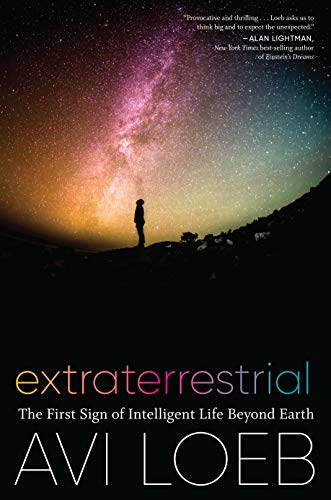
Sean Carroll, physicist at Caltech and host of the Mindscape Podcast, brings a unique perspective to this book. After encountering Avi Loeb's work, he was struck by the balance between healthy skepticism and openness to new ideas. "It's good to be skeptical of audacious ideas. But it's also important to be open to audacious possibilities, and to think through their ramifications," Carroll writes, highlighting how the book challenges conventional thinking about extraterrestrial life. His endorsement underscores why this book offers valuable insights for anyone eager to explore questions about intelligent life beyond Earth. Additionally, Stephen Greenblatt, Pulitzer Prize-winning author, praises the book for urging readers to reconsider humanity's uniqueness in the universe.
“It's good to be skeptical of audacious ideas. But it's also important to be open to audacious possibilities, and to think through their ramifications. Avi Loeb's sumptuously written book will provoke you to think about the possibility of intelligent life elsewhere in the universe in new and stimulating ways.” (from Amazon)
Abraham (Avi) Loeb is the Frank B. Baird, Jr., Professor of Science at Harvard University, chair of Harvard’s Department of Astronomy, founding director of Harvard’s Black Hole Initiative, and director of the Institute for Theory and Computation (ITC) within the Harvard-Smithsonian Center for Astrophysics. He also chairs the Advisory Committee for the Breakthrough Starshot Initiative, and serves as the science theory director for all Initiatives of the Breakthrough Prize Foundation, as well as chair of the Board on Physics and Astronomy of the National Academies. Author of four books and over 700 scientific papers, Loeb is an elected fellow of the American Academy of Arts & Sciences, the American Physical Society, and the International Academy of Astronautics. In 2012, Time selected Loeb as one of the twenty-five most influential people in space.
The breakthrough moment came when Avi Loeb, Harvard's leading astronomer, proposed that an unusual object passing through our solar system in 2017 was not an asteroid but advanced alien technology. In this book, you’ll explore the scientific evidence behind this claim, including the object's high speed, unusual trajectory, and lack of debris, alongside the broader implications for science and society. Loeb’s narrative intertwines his personal reflections with a challenge to conventional scientific assumptions, inviting you to reconsider humanity’s place in the cosmos. This book suits anyone curious about astrophysics, the search for extraterrestrial intelligence, or the philosophical questions sparked by such discoveries.
New York Times Bestseller
Author of 4+ books
Elected fellow of American Academy of Arts & Sciences
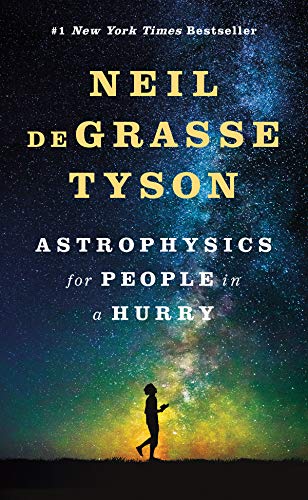
The New Scientist, a respected science publication known for authoritative expertise, highlights this book with praise: "Riveting questions fielded by three top astrophysicists in engaging style, with great illustrations and just a handful of equations. They may just have produced the best book about the universe in the universe." Their endorsement reflects the authors’ ability to make complex cosmic phenomena accessible without oversimplifying. This perspective aligns with The Washington Post’s recognition of the book’s success in communicating vast, cosmic ideas clearly. Together, these voices suggest this book offers a rich, insightful experience for anyone eager to deepen their understanding of space.
“Riveting questions fielded by three top astrophysicists in engaging style, with great illustrations and just a handful of equations. They may just have produced the best book about the universe in the universe.” (from Amazon)
Neil deGrasse Tyson, Michael A. Strauss, J. Richard Gott(you?)·
About the Author
Neil deGrasse Tyson is director of the Hayden Planetarium at the American Museum of Natural History. He is the author of many books, including Space Chronicles: Facing the Ultimate Frontier, and the host of the Emmy Award–winning documentary Cosmos: A Spacetime Odyssey. Michael A. Strauss is professor of astrophysics at Princeton University. J. Richard Gott is professor of astrophysics at Princeton University. His books include The Cosmic Web: Mysterious Architecture of the Universe (Princeton).
Drawing from their extensive experience as leading astrophysicists, Neil deGrasse Tyson, Michael A. Strauss, and J. Richard Gott guide you through the vast cosmos with clarity and wit. You’ll explore everything from the lifecycle of stars and the mysteries of black holes to the expansion of the universe and the prospects of intelligent life beyond Earth. The book’s conversational tone and vivid illustrations bring complex astrophysical concepts within reach, particularly in chapters explaining phenomena like wormholes and dark energy. If you’re curious about how we know what we know about space and want a tour that balances depth with accessibility, this book offers a thorough introduction without overwhelming jargon.
Goodreads, a leading book community platform, praises this work as "Engaging and illuminating." Their endorsement carries weight because they connect millions of readers with books that clarify complex topics like astrophysics. This reflects how Tyson's clear, witty style can transform intimidating science into approachable knowledge. Similarly, Hackernoon, known for in-depth tech and science coverage, describes it as mind-blowing, signaling its appeal beyond academics to anyone curious about the cosmos. These perspectives highlight why this book is a go-to guide for grasping the universe's big questions without getting lost in technicalities.
Neil deGrasse Tyson is an astrophysicist with the American Museum of Natural History and the New York Times best-selling author of Astrophysics for People in a Hurry. He lives in New York City. Tyson was born in New York City the same week NASA was founded. His interest in the universe traces back to age 9, after a first visit to the Hayden Planetarium of the American Museum of Natural History. He was educated in the public schools of New York City through his graduation from the Bronx High School of Science. After earning a BA in Physics from Harvard and a PhD in Astrophysics from Columbia, he became the Frederick P. Rose Director of the Hayden Planetarium, where he has served since 1996.
Neil deGrasse Tyson's decades of astrophysics research and public science advocacy led him to write this book as a way to distill complex cosmic concepts into digestible insights for busy minds. You’ll learn foundational ideas about space and time, from the Big Bang and quantum mechanics to black holes and the search for extraterrestrial life, all explained with Tyson’s characteristic wit and clarity. The chapters are short, making it easy to absorb key ideas during brief moments of downtime. If you've ever wanted to grasp the universe’s basics without getting bogged down in jargon, this book gives you just that, making it a solid choice for curious minds rather than specialists.
Brian May, rocket ship builder and astrophysicist, praises this book as a transformative tool for visualizing the universe, sharing how it compelled him to rethink his mental image of galaxies. His perspective as a scientist and musician adds weight to his endorsement, highlighting the book's ability to bridge complex ideas with vivid imagery. This resonated deeply with him during his explorations of cosmic structures. Similarly, Richard Dawkins, emeritus fellow at Oxford, commends the author's narrative as a natural history of galaxies worthy of a documentary, emphasizing the majestic storytelling and visual depth that invite you to experience the universe anew.
“I love this book. It represents a new giant leap in our ability to visualize the universe. For me, reading it was a shocking realization that I must now update my mental picture of the cosmos.” (from Amazon)
David J. Eicher is one of the most widely recognized astronomy enthusiasts in the world. He is editor in chief of Astronomy magazine and of the international Asteroid Day project. He has also written shows for the Adler Planetarium and for NASA, and is the coauthor, with Brian May, of Mission Moon 3-D and the author of The New Cosmos. In addition to appearances on CNN, Fox News, and NPR, Dave regularly lectures on science and astronomy at Harvard University, the Starmus Festival, and the American Museum of Natural History.
When David J. Eicher, editor in chief of Astronomy magazine, compiled this extensive exploration of galaxies, he drew on decades of experience communicating complex astronomy topics to the public. You gain a vivid understanding of different galaxy types, their formation, and cosmic phenomena like black holes powering star cities. The book’s rich illustrations and rare archival photographs, especially in chapters detailing galaxy classification and cosmic evolution, deepen your grasp of the universe’s structure. This book suits anyone intrigued by cosmic scale and the intricate workings behind our galactic neighbors, providing both historical context and up-to-date discoveries without overwhelming jargon.
Roger Penrose, author of works on new physics and the universe, highlights how Laura Mersini-Houghton’s Before the Big Bang offers a detailed look into the principles possibly governing the universe's explosive start. His expertise in cosmology lends significant weight to this endorsement, especially given the complexity of the ideas presented. Penrose’s recognition of the book’s depth suggests it reshaped his understanding of cosmic origins, making it a compelling read for those aiming to grasp advanced cosmological theories. Alongside him, Paul Davies praises Mersini-Houghton's exploration of the multiverse, emphasizing her role in uncovering signs that our universe may be one among many, enriching your perspective on the vastness of space.
“Laura Mersini-Houghton’s Before the Big Bang provides a fascinating account of the background and underlying motives for her intriguing proposal for the physical principles that may have governed the explosive origin of our universe.” (from Amazon)
Laura Mersini-Houghton is an internationally renowned cosmologist and theoretical physicist and is one of the world’s leading experts on the multiverse and the origins of the universe. Currently, she is a professor of theoretical physics and cosmology at the University of North Carolina at Chapel Hill, and a visiting professor at the Department of Applied Mathematics and Theoretical Physics at the University of Cambridge. She has been the subject of hundreds of articles in leading popular science magazines and has appeared on the Science Channel’s Through the Wormhole with Morgan Freeman, as well as on documentaries on the Discovery Channel and the BBC. She lives in Chapel Hill, North Carolina.
Drawing from her extensive background as a leading cosmologist and theoretical physicist, Laura Mersini-Houghton challenges conventional ideas about the universe's origins. She guides you through the concept of the multiverse, revealing how recent scientific tools have begun to uncover evidence of other universes beyond our own. The book delves into quantum landscapes and cosmic signatures, offering insights into the fundamental forces shaping existence itself. You’ll gain a deeper understanding of what might have preceded the Big Bang and the implications of a universe that is part of a vast cosmic family. This book suits those curious about foundational cosmology and the evolving frontiers of space science.
Sean Carroll, a physicist at Caltech and the Santa Fe Institute, spoke highly of this book after engaging deeply with its content. He emphasized the difficulty of challenging established cosmological views, noting how Luke A. Barnes and Geraint F. Lewis lay out precisely what is necessary to question the Big Bang model. "Overthrowing all of modern cosmology isn’t easy, but it could happen. Maybe you will be the one to do it!" Carroll's appreciation stems from the book’s detailed exploration of cosmic phenomena, which reshaped his perspective on the universe's mysteries. This candid examination equips you to join the scientific conversation, much like Carroll himself was inspired to do. Astrophysicist Priyamvada Natarajan also praised the book for making complex cosmology accessible with clarity and enthusiasm, making it approachable for those eager to understand the cosmos better.
“Overthrowing all of modern cosmology isn’t easy, but it could happen. Maybe you will be the one to do it! If you’re up for the challenge, Luke A. Barnes and Geraint F. Lewis tell you exactly what you have to accomplish. Even if you don’t topple the stodgy edifice of modern science, you’ll certainly learn some exciting things about the universe along the way.” (from Amazon)
Luke A. Barnes is a postdoctoral researcher at Western Sydney University. He completed his undergraduate studies at the University of Sydney, before undertaking Ph.D. research at the University of Cambridge. The focus of his research has been the cosmic evolution of matter, and he has published papers in the field of galaxy formation and evolution, and on the fine-tuning of the Universe for life. He returned to the University of Sydney in 2008 as a Super Science Fellow, before being awarded a prestigious Templeton Fellowship to expand his research on the physics of fine-tuning of the laws of physics for complexity and ultimately life. Dr Barnes is an accomplished speaker to professional and amateur audiences, and can speak across the boundaries of cosmology, philosophy and religion. He has lectured to numerous amateur astronomical groups and to public audiences, including speaking on fine-tuning at the Royal Institution in London in 2017.
Drawing from their academic backgrounds in astrophysics and cosmology, Luke A. Barnes and Geraint F. Lewis challenge the prevailing Big Bang paradigm by closely examining the observational foundations behind it. You’ll explore key cosmological concepts such as dark matter, black holes, and cosmic evolution, gaining clarity on why certain ideas dominate scientific discourse despite imperfections. Chapters dissect the evidence and theories that shape modern cosmology, arming you with the knowledge to critically assess mainstream views. This book suits anyone curious about the universe’s workings and those ready to question established cosmic narratives.
Sean Carroll, a physicist at Caltech and the Santa Fe Institute known for his work on the universe's biggest questions, shares how Dan Hooper's book reshaped his understanding of cosmic evolution. Carroll remarks, "What a journey, from the very birth of the universe to its ultimate future. In accessible fashion, Hooper's book does a great job explaining the fundamental laws of physics and showing how they play out in cosmic evolution." This perspective from a leading thinker highlights how the book offers a clear path through complex topics that can otherwise seem impenetrable, making it a compelling read for anyone eager to grasp the earliest moments of space and time. Cosmologist Sophia Gadnasr also praises Hooper's work, reflecting the book's appeal among experts probing the universe's deepest mysteries.
“What a journey, from the very birth of the universe to its ultimate future. In accessible fashion, Hooper's book does a great job explaining the fundamental laws of physics and showing how they play out in cosmic evolution.” (from Amazon)
Dan Hooper is a senior scientist and the head of the Theoretical Astrophysics Group at the Fermi National Accelerator Laboratory and a professor of astronomy and astrophysics at the University of Chicago. He is the author of Dark Cosmos and Nature’s Blueprint (both Smithsonian/Harper Collins). He lives in Oak Park, Illinois.
Dan Hooper's decades of experience as a senior scientist at Fermilab and professor at the University of Chicago led to this exploration of the universe's earliest moments. You gain insights into the Big Bang's first seconds, including how experiments like the Large Hadron Collider help recreate those conditions and probe the origins of dark matter and cosmic inflation. Chapters cover the transition from cosmic inflation to matter formation, illustrating complex physics with clarity. If you're fascinated by how fundamental particles shaped everything around us, this book offers a focused dive into those initial cosmic events.
Sean Carroll, physicist at Caltech and a respected voice in cosmology, highlights how this book brings the vast questions of modern cosmology down to a human scale. He notes, "Modern cosmology tackles some of the biggest questions we have about the nature of the cosmos. In The 4% Universe, Richard Panek brings this quest down to a human scale." Carroll's expertise in the field gives weight to this recommendation, especially as he reflects on how the book deepened his understanding during a period of intense research on cosmic phenomena. Alongside him, Timothy Ferris, known for his works on the galaxy and dark skies, echoes the book’s reliability and readability, making it a compelling choice for anyone eager to grasp the mysterious 96 percent of the universe that remains unseen.
Physicist at Caltech and SFI, science communicator
“Modern cosmology tackles some of the biggest questions we have about the nature of the cosmos. In The 4% Universe, Richard Panek brings this quest down to a human scale.” (from Amazon)
Richard Panek is the prize-winning author of The 4% Universe and the recipient of a Guggenheim Fellowship in Science Writing. He has often written about astronomy and cosmology for The New York Times, Discover, Smithsonian, Esquire, Natural History, and many other publications. He lives in New York City with his wife and two sons.
Richard Panek, a Guggenheim Fellow and seasoned science writer, unravels the profound mystery of how just 4 percent of the universe is made of known matter, while the rest remains elusive dark matter and dark energy. You gain insight into the scientific process behind this revelation through vivid portraits of key figures like Saul Perlmutter and Vera Rubin, and learn about the experiments and debates that reshaped cosmology. The book offers a narrative that is both a history of discovery and an exploration of current scientific puzzles, making it particularly valuable if you're curious about the forces shaping our cosmos beyond what textbooks cover. While it may challenge your assumptions, it’s ideal for readers ready to grapple with the complexities and uncertainties of modern space science.
The Wall Street Journal, a leading voice in cultural and scientific commentary, highlights this book as "a reminder that the finest telescope in space might also be the greatest camera ever created." Their appreciation stems from the unique access Terence Dickinson provides to Hubble's latest imaging capabilities, enriching their understanding of cosmic photography. This endorsement reflects just how much the book deepened their appreciation for the telescope’s dual role in science and art. Alongside, Publisher's Weekly calls it "a treasure map to the majesty of our universe," reinforcing its appeal to those drawn to the wonders beyond Earth.
Terence Dickinson, one of Canada's best-loved amateur-astronomy writers, gained renown for unraveling the mysteries of the cosmos. His down-to-earth style made him the award-winning best-selling author of 14 astronomy books, including NightWatch, The Backyard Astronomer's Guide, The Universe and Beyond and Hubble's Universe. The cofounder and former editor of SkyNews, Canada's national astronomy magazine, Dickinson was a recipient of the Order of Canada and two honorary doctorates.
Terence Dickinson, celebrated for making astronomy accessible, brings you a vivid journey through the cosmos with Hubble's Universe. Drawing on his extensive background as cofounder of SkyNews and author of 14 astronomy books, Dickinson curates nearly 300 stunning images captured by the Hubble Space Telescope, paired with insightful commentary that reveals lesser-known details about these celestial phenomena. You’ll gain a clearer understanding of the forces shaping galaxies, nebulae, and star clusters, enhanced by Dickinson’s direct access to Hubble scientists. This book suits anyone fascinated by space imagery who wants to deepen their grasp of the universe’s grand structures without wading through jargon.
The best Space books and more, in your inbox each week. No account needed.
Conclusion
The collection of these 19 books paints a diverse picture of space—from the gritty realities of pioneering startups to the profound mysteries of cosmic beginnings. If you're grappling with where to start, Astrophysics for People in a Hurry offers an accessible entry point, while Liftoff and Spaceman deliver gripping human stories for those drawn to the personal side of exploration.
For rapid insight into cosmic phenomena, pairing The End of Everything with How to Die in Space can quickly deepen your understanding of the universe's dark corners. Meanwhile, A City on Mars challenges you to think critically about the future of human settlement beyond Earth.
Alternatively, you can create a personalized Space book to bridge the gap between general principles and your specific situation. These books can help you accelerate your learning journey and connect with the cosmos on your own terms.
Frequently Asked Questions
I'm overwhelmed by choice – which book should I start with?
Start with Astrophysics for People in a Hurry by Neil deGrasse Tyson. Its concise chapters offer a swift, clear overview of key cosmic concepts, easing you into the vastness of space without feeling lost.
Are these books too advanced for someone new to Space?
Not at all. Titles like Not Necessarily Rocket Science and Black Hole Survival Guide are written to be accessible and engaging, perfect for newcomers curious about space careers and phenomena.
Should I start with the newest book or a classic?
It depends on your interest. Newer books like A City on Mars explore current debates on space settlement, while classics like Carrying the Fire provide timeless astronaut perspectives. Both offer valuable insights.
Do I really need to read all of these, or can I just pick one?
You can definitely pick one or two that align with your interests. For example, Liftoff if you're fascinated by aerospace startups, or The End of Everything if cosmology intrigues you.
Which books focus more on theory vs. practical application?
The Cosmic Revolutionary's Handbook and Before The Big Bang delve into theoretical cosmology, while Spaceman and Carrying the Fire provide practical, hands-on astronaut experiences.
How can I get space knowledge tailored to my goals without reading multiple books?
While these books offer great foundational knowledge, you can create a personalized Space book that blends expert insights with your specific interests and background, saving time and focusing on what matters most to you.
📚 Love this book list?
Help fellow book lovers discover great books, share this curated list with others!