8 Spanish Biography Books That Change Perspectives
Curated by Marc Andreessen (Andreessen Horowitz), Paul Kedrosky (SK Ventures), and Paul Graham (Y Combinator) for insightful Spanish Biography reads
Updated on June 23, 2025·We may earn commissions for purchases made via this page
7 of 8 books have Kindle versions
We're launchingLaunching on Product Hunt today 🎉We just launchedJust launched on Product Hunt 🎉
Modelpeers, from the BookAuthority teamFrom the BookAuthority team: Modelpeers, a free way to follow AI models and agents like you follow people. We'd love your support.
What if you could peer into Spain’s past through the eyes of those who lived it, felt its turbulence, and shaped its culture? Spanish Biography books offer vivid, personal narratives that go beyond dates and facts to reveal the passions and contradictions of this storied nation. Whether it’s the ideological rifts of the Civil War or the creative genius behind Barcelona’s skyline, these biographies connect you intimately with Spain’s soul.
Experts like Marc Andreessen, General Partner at Andreessen Horowitz, praise Homage to Catalonia for its unflinching look at the Spanish Civil War’s factional struggles. Investor Paul Kedrosky highlights Orwell’s narrative as one of his finest works, while Paul Graham, co-founder of Y Combinator, recommends The Quest for El Cid for its deep dive into medieval Spain’s legends and realities. Their endorsements come from decades of engaging with complex history, adding weight to their recommendations.
While these expert-selected books provide rich frameworks, you might find it valuable to explore Spanish Biography tailored to your background, interests, and goals. Consider creating a personalized Spanish Biography book that builds on these insights with content customized just for you.
Marc Andreessen, General Partner at Andreessen Horowitz, values this book for its detailed exploration of ideological conflicts within the Spanish Civil War’s leftist factions. After engaging deeply with the material, he pointed out that Orwell’s appended chapters reveal some of the most insightful content on the divisions among Anarchists, Socialists, and Soviet-aligned Communists. This perspective helped Andreessen appreciate the complexity behind the war beyond the common narratives. Additionally, Paul Kedrosky, an investor with a keen interest in historical insights, calls it one of Orwell's best, underscoring its enduring relevance and literary strength.
“Orwell later bumped two chapters of Homage To Catalonia to appendices. They may be the best chapters in the book; they detail the divisions and fighting within the left among the Anarchists, the Socialists, and the Soviet-controlled Communists.” (from X)
George Orwell is one of England's most famous writers and social commentators. Among his works are the classic political satire Animal Farm and the dystopian nightmare vision Nineteen Eighty-Four. Orwell was also a prolific essayist, and it is for these works that he was perhaps best known during his lifetime. They include Why I Write and Politics and the English Language. His writing is at once insightful, poignant and entertaining, and continues to be read widely all over the world. Eric Arthur Blair (George Orwell) was born in 1903 in India, where his father worked for the Civil Service. The family moved to England in 1907 and in 1917 Orwell entered Eton, where he contributed regularly to the various college magazines. From 1922 to 1927 he served with the Indian Imperial Police in Burma, an experience that inspired his first novel, Burmese Days (1934). Several years of poverty followed. He lived in Paris for two years before returning to England, where he worked successively as a private tutor, schoolteacher and bookshop assistant, and contributed reviews and articles to a number of periodicals. Down and Out in Paris and London was published in 1933. In 1936 he was commissioned by Victor Gollancz to visit areas of mass unemployment in Lancashire and Yorkshire, and The Road to Wigan Pier (1937) is a powerful description of the poverty he saw there. At the end of 1936 Orwell went to Spain to fight for the Republicans and was wounded. Homage to Catalonia is his account of the civil war. He was admitted to a sanatorium in 1938 and from then on was never fully fit. He spent six months in Morocco and there wrote Coming Up for Air. During the Second World War he served in the Home Guard and worked for the BBC Eastern Service from 1941 to 1943. As literary editor of the Tribune he contributed a regular page of political and literary commentary, and he also wrote for the Observer and later for the Manchester Evening News. His unique political allegory, Animal Farm was published in 1945, and it was this novel, together with Nineteen Eighty-Four (1949), which brought him world-wide fame. Orwell's fiercely moral writing has consistently struck a chord with each passing generation. The intense honesty and insight of his essays and non-fiction made Orwell one of the foremost social commentators of his age. Added to this, his ability to construct elaborately imaginative fictional worlds, which he imbued with this acute sense of morality, has undoubtedly assured his contemporary and future relevance. George Orwell died in London in January 1950.
When George Orwell first realized the complexities behind the Spanish Civil War, he transformed his experience into an unvarnished narrative that challenges simplistic views of conflict. Unlike most war memoirs, Orwell doesn't glorify battle; instead, he exposes the internal divisions among leftist factions, notably in chapters that Marc Andreessen highlights as the best. You learn about the harsh realities of frontline fighting and political infighting through Orwell’s vivid descriptions, especially his time in Barcelona and the Republican army. This book is ideal if you want a candid, personal account of the Spanish Civil War that also delves into ideological struggles, rather than a glorified battlefield story.
Peter Kemp was a British law student who volunteered for the Nationalist cause during the Spanish Civil War. His unique perspective as a foreign volunteer provides an insightful account of the conflict, which he later published in 1957. Kemp had a distinguished military career, serving in the British Special Operations Executive during World War II, and his experiences in Spain shaped his views on war and politics.
Peter Kemp was a British law student who volunteered for the Nationalist cause during the Spanish Civil War. His unique perspective as a foreign volunteer provides an insightful account of the conflict, which he later published in 1957. Kemp had a distinguished military career, serving in the British Special Operations Executive during World War II, and his experiences in Spain shaped his views on war and politics.
When Peter Kemp first discovered the intense polarization of the Spanish Civil War, he felt compelled to share a perspective often overlooked: that of the Nationalists. Drawing from his own experience as a British volunteer fighting alongside traditionalist militias and the Spanish Foreign Legion, Kemp offers a firsthand account of the conflict’s brutal realities and ideological struggles. You’ll gain insight into the motivations behind the Nationalist cause, including the fear of communism and the desire to preserve tradition, as well as vivid descriptions of key battles and political dynamics. This book suits readers interested in military history, ideological conflicts, and those wanting a less common viewpoint on Spain's 20th-century turmoil.
This AI-created book on Spanish biography is tailored to your specific background and interests. When you share your knowledge level, the figures or periods you want to focus on, and your goals, this book is crafted to cover precisely what you need to understand. Unlike one-size-fits-all biographies, this personalized guide addresses the aspects of Spanish historical narratives that matter most to you. It’s a focused way to deepen your grasp of Spain’s rich biographical heritage without wading through unrelated content.
TailoredRead AI creates personalized nonfiction books that adapt to your unique background, goals, and interests. Instead of reading generic content, you get a custom book written specifically for your profession, experience level, and learning objectives. Whether you're a beginner looking for fundamentals or an expert seeking advanced insights, TailoredRead crafts a book that speaks directly to you. Learn more.
2026·50-300 pages·Spanish Biography, Historical Context, Political Figures, Literary Figures, Social Movements
This personalized book offers an in-depth exploration of Spanish biography, focusing on your unique interests and goals within the genre. It provides a tailored approach to understanding key historical figures and cultural narratives shaping Spain’s past, cutting through irrelevant advice often found in generic biographies. The book delves into political, literary, and social contexts using a personalized framework that fits your specific context, enabling you to grasp the complexities of Spain’s history through intimate life stories. It also addresses methodologies for analyzing biographical sources and interpreting historical impact, making it a focused resource for mastering Spanish biography in alignment with your background and objectives.
Richard Fletcher is Senior Lecturer in History at the University of York and author of numerous books on medieval Spain. His deep academic background and focused research on this period provide a solid foundation for understanding the complex figure of El Cid. Fletcher's work draws readers into the historical and cultural milieu that shaped this legendary mercenary, offering a clear-eyed look at how history and myth intertwine. His expertise makes this book a valuable resource for anyone interested in Spanish Biography or medieval history.
Richard Fletcher is Senior Lecturer in History at the University of York and is the author of numerous books on medieval Spain, including the forthcoming Moorish Spain.
When Richard Fletcher first immersed himself in the turbulent era of eleventh-century Spain, he realized the need to separate myth from reality surrounding El Cid. Drawing from his expertise as a Senior Lecturer in History at the University of York, Fletcher unpacks the life of this mercenary figure alongside the legends that have grown around him. You gain a nuanced understanding of medieval Spanish society and the Reconquista’s complex backdrop, with detailed examinations of historical events and cultural narratives. This book suits those fascinated by medieval history, Spanish culture, or legendary biographies, providing insight into how mythmaking shapes historical memory.
Aaron Shulman is a journalist whose work has appeared in The Believer, The American Scholar, The New Republic, and The Los Angeles Review of Books. He first lived in Spain while studying abroad and later moved back after falling in love with a Spanish woman. His fascination with the Panero family, sparked by the documentary 'El Desencanto,' led him to write this immersive narrative that intertwines biography with Spain's fraught history, offering readers a vivid look at the intersection of personal and political upheaval.
Aaron Shulman is a journalist whose work has appeared in publications including The Believer, The American Scholar, The New Republic, and The Los Angeles Review of Books. He first lived in Spain while studying abroad and moved back in 2010 after falling in love with a Spanish woman. Shulman became fascinated with the Panero family after watching the documentary 'El Desencanto' in 2012.
2019·496 pages·Spanish Biography, Literary History, Civil War, Art History, Political History
Aaron Shulman's background as a journalist with bylines in The Believer and The New Republic uniquely positions him to explore the Panero family, Spain's most notorious literary clan, within the turbulent backdrop of the Spanish Civil War. Through detailed narrative history, you gain insight into how the Paneros' personal struggles intertwined with iconic figures like Picasso and Neruda, revealing the complex interplay of art, politics, and legacy. Chapters that blend memoir with cultural history illuminate the family's influence on and reflection of Spain's societal upheavals, making this a compelling read for anyone interested in the human side of historical biography. You’ll find it especially meaningful if you want to understand how individual lives shape and are shaped by national trauma.
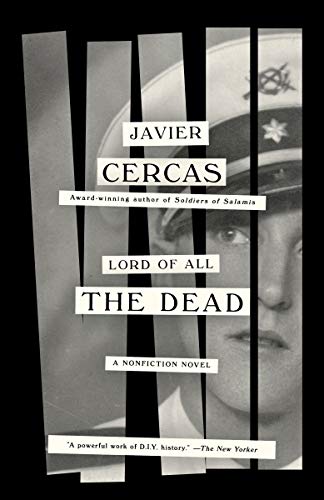
Javier Cercas, born in Spain in 1962, is a novelist and columnist whose internationally awarded works have been translated into over thirty languages. His deep engagement with Spain’s history and memory led him to write this book, which combines personal family investigation with broader historical analysis, revealing the complex legacy of the Spanish Civil War through the story of his great-uncle. Cercas’s background as a celebrated author gives this book a unique perspective that connects intimate biography with national history.
Javier Cercas was born in Spain in 1962. He is a novelist and columnist, and he has received numerous international awards. His books include Soldiers of Salamis (which has sold more than a million copies worldwide), The Anatomy of a Moment, The Tenant and The Motive, The Speed of Light, and The Impostor. His books have been translated into more than thirty languages. He lives in Barcelona.
2020·288 pages·Spanish Biography, Civil War, Family History, Historical Memory, Personal Identity
When Javier Cercas first discovered the complex legacy of his great-uncle Manuel Mena, he embarked on a deeply personal investigation into Spain’s turbulent history. This book unravels the intertwined stories of a family's memory and the broader Spanish Civil War, challenging simplistic labels by exploring Manuel’s life as both a young fascist soldier and a symbol of a generation’s trauma. You gain insights into historical memory, personal identity, and the enduring scars of conflict, all woven with Cercas’s novelist's eye for detail and narrative. This exploration benefits anyone interested in Spanish history, biography, and how personal stories illuminate national struggles.
This AI-created book on Spanish biography is written based on your background and goals, focusing on daily steps to deepen your understanding within one month. You share your current knowledge and the specific aspects of Spanish biography you want to explore. The book is then tailored to guide you through focused daily learning that fits your pace and interests. It makes sense for this subject because Spanish biography covers diverse eras and figures, so a customized day-by-day plan helps you build knowledge steadily without feeling overwhelmed.
TailoredRead AI creates personalized nonfiction books that adapt to your unique background, goals, and interests. Instead of reading generic content, you get a custom book written specifically for your profession, experience level, and learning objectives. Whether you're a beginner looking for fundamentals or an expert seeking advanced insights, TailoredRead crafts a book that speaks directly to you. Learn more.
This tailored book provides a personalized framework for deepening your understanding of Spanish biography through daily, actionable steps over a one-month period. It focuses on structured, progressive engagements with key historical figures, cultural contexts, and narrative techniques specific to Spanish life stories. The book cuts through general biography advice by delivering a tailored approach that fits your existing knowledge level, interests, and learning goals. Readers gain practical strategies for contextual analysis, chronological exploration, and thematic insight that connect individual narratives to broader Spanish history and culture. This personalized plan ensures efficient knowledge absorption by concentrating on relevant topics and avoiding extraneous content.
Diane Lorz Benitez met and married a Spanish engineer before moving from the United States to Madrid, where she lived through Franco's dictatorship. Her memoir paints a vivid picture of everyday life during this tense period, blending love, humor, and the lingering shadows of the Spanish Civil War. This personal narrative draws on her unique experience to reveal a side of Spanish history seldom told with such warmth and immediacy.
Diane Lorz Benitez met, fell in love, and married a successful Spanish engineer then promptly moved from the United States to Madrid, Spain. Her story of daily life during the dictatorship of Generalissimo Francisco Franco is filled with love and humor and the haunting specter of the Spanish Civil War. This is her first book. She lives in Scottsdale, Arizona.
Unlike most memoirs about historical regimes that focus heavily on political or military narratives, Diane Lorz Benitez offers a personal, intimate glimpse into life under Franco’s Madrid through the eyes of an American expatriate. You gain insight into the daily rhythms of a family navigating love and fear during a dictatorship, learning about the subtle social dynamics, quiet resilience, and the ever-present shadow of the Spanish Civil War. Chapters recount moments like letters home filled with anecdotes about maids, food, and in-laws, contrasting with the chilling reality of Franco's police and Alberto’s haunting memories. This book suits anyone interested in Spanish history who wants a nuanced, human perspective rather than a purely academic account.
Stanley G. Payne, the Hilldale–Jaume Vicens Vives Professor of History Emeritus at the University of Wisconsin–Madison, brings decades of expertise on Spanish history to this work. His access to the Franco Archive and collaboration with historian Jesús Palacios allowed them to craft a detailed account of Franco’s personal and political journey. Their scholarly approach offers readers an objective look at a leader whose impact still resonates in Spain today.
Stanley G. Payne is the Hilldale–Jaume Vicens Vives Professor of History Emeritus at the University of Wisconsin–Madison and the author of many books, including A History of Fascism, 1914–1945; The Franco Regime, 1936–1975; and Spain: A Unique History.
When Stanley G. Payne first examined the Franco Archive, long inaccessible to historians, he uncovered a trove of material that reshaped the narrative around General Francisco Franco's complex legacy. Drawing from his extensive background as a historian of Spain and coauthor Jesús Palacios’s insights, this biography balances Franco’s personal, military, and political life without veering into bias. You’ll gain a nuanced understanding of Franco’s rise as a young brigadier general, his pivotal role during the Spanish Civil War, and the evolution of his dictatorship over four decades. This book suits those who want a deep, measured study of one of Spain’s most controversial leaders, offering detailed chapters on his family life, military strategies, and political adaptations.
Best Books for General Audiences by American Association of School Librarians
Best Books for General Audiences by Public Library Reviewers
Gonzalo M. Quintero Saravia, a scholar with a J.S.D. and Ph.D. and former Fellow at Harvard's Weatherhead Center, draws on extensive archival research to shed light on Bernardo de Gálvez's critical but often overlooked contributions to the American Revolution. His academic background in eighteenth-century Spanish American history uniquely positions him to explore the complex interplay between empire, enlightenment ideals, and military strategy that defined Galvez’s career and Spain’s influence during this era.
Gonzalo M. Quintero Saravia, S.J.D., Ph.D., is the author of several books on eighteenth-century Spanish American history and a former Fellow at the Weatherhead Center for International Affairs at Harvard University.
Gonzalo M. Quintero Saravia, with his deep expertise as a scholar of eighteenth-century Spanish American history and former Harvard Weatherhead Center fellow, brings a nuanced perspective to Bernardo de Gálvez's pivotal role in the American Revolution. You’ll gain detailed insights into Galvez's military campaigns that strategically undermined British forces along the Mississippi and Gulf Coast, as well as his enlightened reforms as viceroy of New Spain. The book uncovers how Spain’s indirect involvement decisively shaped the war’s outcome and colonial North America’s future, making it an essential read if you want to understand the broader international dimensions of the Revolution beyond the usual Anglo-American narrative.
The best Spanish Biography books and more, in your inbox each week. No account needed.
Conclusion
These eight biographies weave themes of conflict, culture, and identity that define Spain’s layered history. If you’re drawn to wartime realities and ideological battles, start with Homage to Catalonia and Mine Were of Trouble to see contrasting Civil War viewpoints. For a rich cultural perspective, pair Gaudi with The Age of Disenchantments to understand art’s role in shaping Spanish identity.
Readers seeking a personal lens on historical trauma should explore Without a Second Thought and Lord of All the Dead, which reveal the human costs behind political turmoil. For broader historical sweep and military strategy, Bernardo de Gálvez and The Quest for El Cid offer essential context.
Once you’ve absorbed these expert insights, create a personalized Spanish Biography book to bridge general principles with your unique situation. This approach sharpens your understanding and fits your specific interests, saving you time while deepening your knowledge.
Frequently Asked Questions
I'm overwhelmed by choice – which book should I start with?
Start with Homage to Catalonia for a raw, personal perspective on the Spanish Civil War that sets the stage for many other stories in Spanish Biography.
Are these books too advanced for someone new to Spanish Biography?
Not at all. Several, like Without a Second Thought, offer intimate narratives that are accessible, while others provide deeper historical context as you explore further.
What's the best order to read these books?
Begin with Civil War accounts (Homage to Catalonia, Mine Were of Trouble), then explore cultural figures (Gaudi, The Age of Disenchantments), and finally broader historical biographies (Bernardo de Gálvez).
Do I really need to read all of these, or can I just pick one?
You can pick based on your interest—war history, culture, or biography. Each book stands alone but together they offer a fuller picture of Spanish history.
Are any of these books outdated given how fast Spanish Biography changes?
These works remain relevant due to their strong research and timeless personal narratives. Historical perspectives evolve slowly, and these offer foundational insights.
How can I get Spanish Biography insights tailored to my specific interests and background?
While these expert books offer broad insights, personalized Spanish Biography books can match your background and goals perfectly. Try creating your own tailored Spanish Biography book for focused learning.
📚 Love this book list?
Help fellow book lovers discover great books, share this curated list with others!