10 Strong AI Books Shaping Our Future Intelligence
Recommended by Bill Gates, Elon Musk, and Stuart Russell, these Strong AI books offer essential insights for enthusiasts and professionals alike.
Updated on June 28, 2025·We may earn commissions for purchases made via this page
2 of 10 books have Audiobook versions
We're launchingLaunching on Product Hunt today 🎉We just launchedJust launched on Product Hunt 🎉
Modelpeers, from the BookAuthority teamFrom the BookAuthority team: Modelpeers, a free way to follow AI models and agents like you follow people. We'd love your support.
What if the machines we build could not only think but surpass the very intelligence that created them? This isn't just science fiction—it’s a growing reality that Strong AI promises to bring. As AI progresses from narrow applications to systems capable of human-like reasoning, the stakes have never been higher. Understanding this transformation is crucial for anyone interested in technology’s future impact.
Leaders like Bill Gates, co-founder of Microsoft, have long advocated for deep understanding of AI's power and risks. Meanwhile, Elon Musk, CEO of Tesla and SpaceX, warns of the urgency in managing AI development responsibly. And Stuart Russell, a professor at UC Berkeley, offers foundational insights on aligning AI with human values. Their combined perspectives illuminate why these books matter.
While these expert-curated books provide proven frameworks to grasp Strong AI’s challenges and possibilities, you might find even greater value in creating a personalized Strong AI book tailored to your background, interests, and goals. This approach helps you dive deeper into the aspects of Strong AI most relevant to your journey.
Best for visionary futurists exploring AI's impact
Audiobook version not available
Tony Robbins, a business and life coach with deep insight into transformative technologies, endorses this book, lending significant weight to its exploration of AI’s future. His perspective as a motivational figure who understands human potential aligns with Kurzweil’s vision of expanding intelligence through technology. The author’s detailed assessment of AI’s exponential growth and human-machine integration resonates with Robbins’ focus on unlocking human capacity. Additionally, Bill Gates praises Kurzweil’s predictive accuracy in AI, reinforcing the book’s credibility among tech leaders. Together, these endorsements highlight the book’s authority as a guide to understanding the profound shifts strong AI will bring.
Ray Kurzweil is a world class inventor, thinker, and futurist, with a thirty-five-year track record of accurate predictions. He has been a leading developer in artificial intelligence for 61 years – longer than any other living person. He was the principal inventor of the first CCD flat-bed scanner, omni-font optical character recognition, print-to-speech reading machine for the blind, text-to-speech synthesizer, music synthesizer capable of recreating the grand piano and other orchestral instruments, and commercially marketed large-vocabulary speech recognition software. Ray received a GRAMMY® Award for outstanding achievement in music technology; he is the recipient of the National Medal of Technology and was inducted into the National Inventors Hall of Fame. He has written five best-selling books including The Singularity Is Near and How to Create a Mind. He is a Principal Researcher and AI Visionary at Google.
Ray Kurzweil’s decades-long work in artificial intelligence and technology innovation shapes this thoughtful update to his earlier vision of the Singularity. You’ll gain insights into how exponential growth in AI, nanotechnology, and biotechnology could expand human intelligence a millionfold and extend life far beyond current limits. Chapters on nanobots rebuilding the world atom by atom and connecting our brains to the cloud provide concrete examples of near-future possibilities. This book suits anyone curious about the intersection of technology and humanity’s future rather than casual readers seeking light futurism.
Daniel Kahneman, a Nobel laureate and professor at Princeton, considers this book a crucial read on AI’s future. Drawn by the urgency of understanding superintelligence, he praises it as "the most important book I have read in quite some time," highlighting its lucid explanation of AI risks and the hopeful solutions it offers. Kahneman's endorsement underscores the book’s ability to clarify complex AI control challenges, making it a vital guide for anyone concerned about how intelligent machines will coexist with humanity. Alongside him, Sam Harris echoes this sentiment, noting Russell as the most sensible voice on AI risk and calling this work the long-awaited definitive guide.
“This is the most important book I have read in quite some time. It lucidly explains how the coming age of artificial super-intelligence threatens human control. Crucially, it also introduces a novel solution and a reason for hope.” (from Amazon)
Stuart Russell is a professor of Computer Science and holder of the Smith-Zadeh Chair in Engineering at the University of California, Berkeley. He has served as the Vice-Chair of the World Economic Forum's Council on AI and Robotics and as an advisor to the United Nations on arms control. He is a Fellow of the American Association for Artificial Intelligence, the Association for Computing Machinery, and the American Association for the Advancement of Science. He is the author (with Peter Norvig) of the definitive and universally acclaimed textbook on AI, Artificial Intelligence: A Modern Approach.
When Stuart Russell, a leading AI researcher and Berkeley professor, examines the challenge of controlling superintelligent machines, he offers a fresh perspective that reshapes how you think about artificial intelligence. You’ll explore the risks of autonomous AI systems and the ethical dilemmas they pose, but more importantly, you’ll discover Russell’s proposal to design AI systems that remain uncertain about human preferences—making them inherently deferential and aligned with our values. Chapters detailing near-term applications like intelligent personal assistants and the potential misuse of AI add concrete context. This book suits anyone seriously interested in the future of AI governance and safety, though it might feel dense if you're seeking a casual overview.
This AI-created book on Strong AI is designed around your individual background and learning goals. By sharing your existing knowledge and the specific Strong AI topics you want to explore, you receive a book that focuses precisely on what matters most to you. This personalized approach helps you navigate complex ideas efficiently, making your study of Strong AI both deeper and more relevant to your interests.
TailoredRead AI creates personalized nonfiction books that adapt to your unique background, goals, and interests. Instead of reading generic content, you get a custom book written specifically for your profession, experience level, and learning objectives. Whether you're a beginner looking for fundamentals or an expert seeking advanced insights, TailoredRead crafts a book that speaks directly to you. Learn more.
This personalized book explores the vast and intricate world of Strong AI, offering a tailored journey that matches your unique background and interests. It covers foundational concepts as well as advanced theories, revealing how intelligent systems can mimic and eventually surpass human cognition. Through a careful synthesis of expert knowledge, this book focuses on your specific goals, providing insights into neural architectures, learning paradigms, ethical considerations, and future challenges. By concentrating on your chosen sub-topics, it delivers a rich, engaging experience that deepens your understanding of how Strong AI is shaping our technological horizon.
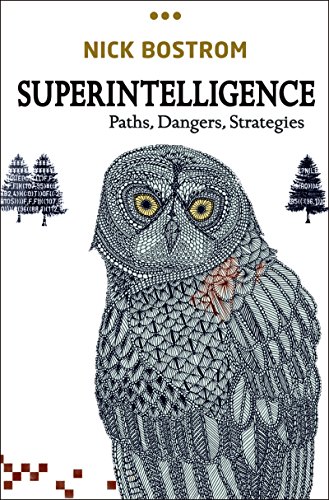
Bill Gates, co-founder of Microsoft and a leading voice on technology’s future, endorses this book strongly, saying "I highly recommend this book." Gates appreciates how the book offers a thorough exploration of the challenges posed by superintelligent machines, reflecting his deep engagement with artificial intelligence's promises and risks. His recommendation stems from a career spent navigating technology’s rapid evolution, making his perspective especially relevant. Alongside Gates, Elon Musk, CEO of Tesla and SpaceX, also recognizes the significance of this work, underscoring its importance for anyone concerned about AI’s trajectory.
Nick Bostrom is a Swedish-born philosopher and polymath with a background in theoretical physics, computational neuroscience, logic, and artificial intelligence, as well as philosophy. He is Professor at Oxford University, where he leads the Future of Humanity Institute as its founding director. Bostrom's widely influential work has illuminated the links between our present actions and long-term global outcomes, thereby casting a new light on the human condition. He is the author of over 200 publications, including 'Anthropic Bias' and 'Global Catastrophic Risks'. His writings have been translated into 28 languages, and he has been listed on Foreign Policy's Top 100 Global Thinkers list twice.
After decades studying the intersection of philosophy and technology, Nick Bostrom developed a rigorous framework to tackle one of the most profound questions humanity faces: what happens when machines surpass human intelligence? You’ll explore the potential paths toward superintelligence, the risks it poses, and strategies for keeping it under human control. Chapters detail scenarios like intelligence explosions and the AI control problem, unpacking complex concepts with precision. This book suits you if you want a deep, thoughtful examination of strong AI's future and its ethical and strategic challenges.
Elon Musk, CEO of SpaceX, Tesla, and Neuralink, brings unmatched insight into the future of artificial intelligence, making his recommendation of this book particularly significant. His experience overseeing cutting-edge AI projects informs his concern about the risks Barrat outlines. Musk’s endorsement signals that this is not just speculative fiction but a serious exploration of AI’s potential to surpass human intelligence and the challenges that will follow. Alongside him, Sam Harris, author and neuroscientist, also highlights the importance of this work in understanding AI’s impact, reinforcing its status as a vital read for anyone engaged with the future of technology.
“@opineno @jrbarrat IMHO “Our Final Invention” is one of the best books ever written on the dangers of AI. I had the pleasure of meeting James for the first time back in 2015, just after I read his book. James is also an accomplished documentary filmmaker.” (from X)
James Barrat is a documentary filmmaker who’s written and produced films for National Geographic, Discovery, PBS, and many other broadcasters in the United States and Europe. He lives near Washington, DC with his wife and two children.
What happens when documentary filmmaking expertise meets the urgent topic of artificial intelligence? James Barrat, drawing on his investigative background, explores the complex risks of AI evolving beyond human control. You’ll gain a nuanced understanding of the AI control problem, the survival drives of superintelligent machines, and the societal stakes involved, especially through profiles of key industry figures. This book suits anyone seriously curious about AI’s future—not just technologists but also policymakers and thoughtful observers wary of unchecked innovation.
Brent Oster is a recognized expert in artificial intelligence with a deep understanding of its societal implications, complemented by Gunnar Newquist's insights into neuroscience. Their collaboration brings a multifaceted perspective to artificial general intelligence, combining technical rigor with an exploration of the human brain's workings. Their combined expertise drives a book that aims to clarify the state of AI and illuminate the path toward AGI for a wide audience, including students, professionals, and policymakers.
Brent Oster is a recognized expert in artificial intelligence, with extensive experience in the field. He has authored several works that explore the implications of AI technology on society and the future of human intelligence. Alongside him, Gunnar Newquist contributes valuable insights into the neuroscience behind AI, making their collaboration a significant contribution to the understanding of artificial general intelligence.
Drawing from Brent Oster's extensive background in artificial intelligence and Gunnar Newquist's expertise in neuroscience, this book offers a clear-eyed examination of where AI technology currently stands and how it compares to human cognition. You explore the strengths and limits of modern deep learning techniques, gain insights into the neuroscience of the brain, and follow a detailed framework for designing artificial general intelligence (AGI) inspired by human neural architecture. The authors also provide concrete examples of AGI applications across sectors like medicine, finance, and defense, alongside thoughtful forecasts of its evolving impact. This is a fitting read for anyone eager to understand the technical and societal dimensions of AGI without getting lost in jargon or hype.
This personalized AI book about AGI learning is created after you share your background, skill level, and which AGI topics you want to focus on. You also tell us your specific goals, and the book is written to help you achieve those rapidly and effectively. By tailoring the content to your unique needs, this AI-crafted guide bridges expert knowledge with your personal learning journey, making complex AGI concepts approachable and relevant.
TailoredRead AI creates personalized nonfiction books that adapt to your unique background, goals, and interests. Instead of reading generic content, you get a custom book written specifically for your profession, experience level, and learning objectives. Whether you're a beginner looking for fundamentals or an expert seeking advanced insights, TailoredRead crafts a book that speaks directly to you. Learn more.
This tailored book explores the rapidly evolving world of Artificial General Intelligence (AGI) through a focused, personalized lens. It covers foundational concepts and advances in AGI, emphasizing rapid, practical actions aligned with your unique learning objectives. By tailoring content to your background and goals, it bridges complex expert knowledge with your specific interests, enabling a deep yet accessible understanding of AGI. The book examines key AGI principles, development challenges, and future possibilities, providing a clear pathway tailored to your pace and priorities. This personalized approach facilitates efficient learning, helping you build skills and insights that resonate with your ambitions in AGI.
Best for cognitive science and AI theory enthusiasts
Audiobook version not available
Herbert L. Roitblat is Principal Data Scientist at Mimecast, bringing a lifelong background in computers and artificial intelligence to this work. His focus on the quest for general artificial intelligence and his examination of the limits of current AI systems set this book apart. Roitblat explores essential human intelligence features that computational approaches have yet to address, offering readers a unique lens on why true general AI remains out of reach and what breakthroughs might be necessary.
Herbert L. Roitblat is Principal Data Scientist at Mimecast, with a lifelong background in computers and artificial intelligence. His work focuses on the quest for general artificial intelligence, exploring the limitations of current AI systems and the essential features of human intelligence that remain unaddressed by computational approaches.
What if everything you knew about artificial intelligence was wrong? Herbert L. Roitblat argues that current AI systems, while advanced, fall short of achieving true general intelligence because they rely solely on algorithms that solve well-defined problems. Instead, he highlights the critical role of insight—our ability to navigate ill-structured problems and create new problem-solving paths—which remains unexplored by computational models. Drawing from psychology, philosophy, and cognitive science, Roitblat unpacks essential features like perception, analogy, and creativity that differentiate human intelligence from machines. If you want a deeper understanding of why general AI remains elusive and what it truly entails, this book guides you through the nuances that typical AI discussions overlook.
Best for readers interested in AGI's real-world impact
Audiobook version not available
Daniel D. Lee is the visionary curator behind SkyCuration, blending decades of global cultural experience with technical expertise from finance and medical sectors. His unique perspective shapes this book, which illuminates the complex journey toward Artificial General Intelligence, offering you a lens to understand both the technology and its broader societal implications.
Daniel D. Lee is the visionary curator behind SkyCuration—a unique approach to literature that goes beyond traditional storytelling. Born in Chicago and raised in Philadelphia, Lee's diverse background reflects the rich tapestry of American culture. With an international perspective shaped by living in 20 countries, Lee brings a global flair to his creative endeavors. An alumnus of Georgia Institute of Technology, Lee has applied his expertise to significant projects in the financial and medical sectors. SkyCuration, Lee's brainchild, fuses cutting-edge technology with artistic brilliance, creating a constantly evolving literary experience.
Daniel D. Lee brings a distinct blend of global experience and technical insight to this exploration of Artificial General Intelligence, drawing from his work in finance and medicine to frame OpenAI's mission in real-world contexts. You gain a detailed look at the technical milestones and philosophies driving AGI development, including chapters on ethical frameworks and governance. The book’s examination of AGI’s impact on sectors like healthcare and urban planning offers concrete perspectives on future challenges and opportunities. This book suits those who want a thoughtful, nuanced understanding of AGI’s evolving landscape rather than a purely technical manual or hype-driven narrative.
Reynaldo Nuncio is an economist, businessman, and AI researcher with a rich background in technology and economics. As president emeritus of the National Institute of Informatics and Communication in Mexico, he draws on his extensive experience to navigate the complex landscape of Strong Artificial Intelligence. His book offers insights grounded in both economic theory and technological realities, aiming to clarify what the AI revolution means for individuals and society alike.
Reynaldo Nuncio is an economist businessman, teacher, business consultant, Artificial Intelligence researcher, and science and technology writer. He has published seven books on computers, software, and Artificial Intelligence. He has a degree in Economics. He is currently president emeritus of the National Institute of Informatics and Communication in Mexico. He was president of the US Hispanic Chamber of Commerce Mexico Chapter and has published some books for the Hispanic community on computers, software, and Artificial Intelligence.
After years studying the economic and technological shifts driven by AI, Reynaldo Nuncio presents a grounded look at the rapid emergence of what he terms Strong Artificial Intelligence—the point when machine intelligence surpasses human cognition. You’ll find detailed explorations of AI’s potential impacts on privacy, employment, and society’s future, with chapters that tackle both benefits and existential risks. This book suits anyone curious about the broad implications of AI beyond hype, especially those seeking to understand the nuanced debate about AI’s trajectory and ethical concerns. While it doesn’t offer technical blueprints, it provides a thoughtful framework for grasping the AI revolution’s complexity and urgency.
Dr. Ben Goertzel, a mathematician and AI expert, leads several pioneering AI initiatives including the AGI Society and OpenCog Foundation. With a PhD from Temple University and a prolific career spanning academia and industry, he brings unmatched authority to the subject. His book offers an insider’s view on how AGI evolved from theory to the forefront of technological innovation, reflecting his unique blend of mathematical rigor and visionary foresight.
Dr. Ben Goertzel leads the AGI Society and the OpenCog Foundation; and serves as Chief Scientist of robotics firm Hanson Robotics, and Chairman of investment management firm Aidyia Holdings and AI consulting firm Novamente LLC. He is also Vice Chair of futurist group Humanity+, and co-founder of Ethiopian AI/robotics firm iCog Labs. Previously, Ben served as a university faculty in several departments of mathematics, computer science and cognitive science in US, Australia and New Zealand. Ben has published 15 books on AI and related topics, and more than 100 scientific papers. He earned his PhD in mathematics from Temple University in 1989. He has 3 grown children, and lives in Hong Kong with his wife Ruiting Lian and two very energetic poodles.
This isn't another AI book promising vague breakthroughs; Dr. Ben Goertzel draws from decades immersed in both academia and industry to chart the actual rise of Artificial General Intelligence (AGI). You gain detailed insight into the human brain’s workings and the competing approaches to AGI, including Goertzel’s OpenCog project, which aims to replicate human-like mental autonomy and creativity. The book also explores broader implications, such as using AGI to tackle human aging and society-wide transformations expected from superintelligent systems. If you want a deep dive into AGI’s technical and philosophical landscape from a pioneer’s perspective, this book suits you well, though it demands your full attention to grasp its complexities.
Sonja Mel, a notable tech influencer, highlights this book as essential if you’re curious about consciousness and AI, praising its insights into how we process the world. Her endorsement gains weight given her deep engagement with technology and gaming culture, showing how this book resonates beyond academia. Similarly, Tobias S, a designer who’s revisited this work multiple times during his projects, underscores its relevance for creative professionals exploring mind and machine. Their combined recommendations frame this as a significant read for anyone serious about understanding strong AI’s foundations.
“This book in the photo is How to Create a Mind - Ray Kurzweil.. I just finished it a few days ago 🤯, if you’re interested in consciousness, how we process our world, AI it’s a must read.” (from X)
Ray Kurzweil is a world-class inventor, thinker, and futurist, with a thirty-five-year track record of accurate predictions. He has been a leading developer in artificial intelligence for 61 years – longer than any other living person. He was the principal inventor of the first CCD flat-bed scanner, omni-font optical character recognition, print-to-speech reading machine for the blind, text-to-speech synthesizer, music synthesizer capable of recreating the grand piano and other orchestral instruments, and commercially marketed large-vocabulary speech recognition software. Ray received a Grammy Award for outstanding achievement in music technology; he is the recipient of the National Medal of Technology and was inducted into the National Inventors Hall of Fame. He has written five best-selling books including The Singularity Is Near and How To Create A Mind, both New York Times best sellers, and Danielle: Chronicles of a Superheroine, winner of multiple young adult fiction awards. His forthcoming book, The Singularity Is Nearer, will be released June 25, 2024. He is a Principal Researcher and AI Visionary at Google.
During decades pioneering artificial intelligence, Ray Kurzweil developed a distinctive view on how the human brain creates thought. In this book, he shares his theory of the brain’s pattern recognition system and how it gives rise to consciousness and intelligence. You’ll explore detailed mechanisms behind mental processes and their implications for building machines that think. Chapters delve into emotional intelligence, moral reasoning, and the future merging of humans with AI technologies. This book suits anyone curious about the intersection of neuroscience and AI, especially those interested in how mind and machine might converge.
The best Strong AI books and more, in your inbox each week. No account needed.
Conclusion
This collection reveals three key themes: the exhilarating promise of vastly expanded intelligence, the profound ethical and control challenges we face, and the diverse technical paths researchers explore toward true Artificial General Intelligence. If you’re grappling with AI safety, starting with Human Compatible will ground you in control issues. For understanding AI’s societal shifts, Strong Artificial Intelligence offers valuable frameworks. Looking for technical depth? Pair Algorithms Are Not Enough with AGI Revolution for a rigorous exploration.
Alternatively, you can create a personalized Strong AI book to bridge the gap between general principles and your specific situation. These books will accelerate your learning and empower you to engage thoughtfully with one of the most transformative technologies of our time.
Frequently Asked Questions
I'm overwhelmed by choice – which book should I start with?
Start with "Human Compatible" by Stuart Russell if you want to understand AI risks and control. It lays a solid foundation for grasping the challenges of Strong AI. Once comfortable, explore "Superintelligence" for strategic insights or "How to Create a Mind" for brain-based models.
Are these books too advanced for someone new to Strong AI?
Not necessarily. While some books like "AGI Revolution" delve deep, others such as "The Singularity Is Nearer" and "Our Final Invention" are accessible and provide broad overviews. Choose based on your comfort with technical material and interest areas.
What's the best order to read these books?
Begin with accessible introductions like "The Singularity Is Nearer" or "Our Final Invention" to get a broad view. Then move to technical and ethical analyses in "Superintelligence" and "Human Compatible." Finish with specialized reads like "Algorithms Are Not Enough."
Do I really need to read all of these, or can I just pick one?
You can pick based on your focus. For ethical and control issues, "Human Compatible" is essential. For understanding AI's future impact, "Superintelligence" is key. Reading multiple books offers richer perspectives but one book can still provide valuable insights.
Which books focus more on theory vs. practical application?
"Algorithms Are Not Enough" and "How to Create a Mind" lean toward theoretical and cognitive science aspects. Meanwhile, "OpenAI's AGI" and "Artificial General Intelligence" explore practical applications and design frameworks in real-world contexts.
How can I tailor these expert insights to my specific AI interests or career goals?
Great question! While these books provide foundational knowledge, creating a personalized Strong AI book lets you target your unique interests and goals. This bridges expert knowledge with your situation, delivering focused strategies and insights. Check out creating a personalized Strong AI book to get started.
📚 Love this book list?
Help fellow book lovers discover great books, share this curated list with others!