10 Studying Books That Transform Your Learning Journey
Recommended by Steven Pinker, Kevin Kelly, and Stephen Kosslyn for effective Studying Books insights
Updated on June 28, 2025·We may earn commissions for purchases made via this page
10 of 10 books have Kindle versions
We're launchingLaunching on Product Hunt today 🎉We just launchedJust launched on Product Hunt 🎉
Modelpeers, from the BookAuthority teamFrom the BookAuthority team: Modelpeers, a free way to follow AI models and agents like you follow people. We'd love your support.
What if the secret to mastering any subject lies not in studying harder, but in studying smarter? For decades, students have wrestled with ineffective habits—highlighting without focus, cramming sessions that fade fast, and lectures that blur together. Yet today, cognitive psychology and educational science offer fresh perspectives that challenge these old routines and open new pathways to learning success.
Experts like Steven Pinker, renowned cognitive psychologist, and Kevin Kelly, technology commentator and author, have championed books that rethink how you absorb and retain knowledge. Meanwhile, Stephen Kosslyn, president of Foundry College, has highlighted practical approaches that bring theory to life, especially in the era of online learning. Their endorsements come from direct experience, reflecting both research and real-world classroom innovation.
While these expert-curated books provide proven frameworks, readers seeking content tailored to their specific background, goals, and learning style might consider creating a personalized Studying book that builds on these insights. This approach can bridge general principles with your unique study challenges, accelerating your journey to mastery.
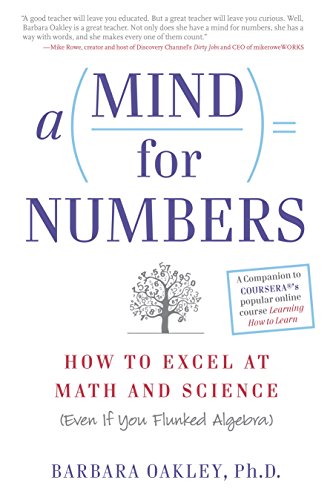
Michael Shaughnessy, past president of the National Council of Teachers of Mathematics, brings a wealth of expertise in math education to his recommendation of this book. He highlights its value across any problem-solving realm, noting, "A Mind for Numbers is an excellent book about how to approach mathematics, science, or any realm where problem solving plays a prominent role." His endorsement reflects the book’s broad applicability and depth, showing how Oakley’s methods can reshape your approach to challenging subjects. Following Shaughnessy, James Taranto, op-ed editor at The Wall Street Journal, praises its accessible insights into human cognition, reinforcing why this book deserves your attention.
Past President, National Council of Teachers of Mathematics
“A Mind for Numbers is an excellent book about how to approach mathematics, science, or any realm where problem solving plays a prominent role.” (from Amazon)
Barbara Oakley is a professor of engineering at Oakland University in Rochester, Michigan. Her research has been termed 'revolutionary' by the Wall Street Journal. She has received many national awards for her teaching, including the American Society of Engineering Education Chester F. Carlson Award for outstanding technical innovation in STEM pedagogy and the Theo L. Pilkington Award for exemplary work in bioengineering education. Her Coursera-UC San Diego course Learning How to Learn, created with her co-instructor Terrence Sejnowski, the Francis Crick Professor at the Salk Institute, is the most popular massive open online course in the world, with nearly 2 million students to date.
Barbara Oakley’s engineering background and personal struggle with math drive this approachable guide to mastering math and science. You’ll learn how to harness different modes of thinking—analytical and creative—to tackle problems more effectively, as she explains with examples like the numerous proofs of the Pythagorean theorem. The book challenges the idea that intense, focused study is the sole path to understanding, instead advocating for mental breaks that engage creativity. Whether you’re a student facing tough STEM classes or someone pivoting careers, Oakley’s insights provide practical mental tools to navigate intimidating subjects with less frustration.
Steven Pinker, a cognitive psychologist known for his work on language and mind, was drawn to this book during his exploration of how psychology informs learning. He calls it "One of psychology" that insightfully bridges theory and practice, reshaping how students approach studying. Pinker's endorsement highlights the book's ability to challenge common misconceptions and equip students with evidence-based strategies. Alongside Pinker, Stephen Kosslyn, president and CEO of Foundry College, praises Paul Penn as the academic advisor every student wishes for, combining wisdom with humor. Their perspectives underline why this book is a resource worth your attention if you want to rethink your study habits.
Dr. Paul Penn has been a lecturer in Psychology since 2007. He is a Chartered Scientist, Psychologist and member of the British Psychological Society’s Division of Academics, Researchers and Teachers in Psychology. He is also a fellow of Advance HE (formerly the Higher Education Academy). In June 2021 Paul was named the Higher Education Psychology Teacher of the Year in recognition of his efforts to improve the communication of advice from psychology on effective studying to students in higher education and those who support them. He offers consultancy on using psychological research to improve learning and presentation skills. Paul has a YouTube channel that provides video guides on effective studying.
What happens when psychology expertise meets the struggles of university students? Paul Penn, a Chartered Scientist and award-winning Higher Education Psychology Teacher of the Year, draws from his extensive academic background to expose common study mistakes and how to fix them. You’ll discover not just time management and note-taking tips, but also how cognitive psychology explains why some study habits fail and how to replace them with better strategies. For example, Penn’s chapter on academic integrity tackles tricky ethical dilemmas with straightforward advice. If you're starting your degree or want to sharpen your academic skills, this book offers clear, research-backed guidance without pretension.
Higher Education Psychology Teacher of the Year 2021
This personalized AI book about study techniques is created after you share your background, your current study skills, and the specific learning areas you want to improve. By focusing on your unique goals and interests, this book provides tailored insights that make mastering any subject more effective. It moves beyond generic advice and offers a clear, customized path through complex study concepts, helping you learn in ways that truly fit you.
TailoredRead AI creates personalized nonfiction books that adapt to your unique background, goals, and interests. Instead of reading generic content, you get a custom book written specifically for your profession, experience level, and learning objectives. Whether you're a beginner looking for fundamentals or an expert seeking advanced insights, TailoredRead crafts a book that speaks directly to you. Learn more.
2026·50-300 pages·Studying, Study Techniques, Learning Styles, Memory Enhancement, Time Management
This personalized book explores tailored study techniques designed to help you master any subject with efficiency and confidence. It examines how your unique background and learning preferences influence your study habits, then focuses on methods that resonate specifically with your goals. By blending insights from cognitive science with your personal interests, the book reveals pathways to deepen understanding and retain knowledge effectively. It offers a carefully curated learning journey that avoids one-size-fits-all advice, instead concentrating on your individual needs and challenges. This tailored approach ensures that complex concepts become accessible and engaging, empowering you to study smarter, not harder.
Bob Kerrey, former U.S. Senator and President Emeritus of The New School, emphasizes this book's importance for anyone involved in online education, especially after the pandemic forced so many into virtual learning spaces. He highlights Professor Kosslyn's lifelong dedication to understanding how people learn and praises the book's lessons for thriving in virtual classrooms. His endorsement reflects the book’s practical impact on improving online learning experiences. Similarly, Aaron Rasmussen, founder of Outlier.org and co-founder of MasterClass, calls it his go-to recommendation, valuing its blend of theory and application without unnecessary fluff. Their insights underscore why this book is a valuable guide for educators aiming to bring their online courses to life.
Former U.S. Senator; President Emeritus, The New School
“Every parent and student who were already online learners or who have been pushed by the pandemic into the online world should read this book. Professor Kosslyn has dedicated his academic life to the study of how human beings learn and has developed extremely valuable lessons in how to thrive in a virtual classroom.” (from Amazon)
Stephen M. Kosslyn is currently the Founder, President and Chief Academic Officer of Foundry College and is Founder and President of Active Learning Sciences. Prior to that, he was Founding Dean and Chief Academic Officer of the Minerva Schools at the Keck Graduate Institute. He previously served as Director of the Center for Advanced Study in the Behavioral Sciences at Stanford University after having been chair of the Department of Psychology, Dean of Social Science, and the John Lindsley Professor of Psychology at Harvard University. While at Harvard, he was also co-director of the Mind of the Market Lab at Harvard Business School and a member of the Department of Neurology at the Massachusetts General Hospital. He received a B.A. from UCLA and a Ph.D. from Stanford University, both in psychology. Kosslyn's research has focused on the nature of visual cognition, visual communication, and the science of learning; he has authored or coauthored 15 books and over 350 papers on these topics. Kosslyn has received numerous honors, including the National Academy of Sciences Initiatives in Research Award, a Guggenheim Fellowship, three honorary Doctorates (University of Caen, University of Paris Descartes, Bern University), and election to the American Academy of Arts and Sciences.
While working as an educational innovator and founder of Foundry College, Stephen M. Kosslyn noticed how the rapid shift to online learning during the COVID-19 pandemic revealed a gap in engaging virtual courses. This book distills five scientifically-supported principles—deep processing, chunking, building associations, dual coding, and deliberate practice—into practical exercises that enliven both synchronous and asynchronous online classes. You’ll learn how to design activities that boost student engagement and retention, with tools to tailor exercises to your subject matter. If you're an instructor, course designer, or administrator seeking to enhance online education, this book offers concrete methods grounded in cognitive psychology rather than vague theory.
Tom Varghese Jr. Md Ms Facs, a thoracic surgeon and professor deeply involved in medical education, highlights this book among his top recommendations. His endorsement reflects a professional commitment to advancing effective learning in high-stakes environments. Though brief, his recognition signals the book’s impact across demanding fields where memory and skill mastery are critical. If you’re looking to adopt scientifically backed study methods that resonate even with experts in medicine, this book offers a clear path forward.
“@DrHowardLiu @ellenbraaten @AmandaMorin @echamblet @DouglasMGriffin @Ian_Willoughby @raneutill @LauraFlowersE @DrDanielGih @MVGutierrezMD @JulieSilverMD @SAStrongMD Grateful for the nomination. 🙏🏾
Post a pic of a great book. No explanation. Nominate 6 people to do the same.
@TsengJennifer @JBMatthews @DissanaikeMD @DrNwomeh @AmaliaCochranMD @callie_mt
#SurgeonsWhoRead” (from X)
What happens when cognitive psychology meets practical learning strategies? Peter C. Brown, along with Henry L. Roediger III and Mark A. McDaniel, draws from a decade-long collaboration among leading memory experts to challenge traditional study habits. You’ll learn why techniques like highlighting and rereading often fail, while methods such as self-testing, spaced repetition, and interleaving yield lasting retention. The book offers clear examples and actionable insights into how to improve your learning effectiveness, making it especially useful if you’re a student, educator, or lifelong learner seeking to upgrade your study approach.
Dr Dietmar Sternad brings his extensive background as a professor of international management and former CEO of publishing companies to this guide, combining leadership experience with academic expertise. His passion for helping students succeed is evident in this book, which addresses the challenges of thesis writing with clarity and practical support. Alongside Harriet Power’s editing expertise, their collaboration delivers a resource designed to ease the journey from initial idea to completed thesis, making it a valuable companion for students navigating graduate studies.
Dr Dietmar Sternad is a passionate management educator and Professor of International Management at CUAS/FH Kärnten (Austria). He has extensive experience as a CEO of publishing companies and in teaching, consulting, and coaching top managers. He holds degrees from universities in Austria, Slovenia, and the UK, and has received several national and international awards, including from the Academy of Management and the Austrian State Prize for Teaching Excellence. He is also the founder and CEO of econcise, an internationally active publisher of concise management and leadership textbooks.
Dr Dietmar Sternad’s decades of experience as a management professor and CEO shaped this straightforward guide aimed at students wrestling with thesis writing. You’ll learn how to select a research topic, craft a persuasive proposal, perform literature reviews, and apply both qualitative and quantitative methods effectively. The book also tackles mindset challenges and academic writing style, offering practical insights without overwhelming you. If you’re a graduate student in social sciences or an undergrad facing a thesis, this book walks you through common hurdles with clear examples and tips drawn from real academic settings.
This personalized AI book about study planning is created based on your current habits, skill level, and the areas you want to improve most. By sharing your specific goals and challenges, the book is crafted to offer daily, manageable actions that fit your unique learning style. This approach makes mastering study techniques more practical and engaging, helping you build momentum and see real progress each day.
TailoredRead AI creates personalized nonfiction books that adapt to your unique background, goals, and interests. Instead of reading generic content, you get a custom book written specifically for your profession, experience level, and learning objectives. Whether you're a beginner looking for fundamentals or an expert seeking advanced insights, TailoredRead crafts a book that speaks directly to you. Learn more.
2026·50-300 pages·Studying, Study Habits, Time Management, Memory Techniques, Focus Enhancement
This tailored book explores a personalized 30-day journey designed to transform your study habits through daily, actionable steps. It examines effective techniques and cognitive principles that align with your background and goals, focusing on building consistent routines and sharpening focus. The content reveals how to organize study sessions, manage time efficiently, and apply proven methods to enhance memory and comprehension. By delivering a tailored path, the book matches your interests and addresses your specific challenges, helping you steadily improve your learning skills over a month. This approach bridges expert knowledge with your unique needs, making study success both attainable and sustainable.
Anneliese A. Singh, PhD, LPC, brings her award-winning scholarship and deep commitment to social justice to this guide, drawing on her extensive teaching experience in academic writing and qualitative research methods. As the inaugural Chief Diversity Officer at Tulane University and a prolific author on topics ranging from racial healing to LGBTQ+ empowerment, Singh offers readers a rich blend of expertise and practical tools designed to help social and behavioral scientists succeed in their writing and publishing efforts.
Anneliese A. Singh, PhD, LPC, is an award-winning social justice scholar, author, speaker, and community organizer who speaks on a wide variety of racial healing; racial justice; diversity, equity and inclusion; and LGBTQ+ topics. She is the inaugural Chief Diversity Officer at Tulane University, where she is Professor in the School of Social Work and has a joint appointment in the Department of Psychology. Dr. Singh has taught widely on qualitative research methods and academic writing in the behavioral and social sciences. Her research, practice, advocacy, and more than 100 publications explore the resilience and liberation experiences of trans people, people of color, survivors of trauma, and South Asian immigrants, as well as social justice and empowerment training. Dr. Singh founded the Georgia Safe Schools Coalition and the Trans Resilience Project to translate her LGBTQ+ research findings into school and community-based change efforts. She has given TEDx talks on gender liberation and is a frequent workshop presenter. Dr. Singh’s pronouns are she/her/hers and they/them/theirs.
Anneliese A. Singh's extensive experience as a social justice scholar and educator deeply informs this guide, crafted specifically for social and behavioral scientists grappling with academic writing challenges. You’ll learn how to tailor your voice for specific academic communities and master the structure and style needed for qualitative, quantitative, or mixed-methods research articles. The book offers detailed guidance on selecting the right journals and navigating publication hurdles, alongside exercises and annotated excerpts that sharpen your skills. If you’re committed to elevating your scholarly writing and understanding the publication landscape, this book provides clear strategies and practical reflections to keep your projects on track.
Kevin Kelly, a respected author and technology commentator, discovered this book while seeking better ways to learn languages independently. He described it as "the book I'd use next time I want to learn a new language," praising its smart combination of web resources, apps, and voice training for accelerated learning. This endorsement highlights how Wyner’s approach reshaped Kevin’s understanding of language acquisition, making it accessible and effective. Alongside him, Ilan Stavans applauds the book’s humor and practical toolbox for overcoming language barriers, reinforcing why you should consider this method if you're serious about mastering a new tongue.
“This is the book I'd use next time I want to learn a new language. It employs an intelligent mix of the latest methods for learning a language on your own using the web, apps, and voice training tips in an accelerated time frame.” (from Amazon)
Gabriel Wyner graduated summa cum laude at USC, where he won the school’s Renaissance Award. His essay on language learning for Lifehacker.com was one of the site’s most read in 2012. After not getting anywhere in 5 years of high school language classes, he reached fluency in German in 14 weeks with the help of the immersive Middlebury Language Schools. As a result, he fell in love with the process of language learning, going on to spend two months in intensive Italian courses in Perugia, Italy. Searching for ways to bring the immersion experience into the home, he began to develop a system that rapidly builds fluency in short, daily sessions. In 2010, his efforts paid off. He learned French to fluency in 5 months, and then Russian in 10 months. Currently learning Japanese, Gabe learned Hungarian and Spanish between 2013-2017. His book on language learning – Fluent Forever: How to learn a language fast and never forget it – was released in 2014 and became a WSJ and USA Today national bestseller. In 2017, he launched the most successful crowdfunding campaign for an app in history, raising more than $1.7 million dollars to create The Fluent Forever App.
What happens when a summa cum laude linguistics enthusiast rethinks language learning? Gabriel Wyner, after struggling through traditional classes, devised a method that rewires how you hear and produce foreign sounds, starting with pronunciation techniques borrowed from opera singers and actors. You learn to connect words to images instead of translations, fostering true thinking in your target language. The book also introduces spaced repetition systems that help you memorize hundreds of words in minutes daily. If you want to move beyond rote memorization and engage with language more naturally, this book offers a clear path forward, though it’s best suited for self-motivated learners ready to commit to daily practice.
Jari Saramäki is a professor of computational science with over 100 published papers across diverse fields from molecular biology to social networks. His passion for scientific writing led him to create a guide that distills his extensive experience into a straightforward process for PhD students. This book reflects his interdisciplinary expertise and practical understanding of the challenges in academic publishing, providing you with tools to improve your writing and successfully share your research.
Jari Saramäki is a professor of computational science with over 100 published papers. His interdisciplinary research spans various fields, including the social fabric of smartphone users, the genetic structure of ant supercolonies, and the molecular biology of the human immune system. He is passionate about scientific writing and aims to help others improve their writing skills.
The methods Jari Saramäki developed while navigating his extensive academic career form the backbone of this guide, aimed specifically at PhD students struggling to turn complex research into publishable papers. You’ll learn how to distill your findings into a clear, focused message and craft every section of a scientific paper—from abstract to discussion—with precision, using templates and practical tips that simplify the process. Chapters such as "How to Write the Introduction" and "Tips for Editing Sentences" offer concrete strategies for improving clarity and flow, making it easier to overcome writer’s block and handle peer reviews. This book suits doctoral students and early-career researchers who want a structured, no-frills approach to scientific writing without getting lost in jargon or overwhelming detail.
Dr. Katarzyna Peoples, with advanced degrees in counseling psychology from Duquesne University and extensive experience in addiction counseling and academic supervision, brings a unique perspective to guiding students through phenomenological dissertations. As a core faculty member at Walden University, she combines practical expertise with scholarly insight, making this book a valuable companion for graduate students tackling complex qualitative research.
Dr. Katarzyna Peoples studied Existential Psychology at Duquesne University and earned her Bachelor’s, Master’s, and Doctorate in Counseling Psychology there. She has worked in the addictions field since 1999 and has experience in relationship and marriage counseling. Currently, she is a core faculty member in the Counselor Education and Supervision Doctoral program at Walden University. Dr. Peoples has authored books, chapters, and journal articles on various topics related to counseling, teaching, and philosophy, and runs an online marriage counseling practice.
Dr. Katarzyna Peoples draws on decades of experience in counseling psychology and academic supervision to demystify the challenges of phenomenological dissertations. You’ll find detailed guidance on structuring each chapter—from literature review to methods, results, and discussion—tailored specifically to phenomenological research's unique demands. The book balances flexibility with necessary academic frameworks, featuring practical checklists and tables that help you navigate personal experience as data. Notably, it offers a chapter on developing your own phenomenological method, encouraging innovation beyond the dissertation itself. This book suits graduate students in social, behavioral, or health sciences ready to tackle phenomenology with clarity and confidence.
Successful Student Publications is a dedicated team focused on making writing accessible and manageable for students across proficiency levels. Their experience in identifying common writing challenges fuels this book, which offers clear, step-by-step guidance specifically designed to help young learners gain confidence and competence in essay writing. Their mission to equip students with practical writing tools shines through every chapter, empowering you to succeed both inside and outside the classroom.
Successful Student Publications is a small team of ambitious collaborators pioneering the world of writing by offering easy-to-use and accessible information for students and individuals of all proficiency levels to improve their writing skills. Through extensive experience and meticulous processes, they formulate step-by-step approaches to conquering common writing and ELA pitfalls that may serve as weak points for many students and individuals. Their vision is to equip young minds with the knowledge and tools to be successful within the classroom and beyond.
What happens when focused expertise meets the challenge of teaching essay writing? Successful Student Publications breaks down the five-paragraph essay into manageable parts that demystify the writing process for students from fifth to twelfth grade. You’ll discover detailed chapters on crafting thesis statements, selecting engaging topics, and mastering outlining techniques, all reinforced with exercises to build confidence. This guide doesn’t just tell you what to do; it shows you how to think through each step, making it especially useful if you’ve ever felt lost when staring at a blank page. If you want a straightforward path to sharpen your writing skills without feeling overwhelmed, this book fits the bill.
The best Studying books and more, in your inbox each week. No account needed.
Conclusion
Across these ten books, a few clear themes emerge: the importance of active engagement over passive reading, leveraging cognitive science to build durable knowledge, and the value of tailoring study strategies to your academic context. Whether you’re grappling with STEM subjects, language acquisition, or academic writing, these works offer guidance grounded in research and honed by educators.
If you're facing the challenge of thesis writing, start with The Thesis Writing Survival Guide for practical steps and mindset support. For rapid improvement in memory and retention, combine Make It Stick with A Mind for Numbers. Language learners will find Fluent Forever a refreshing change from traditional methods. For those navigating PhD-level writing, How to Write a Scientific Paper and How to Write a Phenomenological Dissertation provide focused, actionable advice.
Alternatively, you can create a personalized Studying book to bridge the gap between general principles and your specific situation. These books can help you accelerate your learning journey and turn study struggles into academic success.
Frequently Asked Questions
I'm overwhelmed by choice – which book should I start with?
Start with the book that matches your immediate need. For example, if you want to improve retention and memory, begin with Make It Stick. If thesis writing is your challenge, try The Thesis Writing Survival Guide. Each book targets different skills, so pick one aligned with your goals for the best results.
Are these books too advanced for someone new to studying?
No, many of these books, like How To Write A 5-Paragraph Essay, are designed for beginners and build foundational skills. Others, such as Make It Stick and A Mind for Numbers, explain concepts in accessible ways, making them useful for learners at all levels.
What's the best order to read these books?
Consider your priorities: start with core strategies in Make It Stick, then explore specialized topics like language learning with Fluent Forever or academic writing with Successful Academic Writing. You can also read books in parallel if your schedule allows, focusing on the areas you want to develop first.
Should I start with the newest book or a classic?
Both newer and established books have value here. For example, Active Learning Online addresses contemporary challenges in virtual education, while Make It Stick offers timeless cognitive principles. Balancing fresh insights with proven methods will give you a well-rounded learning approach.
Do I really need to read all of these, or can I just pick one?
You don’t need to read them all. Each book targets specific skills or study contexts. Choose based on your current challenges or interests. For instance, language learners may focus solely on Fluent Forever, while STEM students might benefit most from A Mind for Numbers.
How can personalized studying books complement these expert recommendations?
Personalized books build on expert insights by tailoring strategies to your background, goals, and learning preferences. They help you apply general principles directly to your situation, making study more effective. Explore creating your own custom Studying book to get targeted guidance that fits you perfectly.
📚 Love this book list?
Help fellow book lovers discover great books, share this curated list with others!