David Mamet
Author
Book Recommendations:
Recommended by David Mamet
“It is reported that upon Seneca’s tomb are written the words, Who’s Minding the Stoa? He would be pleased to know the answer is Ward Farnsworth.” (from Amazon)
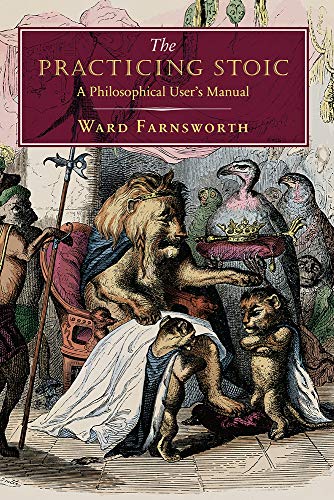
“Farnsworth beautifully integrates his own observations with scores of quotations from Epictetus, Seneca, Marcus Aurelius, Montaigne and others. This isn’t just a book to read―it’s a book to return to, a book that will provide perspective and consolation at times of heartbreak or calamity.”―The Washington Post See more clearly, live more wisely, and bear the burdens of this life with greater ease―here are the greatest insights of the Stoics, in their own words. Presented in twelve lessons, Ward Farnsworth systematically presents the heart of Stoic philosophy accompanied by commentary that is clear and concise. A foundational idea to Stoicism is that we appear to go through life reacting directly to events. That appearance is an illusion. We react to our judgments and opinions―to our thoughts about things, not to things themselves. Stoics seek to become conscious of those judgments, to find the irrationality in them, and to choose them more carefully. In chapters including Emotion, Adversity, Virtue, and What Others Think, here is the most valuable wisdom about living a good life from ages past―now made available for our time. Review Praise for Ward Farnsworth: The Practicing Stoic: A Philosophical User’s Manual: “As befits a good Stoic, Farnsworth’s expository prose exhibits both clarity and an unflappable calm… Throughout The Practicing Stoic, Farnsworth beautifully integrates his own observations with scores of quotations from Epictetus, Seneca, Marcus Aurelius, Montaigne and others. As a result, this isn’t just a book to read—it’s a book to return to, a book that will provide perspective and consolation at times of heartbreak or calamity.” —Michael Dirda, The Washington Post “It is reported that upon Seneca’s tomb are written the words, Who’s Minding the Stoa? He would be pleased to know the answer is Ward Farnsworth.” —David Mamet “This is a book any thoughtful person will be glad to have along as a companion for an extended weekend or, indeed, for that protracted journey we call life.” —The New Criterion “This sturdy and engaging introductory text consists mostly of excerpts from the ancient Greek and Roman Stoic philosophers, especially Seneca, Epictetus through his student Arrian, and Marcus Aurelius as well as that trio’s philosophical confreres, from the earlier Hellenic Stoics and Cicero to such contemporaries as Plutarch to moderns, including Montaigne, Adam Smith, and Schopenhauer… A philosophy to live by, Stoicism may remind many of Buddhism and Quakerism, for it asks of practitioners something very similar to what those disciplines call mindfulness.” —Booklist The Socratic Method: A Practitioner’s Handbook: “Amid 21st-century rancor, a voice from ancient Athens offers an alternative: truth and a little humility....None should be discouraged from seeking out this remarkable book. By presenting the Socratic method as invitingly as it does, it eases the daunting task of taming the fanatical, irrational, censorious beasts in the American political zoo.” —Wall Street Journal “Learned, erudite, and elegant.” —The Millions “The Socratic method decelerates reasoning, making space for deliberation when disagreements arise. So, the Socratic method is, Farnsworth says, an antidote to some social pandemics of our day.” —George F. Will Farnsworth’s Classical English Style: “Mr. Farnsworth has written an original and absorbing guide to English style. Get it if you can.” —Wall Street Journal “For writers aspiring to master the craft, Farnsworth shows how it’s done. For lovers of language, he provides waves of sheer pleasure.”—Steven Pinker “An eloquent study of the very mechanisms of eloquence.” —Henry Hitchings “A great and edifying pleasure.” —Mark Helprin “A storehouse of effective writing, showing the techniques you may freely adapt to make music of your own.” —The Baltimore Sun Farnsworth’s Classical English Rhetoric: “I must refrain from shouting what a brilliant work this is (præteritio). Farnsworth has written the book as he ought to have written it – and as only he could have written it (symploce). Buy it and read it – buy it and read it (epimone).” —Bryan A. Garner “The most immediate pleasure of this book is that it heightens one’s appreciation of the craft of great writers and speakers. Mr. Farnsworth includes numerous examples from Shakespeare and Dickens, Thoreau and Emerson, Winston Churchill and Abraham Lincoln. He also seems keen to rehabilitate writers and speakers whose rhetorical artistry is undervalued; besides his liking for Chesterton, he shows deep admiration for the Irish statesman Henry Grattan (1746-1820), whose studied repetition of a word (‘No lawyer can say so; because no lawyer could say so without forfeiting his character as a lawyer’) is an instance, we are told, of conduplicatio. But more than anything Mr. Farnsworth wants to restore the reputation of rhetorical artistry per se, and the result is a handsome work of reference.” —Henry Hitchings, Wall Street Journal Farnsworth’s Classical English Metaphor: “Ward Farnsworth is a witty commentator…It’s a book to dip in and savor.” —The Boston Globe “Most people will find it a grab-bag of memorable quotations, an ideal browsing book for the nightstand.” —Michael Dirda, The Washington Post “I want this book to be beside my bed for years to come, a treasure-house of the liquid magic of words.” —Simon Winchester “A feat of elegant demystification…Farnsworth is able to focus on the finite material of metaphorical referents…a brilliant strategy, both in its utility for writers and the inherent insight Farnsworth’s divisions suggest about metaphors.” —Jonathan Russell Clark, The Millions From the Back Cover This is a book about human nature and its management. The wisest students of that subject in ancient times, and perhaps of all time, were known as the Stoics. Their recommendations about how to think and live do not resemble the grim lack of feeling we associate with the word “Stoic” in English today. The original Stoics were philosophers and psychologists of the most ingenious kind, and also highly practical; they offered solutions to the problems of everyday life, and advice about how to overcome our irrationalities, that are still relevant and helpful now. About the Author Ward Farnsworth is Professor and W. Page Keeton Chair at the University of Texas School of Law. He is author of The Socratic Method, The Practicing Stoic, and the Farnsworth Classical English series which includes Farnsworth’s Classical English Argument, Farnsworth’s Classical English Rhetoric, Farnsworth’s Classical English Metaphor, and Farnsworth’s Classical English Style—all published by Godine.
Recommended by David Mamet
“According to David Mamet, a film director must, above all things, think visually. Most of this instructive and funny book is written in dialogue form and based on film classes Mamet taught at Columbia University. He encourages his students to tell their stories not with words, but through the juxtaposition of uninflected images. The best films, Mamet argues, are composed of simple shots. The great filmmaker understands that the burden of cinematic storytelling lies less in the individual shot than in the collective meaning that shots convey when they are edited together. Mamet borrows many of his ideas about directing, writing, and acting from Russian masters such as Konstantin Stanislavsky, Sergei M. Eisenstein, and Vsevelod Pudovkin, but he presents his material in so delightful and lively a fashion that he revitalizes it for the contemporary reader.” (from Amazon)

Describes the basic principles of film making, argues that directing is an extension of screenwriting, and explains how films tell stories
Get a weekly reading digest
New expert-recommended books every week. No account needed.