Jia Tolentino
New Yorker
Book Recommendations:
Recommended by Jia Tolentino
“Absolutely extraordinary...A landmark in the contemporary literature of the diaspora.” (from Amazon)

“Absolutely extraordinary...A landmark in the contemporary literature of the diaspora.” —Jia Tolentino, author of Trick Mirror “If Concepcion were only about Samaha’s mother, it would already be wholly worthwhile. But she was one of eight children in the Concepcion family, whose ancestry Samaha traces in this. . . powerful book.” –The New York Times A journalist's powerful and incisive account of the forces steering the fate of his sprawling Filipino American family reframes how we comprehend the immigrant experience Nearing the age at which his mother had migrated to the US, part of the wave of non-Europeans who arrived after immigration quotas were relaxed in 1965, Albert Samaha began to question the ironclad belief in a better future that had inspired her family to uproot themselves from their birthplace. As she, her brother Spanky—a rising pop star back in Manila, now working as a luggage handler at San Francisco airport—and others of their generation struggled with setbacks amid mounting instability that seemed to keep prosperity ever out of reach, he wondered whether their decision to abandon a middle-class existence in the Philippines had been worth the cost. Tracing his family’s history through the region’s unique geopolitical roots in Spanish colonialism, American intervention, and Japanese occupation, Samaha fits their arc into the wider story of global migration as determined by chess moves among superpowers. Ambitious, intimate, and incisive, Concepcion explores what it might mean to reckon with the unjust legacy of imperialism, to live with contradiction and hope, to fight for the unrealized ideals of an inherited homeland.
Recommended by Jia Tolentino
“Fascinating and omnivorous.” (from Amazon)
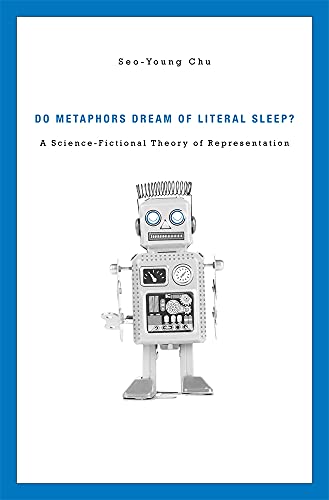
In culture and scholarship, science-fictional worlds are perceived as unrealistic and altogether imaginary. Seo-Young Chu offers a bold challenge to this perception of the genre, arguing instead that science fiction is a form of “high-intensity realism” capable of representing non-imaginary objects that elude more traditional, “realist” modes of representation. Powered by lyric forces that allow it to transcend the dichotomy between the literal and the figurative, science fiction has the capacity to accommodate objects of representation that are themselves neither entirely figurative nor entirely literal in nature. Chu explores the globalized world, cyberspace, war trauma, the Korean concept of han, and the rights of robots, all as referents for which she locates science-fictional representations in poems, novels, music, films, visual pieces, and other works ranging within and without previous demarcations of the science fiction genre. In showing the divide between realism and science fiction to be illusory, Do Metaphors Dream of Literal Sleep? sheds new light on the value of science fiction as an aesthetic and philosophical resource―one that matters more and more as our everyday realities grow increasingly resistant to straightforward representation.
Get a weekly reading digest
New expert-recommended books every week. No account needed.