Neal Stephenson
New York Times best-selling author of Snow Crash, the Baroque Cycle, and Cryptonomicon
Book Recommendations:
Recommended by Neal Stephenson
“The ability to talk in good faith about a shared reality is a foundational element of civics that we didn’t know we had until we suddenly and surprisingly lost it. Jonathan Rauch explains how we got it in the first place and how we are now letting it slip away. His telling of the story is well grounded in history and philosophy as well as in the very latest dispatches from the meme wars. Readers will come away from The Constitution of Knowledge not just concerned about the mess we’re in, but also with new ideas as to how we might dig ourselves out of it.” (from Amazon)
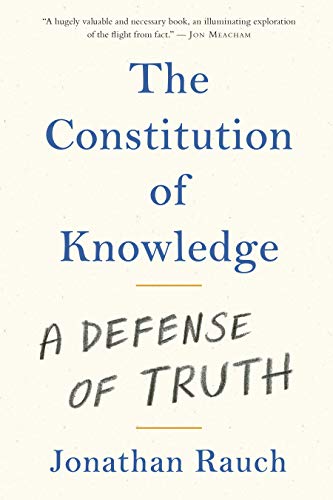
Arming Americans to defend the truth from today's war on facts “In what could be the timeliest book of the year, Rauch aims to arm his readers to engage with reason in an age of illiberalism.” —Newsweek A New York Times Book Review Editors' Choice Disinformation. Trolling. Conspiracies. Social media pile-ons. Campus intolerance. On the surface, these recent additions to our daily vocabulary appear to have little in common. But together, they are driving an epistemic crisis: a multi-front challenge to America's ability to distinguish fact from fiction and elevate truth above falsehood. In 2016 Russian trolls and bots nearly drowned the truth in a flood of fake news and conspiracy theories, and Donald Trump and his troll armies continued to do the same. Social media companies struggled to keep up with a flood of falsehoods, and too often didn't even seem to try. Experts and some public officials began wondering if society was losing its grip on truth itself. Meanwhile, another new phenomenon appeared: “cancel culture.” At the push of a button, those armed with a cellphone could gang up by the thousands on anyone who ran afoul of their sanctimony. In this pathbreaking book, Jonathan Rauch reaches back to the parallel eighteenth-century developments of liberal democracy and science to explain what he calls the “Constitution of Knowledge”—our social system for turning disagreement into truth. By explicating the Constitution of Knowledge and probing the war on reality, Rauch arms defenders of truth with a clearer understanding of what they must protect, why they must do—and how they can do it. His book is a sweeping and readable description of how every American can help defend objective truth and free inquiry from threats as far away as Russia and as close as the cellphone.
Recommended by Neal Stephenson
“The first and last business book anyone needs to read; a one in a world of zeroes.” (from Amazon)
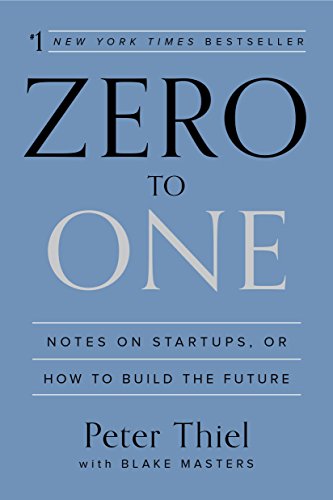
#1 NEW YORK TIMES BESTSELLER • “This book delivers completely new and refreshing ideas on how to create value in the world.”—Mark Zuckerberg, CEO of Meta “Peter Thiel has built multiple breakthrough companies, and Zero to One shows how.”—Elon Musk, CEO of SpaceX and Tesla The great secret of our time is that there are still uncharted frontiers to explore and new inventions to create. In Zero to One, legendary entrepreneur and investor Peter Thiel shows how we can find singular ways to create those new things. Thiel begins with the contrarian premise that we live in an age of technological stagnation, even if we’re too distracted by shiny mobile devices to notice. Information technology has improved rapidly, but there is no reason why progress should be limited to computers or Silicon Valley. Progress can be achieved in any industry or area of business. It comes from the most important skill that every leader must master: learning to think for yourself. Doing what someone else already knows how to do takes the world from 1 to n, adding more of something familiar. But when you do something new, you go from 0 to 1. The next Bill Gates will not build an operating system. The next Larry Page or Sergey Brin won’t make a search engine. Tomorrow’s champions will not win by competing ruthlessly in today’s marketplace. They will escape competition altogether, because their businesses will be unique. Zero to One presents at once an optimistic view of the future of progress in America and a new way of thinking about innovation: it starts by learning to ask the questions that lead you to find value in unexpected places.
Get a weekly reading digest
New expert-recommended books every week. No account needed.