Shannon Hayes
Author, Radical Homemakers: Reclaiming Domesticity from a Consumer Culture
Book Recommendations:
Recommended by Shannon Hayes
“The Healthy Bones Nutrition Plan and Cookbook is such an important source of valuable information about eating right to avoid bone loss. Every woman needs a copy in her library.” (from Amazon)

A Medicine Through Food™ Guide "This book has the answers that conventional medicine keeps missing. I highly recommend."―Christiane Northrup, MD, New York Times bestselling author Includes over 100 recipes, worksheets, and tools to help create a personal nutritional plan! Drugs that claim to prevent or redress bone loss can actually cause bones to crumble and break. Calcium supplements, fortified processed food, and pasteurized dairy don't work because the calcium in them doesn't reach our bones. It’s a grim picture, but The Healthy Bones Nutrition Plan and Cookbook can help. Coauthors Dr. Laura Kelly and Helen Bryman Kelly, daughter and mother, have a firm grasp on the disciplines concerned with bone health, including nutrient absorption and bone metabolism. They offer readers a natural, effective, and safe approach to conserving bone mass and building healthy bones by creating a personalized nutrition plan that includes eating the right foods in the right combinations. The authors’ quest for a natural, effective, safe way to prevent and treat bone loss began after 20 years of frustration, during which Helen tried supplements and several popular dietary approaches to arrest bone loss, only to see her bones continue to deteriorate year by year. Drawing on her knowledge of metabolic science and a rigorous examination of current research, Laura created a unique diet-based approach to bone health that allowed Helen’s body to absorb the nutrients that are naturally present in whole foods. Helen has been following her personal nutrition plan for four years and has stopped her bone loss completely―without taking any pharmaceuticals. Part One of the book begins with a primer on bone metabolism, including the roles of individual vitamins, minerals, and enzymes that can help build strong bones. Building on this knowledge and more, the authors provide a framework and worksheets so readers can use the recipes and work with their doctors to create their personal nutrition plan for skeletal health. The book includes more than 100 bone-health recipes ranging from sauces and small plates to soups, salads, and main dishes, drinks and desserts. The authors also explain how to make staple ingredients such as ghee and bone health vinegar and how to grow shiitake mushrooms―an important source of vitamin D. Readers can count on their personal nutrition plans and the Kellys’ recipes to provide food that helps calcium reach, and potentially strengthen, their bones.
Recommended by Shannon Hayes
“David Asher’s book is brave and important, teaching us to tend to what matters by helping us understand process before recipes. This book expands the boundaries of sustainability, deepening the power of independent autonomy and local flavor, making our world more delicious.” (from Amazon)
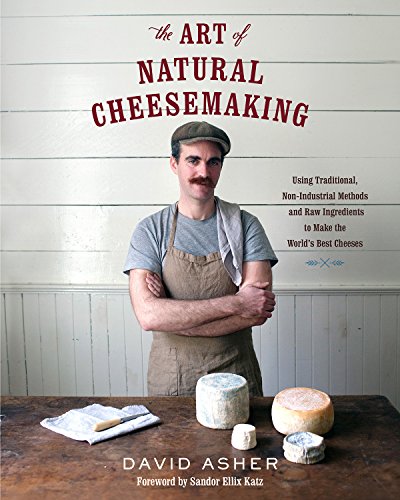
Including more than 35 step-by-step recipes from the Black Sheep School of Cheesemaking Most DIY cheesemaking books are hard to follow, complicated, and confusing, and call for the use of packaged freeze-dried cultures, chemical additives, and expensive cheesemaking equipment. For though bread baking has its sourdough, brewing its lambic ales, and pickling its wild fermentation, standard Western cheesemaking practice today is decidedly unnatural. In The Art of Natural Cheesemaking, David Asher practices and preaches a traditional, but increasingly countercultural, way of making cheese―one that is natural and intuitive, grounded in ecological principles and biological science. This book encourages home and small-scale commercial cheesemakers to take a different approach by showing them: • How to source good milk, including raw milk; • How to keep their own bacterial starter cultures and fungal ripening cultures; • How make their own rennet―and how to make good cheese without it; • How to avoid the use of plastic equipment and chemical additives; and • How to use appropriate technologies. Introductory chapters explore and explain the basic elements of cheese: milk, cultures, rennet, salt, tools, and the cheese cave. The fourteen chapters that follow each examine a particular class of cheese, from kefir and paneer to washed-rind and alpine styles, offering specific recipes and handling advice. The techniques presented are direct and thorough, fully illustrated with hand-drawn diagrams and triptych photos that show the transformation of cheeses in a comparative and dynamic fashion. The Art of Natural Cheesemaking is the first cheesemaking book to take a political stance against Big Dairy and to criticize both standard industrial and artisanal cheesemaking practices. It promotes the use of ethical animal rennet and protests the use of laboratory-grown freeze-dried cultures. It also explores how GMO technology is creeping into our cheese and the steps we can take to stop it. This book sounds a clarion call to cheesemakers to adopt more natural, sustainable practices. It may well change the way we look at cheese, and how we make it ourselves.
Recommended by Shannon Hayes
“Farms with a Future is an important book. If you are new to farming, read it now. If you've been in the business for a while, read it every year to keep yourself on track.” (from Amazon)

What makes a farm sustainable and successful? And what special qualities and skills are needed for someone to become a successful farmer? Rebecca Thistlethwaite addresses these and other crucial questions in this uniquely important book, which is a must-read for anyone who aspires to get into farming, or who wants to make their farm business more dynamic, profitable, and, above all, sustainable. Over an entire year, the author and her husband-experienced farmers themselves-took a sabbatical and traveled the length and breadth of the United States to live and work alongside some of the nation's most innovative farmers. Along the way they learned about best practices, and a whole lot about what doesn't work. Farms with a Future shares this collective wisdom in an inspirational yet practical manner; it will help beginners avoid many of the common mistakes that first-time farmers make. Just as importantly, it discusses positive ideas that can help make any farm enterprise vibrant and financially profitable. Profiles of more than a dozen representative farms help round out the invaluable information and encourage farmers to embrace their inner entrepreneur. Younger growers, in particular, will benefit by learning about "the right stuff" from both their peers and longtime experts.This book provides a useful reference for beginning and experienced farmers alike. While many other books address agricultural production, there are very few that talk about business management for long-term sustainability. Farms with a Future offers an approachable, colorful take on building a triple-bottom-line farming business.
Get a weekly reading digest
New expert-recommended books every week. No account needed.