10 Future of Technology Books That Will Change How You See Tomorrow
Recommended by Bill Gates, Tony Robbins, and Eric Schmidt for insights into Future of Technology
Updated on June 23, 2025·We may earn commissions for purchases made via this page
10 of 10 books have Kindle versions
We're launchingLaunching on Product Hunt today 🎉We just launchedJust launched on Product Hunt 🎉
Modelpeers, from the BookAuthority teamFrom the BookAuthority team: Modelpeers, a free way to follow AI models and agents like you follow people. We'd love your support.
What if the technology transforming our world today is just the opening act? The pace at which innovations like quantum computing, AI, and space exploration accelerate is staggering, reshaping industries and daily life faster than many anticipate. Understanding these changes isn't just for tech insiders—it matters for anyone looking to navigate the future wisely.
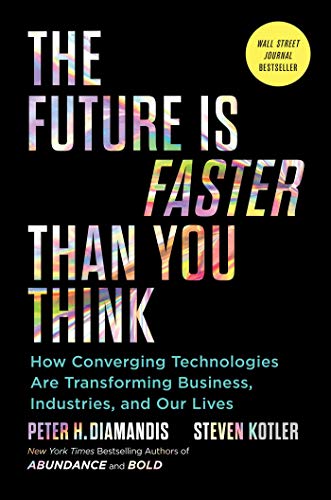
Bill Gates, co-founder of Microsoft, has long championed a deeper grasp of artificial intelligence and its potential. His endorsement of Ray Kurzweil’s The Singularity Is Nearer reflects decades of firsthand experience with AI's evolving role. Meanwhile, Tony Robbins, a renowned business coach, praises The Future Is Faster Than You Think for its clear vision of converging technologies disrupting markets. Their insights, along with others from leaders like Eric Schmidt and Satya Nadella, anchor this selection in real-world expertise.
While these expert-curated books provide proven frameworks and visionary perspectives, readers seeking content tailored to their specific background, interests, and goals might consider creating a personalized Future of Technology book that builds on these insights, offering a custom roadmap to your unique future.
The New York Times, a leading book review publication, highlights how Michio Kaku traces the history of computing from foundational inventions like the Turing machine to the dawn of quantum computers. Their review emphasizes how Kaku’s clear explanations helped them grasp this technological turning point, making complex ideas accessible without oversimplification. This perspective resonates with Science, which praises Kaku’s skill in clearing misconceptions and employing metaphors to illuminate quantum mechanics. Together, these expert voices underscore the book’s role in demystifying a pivotal technology set to influence many sectors.
“Kaku spends much of [Quantum Supremacy] recounting the history of computing, bringing listeners back to the Turing machine and the invention of transistors as crucial foundations. That mind-blowing future is the focus. . . . [Kaku's] lucid prose and thought process make abundant sense of this technological turning point.”
Michio Kaku is a professor of physics at the City University of New York, cofounder of string field theory, and the author of several widely acclaimed science books, including Hyperspace, Beyond Einstein, Physics of the Impossible, and Physics of the Future. He is the science correspondent for CBS’s This Morning and host of the radio programs Science Fantastic and Explorations in Science.
Drawing from decades of experience as a physics professor and science communicator, Michio Kaku unpacks the transformative potential of quantum computing in this book. You’ll gain insight into how quantum mechanics underpins this new technology and why it represents a seismic shift beyond traditional computing limits. Chapters detail applications from medicine to energy, illustrating how quantum breakthroughs could tackle global challenges like disease and climate change. This isn't just for tech specialists; anyone curious about the technological frontier will find clear explanations and vivid examples to understand the stakes and possibilities.
Bill Gates, co-founder and former CEO of Microsoft, whose insights into artificial intelligence have shaped global technology discussions, highly recommends this book. After years of witnessing AI's rapid evolution firsthand, he states, "Ray Kurzweil is the best person I know at predicting the future of artificial intelligence." This endorsement highlights Kurzweil’s unique ability to anticipate technological milestones with remarkable accuracy. The book deepened Gates's understanding of how AI will transform industries and society, offering a grounded yet visionary perspective. Alongside Gates, Nesnáím Faistické Kolaboranty provides a thoughtful view on the book’s discussion of life-extending biotechnology, emphasizing its relevance to today's generations.
Ray Kurzweil is a world class inventor, thinker, and futurist, with a thirty-five-year track record of accurate predictions. He has been a leading developer in artificial intelligence for 61 years – longer than any other living person. He was the principal inventor of the first CCD flat-bed scanner, omni-font optical character recognition, print-to-speech reading machine for the blind, text-to-speech synthesizer, music synthesizer capable of recreating the grand piano and other orchestral instruments, and commercially marketed large-vocabulary speech recognition software. Ray received a GRAMMY® Award for outstanding achievement in music technology; he is the recipient of the National Medal of Technology and was inducted into the National Inventors Hall of Fame. He has written five best-selling books including The Singularity Is Near and How to Create a Mind. He is a Principal Researcher and AI Visionary at Google.
Unlike most futurism books that focus only on broad predictions, Ray Kurzweil’s latest work offers a detailed roadmap of how exponential technologies will reshape human life in the coming decades. Drawing from his six decades of AI research and invention, Kurzweil explores specific advances like nanobots, brain-cloud interfaces, and radical life extension, explaining their practical implications with data and examples. You’ll gain insights into not just what might happen, but how these changes could affect employment, health, and society at large. This book suits anyone curious about the intersection of AI, biotechnology, and the future trajectory of human evolution, though it demands some patience with technical discussions.
This AI-created book on technology trends is tailored to your background and goals, focusing specifically on the emerging technologies shaping tomorrow. You share your current knowledge, interests in subfields like AI or space tech, and what you want to achieve. The book is then created uniquely for you, cutting through broad overviews to deliver insights that resonate with your specific context and ambitions. Personalization here helps you avoid generic forecasts and instead get a focused understanding that supports your particular decision-making and learning needs.
TailoredRead AI creates personalized nonfiction books that adapt to your unique background, goals, and interests. Instead of reading generic content, you get a custom book written specifically for your profession, experience level, and learning objectives. Whether you're a beginner looking for fundamentals or an expert seeking advanced insights, TailoredRead crafts a book that speaks directly to you. Learn more.
This personalized book provides a tailored framework that comprehensively examines emerging technologies and their multifaceted impacts across industries. It focuses on delivering in-depth analysis of key trends such as quantum computing, artificial intelligence, space exploration, and surveillance capitalism, contextualized to your specific knowledge level and objectives. The tailored approach cuts through generic content by fitting insights directly to your situation, enabling a deeper understanding of technological convergence, strategic implications, and future scenarios. By integrating customized content, it offers practical pathways for leveraging innovation and navigating complex technology landscapes effectively within your unique professional or personal context.
Tony Robbins, renowned business coach and motivational speaker, praises this book for offering CEOs and entrepreneurs a clear vision amid rapid technological upheaval. After witnessing accelerating change across industries, he calls it a "powerful and beautiful masterpiece outlining a compelling future for humanity". His endorsement highlights how the authors provide practical insight into navigating the tsunami of innovation reshaping business and society. Following Robbins, Ray Kurzweil, a pioneer in pattern-recognition technology, emphasizes the book's thorough mapping of exponential technology convergence and its impact. Their combined perspectives establish this book as a key guide to understanding the next decade's transformative technological shifts.
“Diamandis and Kotler have written a powerful and beautiful masterpiece outlining a compelling future for humanity. The Future is Faster Than You Think offers CEOs and entrepreneurs a clear vision on the transformation of every major industry this decade. Required reading for anyone who wants to surf above the tsunami of change.”
Peter H. Diamandis, MD, is a New York Times bestselling author and the cofounder of Singularity University, Human Longevity, Inc., Celularity, Inc., and founder of Bold Capital Partners. He is the founder and Executive Chairman of XPRIZE. Diamandis has degrees in molecular genetics and aerospace engineering from MIT and an MD from Harvard Medical School. Steven Kotler is a New York Times bestselling author, award-winning journalist, and the founder and executive director of the Flow Research Collective. His books include Stealing Fire, Bold, The Rise of Superman, Abundance, A Small Furry Prayer, Tomorrowland, West of Jesus, and Last Tango in Cyberspace. His work has been nominated for two Pulitzer Prizes, has been translated into more than forty languages, and has appeared in over a hundred publications, including The New York Times Magazine, The Atlantic, Wired, Forbes, and Time.
What if everything you knew about technological progress was too slow? Peter H. Diamandis and Steven Kotler argue that the future is arriving at a pace few anticipate, driven by the convergence of multiple exponential technologies. You gain insights into how AI, robotics, digital biology, and other fields intersect to disrupt industries from healthcare to finance, with examples like virtual reality reshaping education and 3D printing transforming manufacturing. This book suits entrepreneurs, CEOs, and anyone wanting a detailed roadmap of how rapid innovation will alter business and daily life in the coming decade.
Geoffrey Notkin, board member of the National Space Society and Emmy-winning host, praises this book as a thrilling guide to the dawn of the Second Age of Space Exploration. His enthusiasm, born from years immersed in space science and media, underscores the book's relevance and excitement. He calls it a "factual yet inspiring intro to our around-the-corner new adventures in space," capturing how Rod Pyle, an advisor to NASA, brings both expertise and passion to this journey. Complementing this view, Howard Bloom highlights the rapid evolution of spaceflight with private companies leading the charge, framing Space 2.0 as an indispensable resource for understanding this accelerating era.
Board member, National Space Society; Emmy-winning host
“For spaceflight fanatics like me, now—the dawn of the Second Age of Space Exploration—is the most exciting time to be alive since the moon missions of the late 1960s and early '70s . . . In Space 2.0, ace science writer Rod Pyle—an advisor to NASA and the National Space Society—provides an engaging and expertly-informed explanation of how we got this far, along with a factual yet inspiring intro to our around-the-corner new adventures in space. Strap yourself in tight. It's a fascinating ride!”
Rod Pyle is a space historian who has worked with NASA at the Jet Propulsion Laboratory and the Johnson Space Center. He has written nine books on the history and technology of space exploration and science for major publishers in the US, UK and Asia. As a journalist, Rod's work has appeared in Space.com, LiveScience.com, The Huffington Post, Popular Science, and many other print and online venues. Rod has also produced documentary programming on spaceflight for The History Channel as well as Discovery Communications. He has written on spaceflight and science for NASA/JPL and Caltech, and authored a guide to executive education for the Johnson Space Center/The Conference Board's Apollo Leadership Experience. Rod speaks frequently on spaceflight and executive development, and is a frequent radio guest with regular appearances on WGN/Chicago, KFI/Los Angeles and numerous syndicated radio programs. He worked on the TV series Star Trek: Deep Space Nine as a visual effects coordinator for three seasons, and spent a decade at the Griffith Observatory in Los Angeles. Rod is a graduate of Stanford University and the Art Center College of Design in Pasadena, California, and a member of the National Space Society, the Author's Guild, the National Association of Science Writers and the Producer's Guild of America.
What if everything you knew about space exploration was wrong? Rod Pyle, drawing on decades of experience with NASA and a deep involvement in space journalism, challenges the notion that government agencies alone drive space progress. Instead, he reveals how private companies and international collaborations are reshaping the future of spaceflight, from commercial lunar landers to asteroid prospecting. You’ll gain insight into emerging propulsion and life support technologies poised to take humans beyond the Moon to Mars and deeper into the solar system. If you’re fascinated by the evolving landscape of space exploration and want a grounded understanding of the new players and innovations, this book offers a clear-eyed view of the unfolding space age.
Eric Schmidt, former CEO of Google and Executive Chairman of Alphabet, knows the future of technology and national defense better than most. After closely studying how emerging tech reshapes military strategy, he calls The Kill Chain "a tour-de-force" that expertly ties together technology and defense challenges. This book opened his eyes to the urgent need for America to rethink its military approach amid rapid technological shifts. Michael McFaul, a former US ambassador and professor, echoes this sentiment, praising Brose as a specialist and skilled writer who brings clarity to complex defense issues.
“The Kill Chain is a tour-de-force. Few people are as knowledgeable and experienced as Christian Brose in thinking about the intersection of emerging technology and national defense. He pulls it all together in this compelling, unsettling, and outstanding book.”
Christian Brose is currently Chief Strategy Officer of Anduril Industries, a technology start-up that develops national defense capabilities, and Senior Fellow at the Carnegie Endowment for International Peace. He served as Staff Director of the Senate Armed Services Committee (2015-2018), where he was the youngest person to hold the position in the committee's history. Before that, he served as Senator John McCain's senior policy advisor (2009-2015). Brose was previously a speechwriter to two secretaries of state, Colin Powell and Condoleezza Rice, and a member of the State Department Policy Planning Staff.
2020·320 pages·Future of Technology, Warfare, Military Strategy, Artificial Intelligence, Autonomous Systems
Unlike most military strategy books that focus narrowly on current capabilities, Christian Brose draws from his unique background as Chief Strategy Officer at Anduril Industries and former senior Senate advisor to expose how emerging technologies like AI and autonomous systems are reshaping warfare's future. You gain a clear understanding of the "kill chain" concept—how integrated systems and rapid decision-making can redefine national defense against rising powers such as China. The book carefully examines the erosion of traditional military advantages and sketches a path for America to adapt tactically and technologically. If you want insight into how technology intersects with global security challenges, this book offers a sobering yet thoughtful perspective, though it may be less relevant if your focus is purely on civilian tech innovation.
This custom AI book on future technology is created based on your specific tech interests, background, and learning goals. You share which future technologies captivate you and your current skill level, and the book is crafted to provide daily, focused actions that fit your pace and priorities. This tailored approach helps you engage consistently with complex subjects, making future tech learning manageable and relevant to your ambitions.
TailoredRead AI creates personalized nonfiction books that adapt to your unique background, goals, and interests. Instead of reading generic content, you get a custom book written specifically for your profession, experience level, and learning objectives. Whether you're a beginner looking for fundamentals or an expert seeking advanced insights, TailoredRead crafts a book that speaks directly to you. Learn more.
2026·50-300 pages·Future of Technology, Future Technology, Artificial Intelligence, Quantum Computing, Space Exploration
This personalized book offers a step-by-step daily guide designed to accelerate your understanding of future technology trends and innovations. It provides structured daily actions targeting key areas such as artificial intelligence, quantum computing, space exploration, and emerging tech applications. The tailored approach ensures the content fits your specific interests and goals, cutting through generic advice to deliver focused, actionable insights. By breaking down complex technological developments into manageable daily lessons, it facilitates steady knowledge growth and practical engagement with evolving technologies, providing a personalized framework that bridges expert concepts with your unique context.
Lina Alhathloul Yemencantwait, coauthor and human rights advocate, highlights this book as her top read of 2021, emphasizing its critical importance in understanding surveillance capitalism's grip on our lives. She urges those pressed for time to at least watch the author's interview, revealing how this work deepened her awareness of digital power dynamics. Lina's perspective, shaped by activism and personal stakes in freedom, underscores the book's role in shaping conversations about technology's future. Alongside her, Mohamed A. Elerian, Chief Economic Adviser to Allianz, points to the book’s relevance in interpreting key economic and technological trends, reinforcing its value for those monitoring the interplay of markets and digital surveillance.
“Hi friends ! Please read Shoshana Zuboff’s book THE AGE OF SURVEILLANCE CAPITALISM, it’s my best read of 2021. If you don’t have time, please watch this interview at least :” (from X)
Shoshana Zuboff is the Charles Edward Wilson Professor Emeritus at Harvard Business School. She is the Co-Director of the International Research Fellowship on Surveillance Capitalism or Democracy at the Harvard Kennedy School’s Carr Center for Human Rights Policy. Zuboff’s work has been recognized with the Axel Springer Award, the EPIC Lifetime Achievement Award, and the Global Privacy Assembly Giovanni Buttarelli Award.
What if everything you knew about capitalism was wrong? Shoshana Zuboff argues that the rise of surveillance capitalism marks an unprecedented form of power that manipulates behavior for profit, reshaping society far beyond traditional markets. Drawing from her extensive Harvard Business School research, she exposes how companies trade in "behavioral futures" and erode freedoms under the guise of digital convenience. You’ll gain insight into the mechanisms driving this shift, including specific examples of how behavioral modification operates across industries. This book suits anyone grappling with technology’s impact on democracy and personal autonomy, though its dense analysis demands serious commitment.
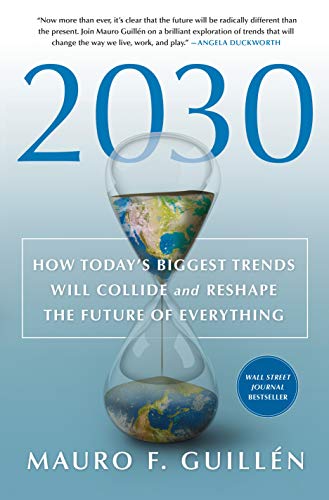
Indra Nooyi, former CEO of PepsiCo and an influential leader in business strategy, highlights this book for its exploration of societal trends shaping the next decade. After leading one of the world’s largest corporations through rapid change, she values how this book provides a roadmap to prepare for emerging shifts, noting it as one of Adam Grant's summer leadership picks. Her endorsement signals the book’s relevance to executives seeking to understand future market and social dynamics. Meanwhile, Richard Florida, a professor known for urban and economic insights, emphasizes the scale of disruption captured here, underscoring its importance for anyone interested in the future of technology and society.
“Wall Street Journal Bestseller One of Adam Grant's '15 Leadership Books of the Summer' 'An interesting book...it talked about the kinds of trends we might see in society over the next decade and how do we prepare for that today.'”
Mauro F. Guillén is one of the most original thinkers at the Wharton School, where he is Professor of Management and Vice Dean for the MBA for Executives Program. An expert on global market trends, he is a sought-after speaker and consultant. He combines his training as a sociologist at Yale and as a business economist in his native Spain to methodically identify and quantify the most promising opportunities at the intersection of demographic, economic, and technological developments. His online classes on Coursera and other platforms have attracted over 100,000 participants from around the world. He has won multiple teaching awards at Wharton, where his presentation on global market trends has become a permanent feature of over fifty executive education programs annually. He is the WSJ bestselling author of 2030: How Today's Biggest Trends Will Collide and Reshape the Future of Everything.
When Mauro F. Guillén first realized how intertwined demographic shifts, economic developments, and technological advances are reshaping our world, he crafted this book to map out these converging forces. You’ll gain insight into why the middle class is shifting geographically, how aging populations and robotics will redefine work, and why new economic powers emerge outside the West. It’s especially useful if you want to understand the complex interplay of global trends that aren’t often connected in typical futurism. For anyone looking to anticipate 2030’s societal and market transformations, this book offers a framework grounded in sociological and economic analysis rather than speculation.
Satya Nadella, CEO of Microsoft, knows firsthand how AI is reshaping the business landscape. He recommends this book as essential for anyone interested in AI's impact, saying, "Iansiti and Lakhani have written an important book that explains what's required to rethink the firm and become an AI-first company." This recommendation comes from his experience leading Microsoft through its own transformation, where understanding AI-driven competition became critical. Nadella's endorsement underscores how this book reshaped his thinking on strategy in an AI-driven world. Additionally, Clayton Christensen, a Harvard professor and author of The Innovator's Dilemma, highlights the book as a must-read for leaders navigating digital disruption.
“Iansiti and Lakhani have written an important book that explains what's required to rethink the firm and become an AI-first company. Anyone interested in the impact of AI should read this book.”
Marco Iansiti is a Professor at Harvard Business School and a leading expert in the field of technology and business strategy. He has published extensively on the impact of digital technologies on business and has consulted for numerous organizations on how to leverage technology for competitive advantage. His work focuses on the intersection of technology and management, particularly in the context of artificial intelligence and digital transformation.
When Marco Iansiti and Karim R. Lakhani challenge the conventional wisdom about business strategy, they reveal how AI fundamentally reshapes how companies operate. Drawing from extensive research across industries, they show you how AI-driven architectures remove traditional limits on scale and scope, allowing firms to innovate and compete in entirely new ways. You'll learn frameworks for rethinking your firm's operating model, illustrated with real examples from companies like Microsoft and Airbnb. This book suits leaders and strategists ready to understand AI's impact beyond tech hype and eager to adapt their organizations accordingly.
Marshall Kirkpatrick, a seasoned social media analyst at Sprinklr, found this book offers a sophisticated and well-informed thesis on how rapidly the world is changing through technology. After years exploring digital trends, he appreciates how it frames the "exponential gap"—the widening divide between technological progress and societal adaptation. He shares, "If you want to see a sophisticated & well informed thesis about how the world is changing dramatically, I recommend this Twitter thread and book from one of the world’s most inspiring community builders." This perspective reshaped his understanding of tech's influence on politics and business. Similarly, Mark Scott, Vice-Chancellor of The University of Sydney, highlights its compelling narrative that led him to unexpected insights by the book's end.
“If you want to see a sophisticated & well informed thesis about how the world is changing dramatically, I recommend this Twitter thread and book from one of the world’s most inspiring community builders.” (from X)
Azeem Azhar is the creator of the Exponential View, a global platform for in-depth tech analysis. His weekly newsletter is read by nearly two hundred thousand people from around the world, and his chart-topping podcast has featured guests including Yuval Noah Harari, Reid Hoffman, and Tony Blair. Over the last three decades, Azhar has founded and invested in a number of successful tech companies bought by firms like Amazon and Microsoft. He is a member of the World Economic Forum’s Global Futures Council, a senior advisor at PwC, and a contributor to publications including the Financial Times, Prospect, and the MIT Technology Review. He served as the Economist’s first ever internet correspondent. He lives in London.
After decades of witnessing rapid technological shifts firsthand, Azeem Azhar developed this book to unpack the dizzying pace of innovation reshaping our world. You’ll explore the concept of the "exponential gap," a divide where technology advances faster than society can adapt, influencing politics, economics, and social structures. The book walks you through concrete examples like AI, renewable energy, and synthetic biology, showing how these forces disrupt traditional frameworks and create new challenges. If you’re involved in policy, business strategy, or simply curious about the forces shaping society, this book offers a clear-eyed lens to understand and navigate these changes.
Tim Draper, founder of DFJ Ventures and Draper University, brings a keen investor’s eye to the future of technology. After witnessing startups pitch breakthrough innovations globally, Draper praises this book for identifying how science fiction concepts like sentient AI and cyborgs edge closer to reality, stating, "Steve Hoffman nails it! He identifies the science fiction that is becoming our new reality. A delightful run through a wild future of sentient AIs, cyborgs, transgenic animals, and designer babies. Read it!" This perspective helped him sharpen his understanding of emerging tech's societal impact. Alongside Draper, Sebastian Thrun, CEO of Kitty Hawk and co-founder of Udacity, emphasizes the book’s urgent call to grasp upcoming changes, urging everyone concerned about the future to wake up to these shifts.
“Steve Hoffman nails it! He identifies the science fiction that is becoming our new reality. A delightful run through a wild future of sentient AIs, cyborgs, transgenic animals, and designer babies. Read it!”
Steve Hoffman, or Captain Hoff as he's called in Silicon Valley, is the CEO of Founders Space, one of the world's leading startup incubators. He’s also an angel investor, limited partner at August Capital, serial entrepreneur, and author of several award-winning books, including Make Elephants Fly and Surviving a Startup. Hoffman was also the founder and chairman of the Producers Guild Silicon Valley Chapter, Board of Governors of the New Media Council, and founding member of the Academy of Television's Interactive Media Group. While in Hollywood, Hoffman worked as a TV development executive at Fries Entertainment, known for producing over a hundred TV shows, acquired by MGM. He went on to pioneer interactive television with his venture-funded startup Spiderdance, which produced interactive TV shows with NBC, MTV, Turner, Warner Brothers, History Channel, Game Show Network, and others. In Silicon Valley, Hoffman founded two more venture-backed startups, in the areas of games and entertainment, and worked as Mobile Studio Head for Infospace, with such hit mobile games as Tetris, Wheel of Fortune, Tomb Raider, Thief, Hitman, Skee-Ball, and X-Files. Hoffman went on to launch Founders Space, with the mission to educate and accelerate entrepreneurs. Founders Space has become one of the top startup accelerators in the world. Hoffman has trained hundreds of startup founders and corporate executives in the art of innovation and provided consulting to many of the world’s largest corporations, including Qualcomm, Huawei, Bosch, Intel, Disney, Warner Brothers, NBC, Gulf Oil, Siemens, and Viacom. Hoffman earned a bachelor’s degree in computer engineering from the University of California and a master’s degree in film and television from the University of Southern California. He currently resides in San Francisco but spends most of his time in the air, visiting startups, investors, and innovators all over the world.
When Steve Hoffman first recognized the sweeping impact of converging technologies, he set out to map how these forces are reshaping our lives and societies. Drawing from his extensive Silicon Valley experience as an investor and startup mentor, Hoffman explores five major dimensions: mass connectivity, bio convergence, human expansionism, deep automation, and intelligence explosion. You’ll gain insight into tangible developments like brain-computer interfaces, gene editing, AI decision-making, and space colonization, helping you grasp how these trends might affect your future. This book suits anyone curious about technology's trajectory and its societal implications, rather than those seeking mere technical manuals or speculative fiction.
The best Future of Technology books and more, in your inbox each week. No account needed.
Conclusion
These ten books collectively reveal a future shaped by rapid technological convergence, ethical dilemmas around data and privacy, and new frontiers in space and defense. They challenge you to think beyond the present and prepare for disruptions that touch every facet of society.
If you’re grappling with how AI will redefine your industry, Competing in the Age of AI and The Singularity Is Nearer offer strategic and visionary guidance. For those curious about the societal and economic shifts ahead, 2030 and The Age of Surveillance Capitalism provide critical perspectives. And if space exploration or defense technology fascinates you, Space 2.0 and The Kill Chain deliver sobering and inspiring insights.
Once you've absorbed these expert insights, create a personalized Future of Technology book to bridge the gap between broad principles and your specific situation. Understanding the future is a journey—these books and tailored strategies equip you to navigate it with clarity and confidence.
Frequently Asked Questions
I'm overwhelmed by choice – which book should I start with?
Start with The Future Is Faster Than You Think for a broad view of converging technologies that impact business and life, then dive into specific areas that match your interests like AI or space exploration.
Are these books too advanced for someone new to Future of Technology?
Not at all. Books like Quantum Supremacy and The Age of Surveillance Capitalism explain complex ideas clearly, making them accessible to motivated readers new to the topic.
Should I read these books in any particular order?
There’s no strict order, but beginning with broader trend analyses like 2030 or The Exponential Age helps build context before tackling specialized topics like AI strategy or military tech.
Do these books focus more on theory or practical application?
They strike a balance. For example, Competing in the Age of AI offers actionable strategies for leaders, while The Singularity Is Nearer explores theoretical implications of AI and biotech advances.
Are any of these books outdated given how fast Future of Technology changes?
All selected books are recent and recommended by current experts, ensuring they reflect the latest thinking and developments in fast-evolving fields.
How can I get insights tailored to my specific interests in Future of Technology?
While these expert books provide solid foundations, you can create a personalized Future of Technology book tailored to your background, skill level, and goals for focused, efficient learning.
📚 Love this book list?
Help fellow book lovers discover great books, share this curated list with others!