Congratulations! 🎉
"Quantum Computation and Quantum Information" by Michael A. Nielsen, Isaac L. Chuang made it to BookAuthority's Best Quantum Computing eBooks of All Time!
10 Quantum Computing Books That Separate Experts from Amateurs
Recommended by Scott Aaronson (UT Austin), Kunle Olukotun (Stanford), and Sergio Boixo (Google) — definitive guides to Quantum Computing
What if I told you that quantum computing, once the stuff of pure theory, is shaping the future of technology right now? This field promises to revolutionize everything from cryptography to material science, yet it remains a complex puzzle for many. Understanding it demands not only curiosity but the right guidance to navigate its intricacies.
Leaders like Scott Aaronson, a professor at the University of Texas at Austin, and Kunle Olukotun, a Stanford professor specializing in computer architecture, have championed certain works that clarify quantum concepts with remarkable clarity. For example, Aaronson praises Chris Bernhardt's approachable treatment of quantum basics, while Olukotun highlights Robert Hundt's practical programming insights that bridge classical and quantum realms.
While these expert-curated books provide proven frameworks, readers seeking content tailored to their specific background, experience level, and learning goals might consider creating a personalized Quantum Computing book that builds on these insights to accelerate their journey.
1. Quantum Supremacy
Recommended by The New York Times
“Kaku spends much of [Quantum Supremacy] recounting the history of computing, bringing listeners back to the Turing machine and the invention of transistors as crucial foundations. That mind-blowing future is the focus. . . . [Kaku's] lucid prose and thought process make abundant sense of this technological turning point.” (from Amazon)

Michio Kaku, a physics professor and cofounder of string field theory, offers a detailed look at how quantum computing is poised to transform multiple industries and solve complex global problems. You’ll gain insights into the technology's potential to revolutionize everything from drug discovery to renewable energy, with clear explanations that make difficult quantum mechanics concepts accessible. For instance, chapters explore how quantum computers might unlock breakthroughs in protein folding or create super batteries for the solar age. This book suits anyone ready to understand the scientific and societal impact of quantum computing, though it assumes some curiosity about physics and technology rather than casual reading.
2. Quantum Computing for Everyone
Recommended by Scott Aaronson
Professor of Computer Science, University of Texas at Austin
“Bernhardt has written a clear, no-nonsense introduction to quantum computing and information -- one that takes beginners by the hand and leads them up to a working understanding of quantum teleportation, Bell's inequality, Simon's algorithm, and more. I'll enthusiastically recommend this book to the next beginner who asks me.” (from Amazon)

Drawing from his extensive background as a mathematics professor, Chris Bernhardt crafted this book to demystify quantum computing for anyone comfortable with high school math. You’ll explore foundational concepts such as qubits, entanglement, and quantum teleportation, with Bernhardt breaking down complex ideas into clear, elementary examples. For instance, he revisits classical computing topics like bits and logic gates before bridging into quantum gates and algorithms, helping you understand the fundamental shift quantum computing represents. If you’re aiming to grasp the mathematical and conceptual underpinnings without drowning in jargon, this book offers a straightforward path, though it’s best suited for those willing to engage with some math rather than purely casual readers.
Quantum Mastery Blueprint

This tailored book explores quantum computing in a way that matches your background and specific goals, offering a focused journey through foundational concepts and advanced applications. It reveals the principles of quantum mechanics, qubit behavior, algorithms, and hardware essentials, all synthesized into a personalized narrative that highlights the areas you want to master. By bridging broad expert knowledge with your unique interests, this book helps you develop a clear understanding of complex quantum phenomena and practical skills in quantum programming and circuit design. The tailored content ensures an engaging learning experience that aligns closely with your personal pathway to quantum mastery.
3. Quantum Computing for Programmers
Recommended by Kunle Olukotun
Cadence Design Professor, Stanford University
“This book strikes just the right balance between theory and practice. Exploring quantum computing from the perspective of a classical programmer, using software and simulators to explain all concepts and algorithms, leads to an intuitive, accessible, yet deep learning experience. I highly recommend this book!” (from Amazon)

Robert Hundt brings his extensive engineering experience at Google to demystify quantum computing from the perspective of classical programmers. You’ll find detailed explanations of over 25 fundamental quantum algorithms, accompanied by mathematical derivations and classical code for simulation in Python and C++. Key chapters cover quantum teleportation, Shor’s algorithm, Grover’s algorithm, and quantum error correction, offering practical insights into both theory and implementation. This book suits programmers, computer science students, and practitioners eager to bridge classical and quantum programming paradigms without prior quantum physics expertise.
4. Quantum Computer Science
Recommended by David DiVincenzo
IBM T. J. Watson Research Center
“… will be a standard for instruction and reference for years to come. … The book is suffused with Mermin’s unique knowledge of the history of modern physics, and has some of the most captivating writing to be found in a college textbook.” (from Amazon)

N. David Mermin brings decades of expertise in physics to this introduction that bridges quantum theory and computer science without assuming prior physics knowledge. You’ll learn foundational quantum concepts from a computational perspective, exploring key algorithms like Shor’s factoring and Grover’s search, as well as quantum error correction, with examples that illuminate complex ideas in accessible terms. The book’s unique angle is its grounding in computer science, making it ideal if you want to grasp how quantum principles translate into computation. If you’re a computer scientist, mathematician, or physicist curious about quantum computing’s core mechanisms, this book will give you clear insights rather than overwhelming physics details.
5. Quantum Computation and Quantum Information
Recommended by Science
“Quantum Computation and Quantum Information is a challenging text that offers a thorough discussion of the relevant physics and a reference book that guides readers to the original literature...Perhaps the best way to use the book, though, is to ask questions and then search within it for answers. Such a self-guided tour can keep one from getting lost in details and can provide a rewarding journey...Nielsen and Chuang have set a high standard.” (from Amazon)
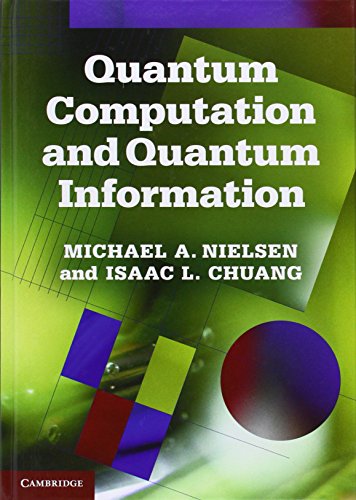
Drawing from their deep expertise in physics and mathematics, Michael A. Nielsen and Isaac L. Chuang explore the fundamental limits of computation and communication through the lens of quantum mechanics. You’ll encounter detailed explanations of key concepts like quantum algorithms, teleportation, cryptography, and error correction, supported by extensive figures and exercises that deepen understanding. The book offers a rigorous foundation for anyone looking to grasp how quantum states enable new computational possibilities beyond classical limits, making it ideal if you have a strong interest in the theoretical and practical aspects of quantum information science. While demanding, this text rewards those ready to tackle its challenges with a thorough grasp of quantum computing’s core principles.
30-Day Quantum Coding System

This tailored book explores rapid, customized quantum programming techniques designed specifically for practitioners eager to accelerate their quantum coding skills. It covers foundational quantum computing concepts, guiding you through practical quantum algorithm development while focusing on your unique background and goals. The book reveals how to bridge complex expert knowledge with your personal learning needs, providing a clear pathway that emphasizes hands-on programming and problem-solving in quantum environments. By tailoring content to your interests, this book helps you navigate intricate quantum topics efficiently, making advanced programming accessible within a focused 30-day framework. It offers a personalized journey through quantum programming that matches your experience and aspirations.
6. Quantum Computing

The breakthrough moment came when Jack D. Hidary, a research scientist at Alphabet X with deep expertise in quantum computing and AI, developed this integrated approach to teaching quantum computing through both theory and hands-on coding. You’ll find detailed coverage spanning foundational quantum circuits, key algorithms complete with code examples, and the mathematical tools necessary to navigate this complex field. The second edition updates core content with topics like quantum machine learning and error correction, reflecting the latest advancements. This book suits academics, corporate engineers, and self-learners aiming to gain practical skills and conceptual clarity in quantum computing.
7. Introduction to Quantum Mechanics

David J. Griffiths' extensive experience as a physics professor shines through in this textbook, designed to make quantum mechanics approachable without sacrificing rigor. You’ll explore foundational concepts like time-dependent potentials and symmetries alongside modern applications in solid-state physics, supported by numerical problems you can solve computationally. The authors break down abstract principles into clear explanations, helping you develop a solid grasp of both theory and practical techniques. This book suits those with some physics background eager to deepen their understanding, though it may challenge beginners without prior exposure to advanced mathematics.
8. Quantum Computing for the Quantum Curious

Drawing from a deep foundation in theoretical physics and quantum phenomena, this book demystifies quantum computing without drowning you in complex math. It walks you through the core concepts of superposition, entanglement, and measurement using accessible language and hands-on labs, making an abstract subject tangible. You’ll find tailored sections that match your comfort with math and physics, plus problem sets that let you experiment with quantum programs. Whether you’re a motivated high schooler, a college student exploring computing, or a professional curious about the future of technology, this book offers a clear window into how quantum mechanics reshapes computation.
9. A Gentle Introduction to Quantum Computing

When L.D. Knowings first realized how quantum computing was reshaping the IT landscape, he set out to demystify this emerging technology for professionals like you. This book breaks down complex ideas such as qubits, superposition, and entanglement using analogies rooted in familiar IT concepts, making the subject accessible without oversimplifying. You'll explore practical applications like quantum gates, quantum machine learning, and cybersecurity impacts, with real-world examples spanning healthcare to finance. If you're an IT professional eager to understand and leverage quantum computing in your career, this guide offers a clear path forward, balancing technical insight with actionable knowledge.
10. Programming Quantum Computers

What happens when a seasoned software engineer with a flair for quantum physics writes a programming guide? Eric R. Johnston, alongside Nic Harrigan and Mercedes Gimeno-Segovia, delivers a hands-on manual that skips heavy theory in favor of practical coding examples to build your intuition for quantum algorithms. You’ll explore topics from qubit manipulation and quantum teleportation to algorithmic primitives like the Quantum Fourier Transform and applications including Shor’s algorithm. This book suits software engineers and computer scientists eager to understand quantum programming’s unique demands and capabilities without getting lost in abstract mathematics.
Enjoying these picks?
The best Quantum Computing books and more, in your inbox each week. No account needed.
Conclusion
This collection of books reveals two clear themes: the necessity of mastering foundational quantum principles and the value of connecting theory with practical programming skills. If you're a newcomer, starting with Bernhardt's approachable explanations can build your conceptual groundwork. For those aiming to apply quantum computing in software, Hundt's and Johnston's works offer actionable coding knowledge.
For rapid implementation, pairing Nielsen and Chuang's theoretical depth with Hidary's applied approach can bridge gaps between understanding and practice. Alternatively, you can create a personalized Quantum Computing book to bridge the gap between general principles and your specific situation.
These books can help you accelerate your learning journey, equipping you to contribute meaningfully to the evolving quantum landscape.
Frequently Asked Questions
I'm overwhelmed by choice – which book should I start with?
Yes, starting can feel daunting. For a newcomer comfortable with math, 'Quantum Computing for Everyone' by Chris Bernhardt is a clear, gentle introduction favored by Scott Aaronson. It lays a solid foundation before diving into more complex texts.
Are these books too advanced for someone new to Quantum Computing?
Not necessarily. Several books like Bernhardt's and 'Quantum Computing for the Quantum Curious' offer accessible entry points. They balance clarity with rigor, making them suitable for beginners with some technical background.
What's the best order to read these books?
Begin with conceptual introductions such as Bernhardt’s or Hughes’s 'Quantum Computing for the Quantum Curious,' then progress to programming-focused books by Hundt or Johnston. Finally, dive into deeper theory with Nielsen and Chuang or Mermin.
Should I start with the newest book or a classic?
Both have value. Newer books like 'Quantum Supremacy' by Michio Kaku offer current perspectives, while classics like 'Quantum Computation and Quantum Information' remain foundational. Pairing them provides balanced insight.
Which books focus more on theory vs. practical application?
Nielsen and Chuang’s and Mermin’s books emphasize theory and foundational algorithms, whereas Hundt’s and Johnston’s texts lean towards practical programming and real-world quantum computing applications.
Can I get tailored quantum computing learning without reading all these books?
Absolutely. While these expert books provide strong foundations, you can create a personalized Quantum Computing book to focus on your specific goals and background, bridging expert knowledge with your unique learning needs.
Help fellow book lovers discover great books, share this curated list with others!
Related Articles You May Like
Explore more curated book recommendations