10 Recession Books That Shape How Experts Navigate Downturns
Insights from Sheryl Sandberg, Michael Berry, and Mark Smucker on top recession books for strategy and survival
Updated on June 25, 2025·We may earn commissions for purchases made via this page
10 of 10 books have Kindle versions
We're launchingLaunching on Product Hunt today 🎉We just launchedJust launched on Product Hunt 🎉
Modelpeers, from the BookAuthority teamFrom the BookAuthority team: Modelpeers, a free way to follow AI models and agents like you follow people. We'd love your support.
What if you could anticipate the twists and turns of an economic downturn before they upend your life or business? Recessions don’t just disrupt markets; they reshape opportunities and risks in ways many miss until it's too late. Understanding these shifts is more urgent than ever as global economies face complex pressures that defy old playbooks.
Sheryl Sandberg, the former COO of Facebook, has praised The Big Short for illuminating the human and financial dynamics behind the 2008 crash, while Mark Smucker, President of The J.M. Smucker Company, endorses Rock the Recession as a blueprint for business leaders ready to thrive, not just survive. Michael Berry, known for his sharp economic commentary, highlights the clarity these books offer in understanding recessions' real impacts.
These carefully selected titles provide proven frameworks and nuanced insights. Yet, if you're looking for strategies tailored to your unique financial situation, career stage, or industry, consider creating a personalized Recession book that builds on these expert recommendations to deliver custom guidance just for you.
Mark Smucker, President of The J.M. Smucker Company, shares a compelling endorsement rooted in firsthand appreciation of business cycles and leadership challenges. He highlights how Paul Belair’s story of an American Dream exit is laid bare in the book, offering you a clear blueprint for navigating recessions effectively. "Paul had an American Dream exit from his company, and in this book, he shares exactly how he did it..." This candid insight reshaped Smucker’s perspective on recession planning, emphasizing preparation beyond mere survival. Alongside him, Peter Diamandis, a medical doctor and bestselling author, underscores how recessions can catalyze disruption and wealth creation, framing this book as essential for entrepreneurs eager to capitalize on downturns.
“Paul had an American Dream exit from his company, and in this book, he shares exactly how he did it. With a name like Rock the Recession, you know this book has to be good!”
Jonathan Slain and Paul Belair founded Recession.com to give entrepreneurs a free tool to assess their recession readiness at Recession.com/Ready. Jonathan Slain spent the Great Recession huddled in the fetal position on the floor of his office. He borrowed $250,000 from his mother-in-law to survive. Jonathan paid his mother-in-law back and is now a highly sought-after consultant (and, yes, he's still married!). Jonathan leverages his experience in investment banking and as an entrepreneur on the keynote speaking circuit because he doesn't want anyone else to have to borrow money from their mother-in-law in the next recession.
2019·264 pages·Recession, Strategy, Business Finance, Leadership, Opportunity Recognition
Jonathan Slain and Paul Belair draw from firsthand experience and investment banking backgrounds to dissect how business leaders can not just survive but take advantage of recessions. Their book details the Recession Gearbox model, teaching you to evaluate your financial health, sharpen your business strategy, and spot when to seize opportunities like acquiring struggling companies or recruiting top talent. You’ll find vivid stories from entrepreneurs who thrived during the Great Recession, offering practical insights into tuning your mindset and operations for downturns. This book suits business owners and leaders ready to shift from defensive survival to proactive wealth creation amid economic uncertainty.
Michael Berry, a respected talk show host known for his sharp economic commentary, credits this book with deepening his understanding of the 2008 financial meltdown. He notes how the book sheds light on Michael Burry's foresight, which many dismissed at the time, and praises the insights it offers beyond just market mechanics. "If you've seen The Big Short, the movie adaptation of the splendid book by Michael Lewis, Michael Burry is played by Christian Bale. Foresaw the mortgage bust, & nobody believed him. He was right. He has some interesting & insightful things to say about more than just markets," Berry explains. Alongside Berry, Paul Kedrosky, an investor and former academic, appreciates how the book makes complex financial concepts more accessible, even if some compromises are made in adaptation.
“If you've seen The Big Short, the movie adaptation of the splendid book by Michael Lewis, Michael Burry is played by Christian Bale. Foresaw the mortgage bust, & nobody believed him. He was right. He has some interesting & insightful things to say about more than just markets.” (from X)
Michael Lewis is the best-selling author of Liar’s Poker, Moneyball, The Blind Side, The Big Short, The Undoing Project, and The Fifth Risk. He lives in Berkeley, California, with his family.
Michael Lewis, already known for his sharp insights into financial markets, takes you behind the scenes of the 2008 financial crisis in this detailed narrative. You get to understand complex financial instruments like mortgage-backed securities and collateralized debt obligations through storytelling about the small group who foresaw the crash. The book dissects not just the mechanics of the recession but also the psychology and character of those who bet against the market. Chapters highlight key players and their strategies, giving you a clear sense of how systemic risk was overlooked. This is a book for anyone wanting to grasp the human and technical causes of a major economic collapse, rather than just its aftermath.
This personalized AI book on recession strategy is created based on your background, skill level, and specific interests in leadership, finance, and market trends during downturns. By sharing what you want to focus on and your goals, you receive a book that matches your unique needs. This tailored approach helps you cut through broad economic theories to concentrate on what matters most for your situation and ambitions.
TailoredRead AI creates personalized nonfiction books that adapt to your unique background, goals, and interests. Instead of reading generic content, you get a custom book written specifically for your profession, experience level, and learning objectives. Whether you're a beginner looking for fundamentals or an expert seeking advanced insights, TailoredRead crafts a book that speaks directly to you. Learn more.
This personalized book explores recession strategies tailored to your unique background and goals. It examines leadership tactics, financial management, and market trend analysis specifically relevant during economic downturns. By focusing on your interests and knowledge level, it reveals how to navigate complex challenges with confidence and clarity. The book covers core economic concepts, risk assessment, and adaptive decision-making, blending expert insights into a tailored narrative that suits your needs. With this tailored approach, you gain a focused learning experience that addresses the nuances of recessionary environments, helping you understand and anticipate shifts in markets, finance, and leadership dynamics.
USA Today, a leading national publication with extensive coverage of economic issues, highlights this book as "the definitive book on Japan's decade-long recession in the 1990s." Their endorsement carries weight given their broad expertise in economic reporting. This recommendation emerged from their comprehensive examination of recession literature, recognizing how Richard C. Koo's analysis reshaped understanding of prolonged economic stagnation by focusing on corporate debt minimization and balance sheet recessions. Their insight sheds light on why traditional theories often miss the mark and how this book changed the conversation about economic policy during downturns.
Richard C. Koo is the Chief Economist of Nomura Research Institute, the research arm of Nomura Securities, the leading securities house in Japan. Consistently voted as one of the most reliable economists by Japanese capital and financial market participants for nearly a decade, he has also advised successive prime ministers on how best to deal with Japan's economic and banking problems. Prior to joining Nomura, he was an economist with the Federal Reserve Bank of New York, and was a Doctoral Fellow of the Board of Governors of the Federal Reserve System. Author of many books and a visiting professor of Waseda University, he was awarded the Abramson Award by the National Association of Business Economics, Washington, D.C. for 2001. He is also a columnist with BusinessWeek Online and the only non-Japanese member of the Defense Strategy Study Conference of the Japan Ministry.
Richard C. Koo, chief economist at Nomura Research Institute, challenges the conventional wisdom that firms always prioritize profit maximization, revealing instead how Japanese companies during the 1990s recession shifted focus to minimizing debt to restore creditworthiness. This approach uncovers why prolonged depressions and liquidity traps occur, areas where traditional macroeconomic theories fall short. You’ll learn about the yin and yang business cycle framework that distinguishes normal economic behavior from balance sheet recessions, offering fresh insight into policy responses like the necessity of fiscal over monetary interventions during downturns. This book suits economists, policymakers, and anyone seeking a deeper understanding of recession dynamics beyond textbook models.
James Rickards brings unparalleled expertise as a portfolio manager, lawyer, and economist with senior roles at Citibank, Long-Term Capital Management, and Caxton Associates. His extensive background, including negotiating the LTCM rescue in 1998 and contributing to prominent publications like the Financial Times and New York Times, underpins this analysis of the post-pandemic economic crisis. Rickards draws on historical insights and monetary theory to illuminate the challenges ahead, offering readers a clear-eyed perspective on preserving wealth amid unprecedented uncertainty.
James Rickards is the Editor of Strategic Intelligence, a financial newsletter, and Director of The James Rickards Project. He is the author of The New Case for Gold, and two New York Times best sellers, The Death of Money and Currency Wars. He is a portfolio manager, lawyer, and economist, and has held senior positions at Citibank, Long-Term Capital Management, and Caxton Associates. In 1998, he was the principal negotiator of the rescue of LTCM sponsored by the Federal Reserve. His clients include institutional investors and government directorates. He is an Op-Ed contributor to the Financial Times, Evening Standard, New York Times, and Washington Post, and has been interviewed on BBC, CNN, NPR, C-SPAN, CNBC, Bloomberg, Fox, and The Wall Street Journal. Mr. Rickards is a guest lecturer in globalization and finance at various prestigious universities and has presented papers on risk at notable institutions. He holds multiple advanced degrees and lives in New Hampshire.
James Rickards, a seasoned portfolio manager and economist with a storied career at Citibank and Long-Term Capital Management, offers a sobering analysis of the economic fallout unleashed by the COVID pandemic. His book unpacks how this crisis diverges sharply from past recessions, detailing the roles of deflation, debt, and demographic shifts in prolonging economic distress. You gain insight into why traditional recovery hopes are misplaced and what strategies might protect your wealth amid widespread bankruptcies and banking instability. Chapters drawing on historical case studies and monetary theory clarify the risks and outline approaches for investors aiming to navigate this turbulent landscape.
Richard Duncan, author of The Dollar Crisis, emphasizes the critical insights in this book, highlighting how policymakers who overlook Koo's findings risk imposing needless hardship. His extensive experience analyzing economic depressions gives weight to his view that this work is indispensable for understanding the current crisis. The book reshaped his perspective on recovery strategies, showing how balance sheet recessions create unique obstacles. Similarly, Lawrence Summers, Harvard professor and former U.S. Treasury Secretary, regards Koo as a pioneer in updating macroeconomic thought to fit today's financial challenges, urging close study of his ideas to improve the decade ahead.
“When the history of this depression is written, policymakers who ignore Koo's finding will be judged harshly for imposing unnecessary suffering on their societies.”
Richard C. Koo is the Chief Economist of Nomura Research Institute, a research arm of Nomura Securities, the leading securities house in Japan. Best known for developing the concept of balance sheet recession, which is now used widely around the world, he has also advised successive prime ministers on how best to deal with Japan's economic and banking problems. Consistently voted as one of the most reliable economists by Japanese market participants for over a decade, he was a Doctoral Fellow of the Board of Governors of the Federal Reserve System and an economist with the Federal Reserve Bank of New York prior to joining Nomura.
After analyzing Japan's prolonged economic stagnation, Richard C. Koo developed the concept of the balance sheet recession, which forms the backbone of this book. You learn how unique political and financial dynamics can trap economies, preventing recovery despite aggressive fiscal and monetary policies. Koo provides detailed comparisons of Japan, the US, Europe, and China, offering insights into quantitative easing's long-term effects and the Eurozone crisis. This book suits economists, policymakers, and anyone wanting to understand the nuanced mechanisms behind modern recessions beyond traditional theories.
This AI-created book on financial resilience is crafted based on your background and goals related to navigating recessions. By sharing your current financial situation and which recovery steps you want to focus on, you receive a book that matches your needs precisely. This personalized approach ensures you get relevant, clear guidance tailored to your challenges, making complex recession recovery concepts easier to understand and apply. Unlike generic advice, this custom book provides a focused learning path designed specifically for your journey toward financial stability.
TailoredRead AI creates personalized nonfiction books that adapt to your unique background, goals, and interests. Instead of reading generic content, you get a custom book written specifically for your profession, experience level, and learning objectives. Whether you're a beginner looking for fundamentals or an expert seeking advanced insights, TailoredRead crafts a book that speaks directly to you. Learn more.
This tailored book explores practical steps to stabilize and grow your finances during recession periods, focusing on your unique financial background and goals. It examines key principles of managing cash flow, reducing debt, and identifying opportunities for growth when economic conditions are challenging. The personalized approach means the content matches your specific situation, addressing your concerns and aspirations with actionable guidance. You'll discover how to navigate financial uncertainty with confidence and build resilience that suits your circumstances.
By concentrating on your interests, this book reveals tailored pathways for rapid recovery and sustainable financial health. It integrates expert knowledge with your personal financial landscape, making complex economic concepts accessible and relevant to you.
Mike Gatto, a four-term California State Assemblyman and seasoned political analyst, highlights this book as a must-read for anyone serious about understanding macroeconomic realities. His recommendation comes from a place of frustration with common misunderstandings around recession causes and monetary policy. "You’re smart, so I ask you to read Richard Duncan’s book," he insists, underscoring how the author’s insights challenge widely held assumptions. This book reshaped Gatto’s perspective on credit’s central role in economic cycles and the risks facing global markets today.
Former California Assemblyman and political analyst
“@DavidOAtkins OK. You don’t really seem open-minded to learning more on this topic. Your second sentence juxtaposed with your first shows remarkable macroeconomic innocence. (I almost used another I-word). You’re smart, so I ask you to read Richard Duncan’s book. Not sure what else to say.” (from X)
Richard Duncan is the author of two earlier books on the global economic crisis. The Dollar Crisis: Causes, Consequences, Cures explained why a worldwide economic calamity was inevitable given the flaws in the post-Bretton Woods international monetary system. It was an international bestseller. The Corruption of Capitalism described the long series of US policy mistakes responsible for the crisis. He has served as global head of investment strategy at ABN AMRO Asset Management and worked as a financial sector specialist for the World Bank. He is now chief economist at Blackhorse Asset Management in Singapore.
Richard Duncan's decades as a global investment strategist and World Bank specialist underpin this focused examination of the post-gold monetary system's fragility. He introduces the Quantity Theory of Credit to explain how credit expansion, rather than capital investment, now drives economic growth and why its contraction risks deepening the current downturn into a new Great Depression. You'll gain insight into the historical shift since 1968, the mechanics behind government responses, and how these dynamics influence asset prices. This book suits economists, investors, and policy watchers seeking to understand the structural causes behind today's economic instability without getting lost in jargon.
J Scott brings a unique blend of Silicon Valley corporate leadership and extensive real estate investing experience to this book. After leaving high-level roles at Microsoft and eBay, he and his wife pivoted to real estate, acquiring and managing over $60 million in properties nationwide. His decade-long journey informs this guide, which explains how understanding economic cycles can empower you to adapt and thrive in any market phase, making his insights valuable for anyone looking to deepen their investing acumen.
J Scott spent much of his early career in Silicon Valley, where he held management positions at several Fortune 500 companies, including Microsoft and eBay. In 2008, J and his wife Carol decided to quit their corporate jobs, move back East, start a family, and focus on real estate investing. In the past ten years, they have bought, built, rehabbed, sold, lent-on and held over $60M in property all around the country. J is also the co-host of The BiggerPockets Business Podcast and the author of four books on real estate investing, which have sold over 200,000 copies and have helped investors from around the world get started with real estate. J and his family currently live in Sarasota, FL.
2020·159 pages·Economy, Recession, Real Estate Investing, Market Cycles, Investment Strategies
What if everything you knew about real estate investing during recessions was wrong? J Scott, with his Silicon Valley management background and a decade of hands-on investing experience, unpacks the economic cycle’s four phases and their distinct impacts on property strategies. You’ll find concrete guidance on recognizing market shifts and adjusting your tactics to not just weather downturns but to capitalize on them. For example, the book breaks down how to pivot investment approaches during expansion versus recession phases. If you’re serious about building resilient real estate wealth amid economic uncertainty, this book offers a grounded perspective tailored for both novices and seasoned investors.
Bill Wiese is a New York Times best-selling author and a seasoned real estate broker with more than 35 years of experience navigating market fluctuations. His extensive career and media presence give him a unique perspective on economic uncertainty. This background fuels his motivation to guide you through practical life principles aimed at thriving, not just surviving, during recessions, making his insights especially relevant for anyone facing financial instability.
Bill Wiese is a New York Times best-selling author and was a successful real estate broker for more than 35 years. He speaks internationally and has appeared on numerous television and radio shows. He lives with his wife, Annette, in Southern California.
Recession, Economics, Personal Finance, Recession Planning, Financial Resilience
Bill Wiese, drawing on over three decades as a top real estate broker and his experience navigating volatile markets, offers a grounded approach to managing personal and financial stability during downturns. Through practical life principles rather than abstract economic theory, you learn how to adapt your mindset and daily habits to weather uncertainty, from budgeting strategies to resilience-building tactics. The book delves into real-life examples illustrating how shifts in attitude and preparation can protect against common pitfalls in recessions. If you want a straightforward guide rooted in lived experience rather than just numbers, this book addresses how to thrive when the economy falters.
Jim Fite is a seasoned business consultant and motivational speaker whose years of guiding organizations through tough economic times inform this book. His practical insights reflect a deep understanding of market dynamics and a commitment to helping businesses not just survive, but thrive during recessions. This background makes the book a valuable resource for those looking to strengthen their approach to economic challenges.
Jim Fite is a seasoned business consultant and motivational speaker with extensive experience in guiding organizations through economic challenges. His insights are drawn from years of practical experience and a deep understanding of market dynamics, making him a trusted advisor for businesses looking to thrive in tough times.
Drawing from his extensive experience as a business consultant and motivational speaker, Jim Fite offers a focused guide to navigating the financial and organizational challenges of recessions. You’ll find specific strategies on preparing financially before downturns, engaging effectively with your team, and setting measurable goals that keep momentum during economic uncertainty. The book emphasizes the importance of mentorship and peer support, underscoring success as a continuous journey fueled by people and persistent effort. If you’re seeking practical wisdom to maintain stability and growth through recessionary periods, this book lays out actionable concepts without unnecessary jargon.
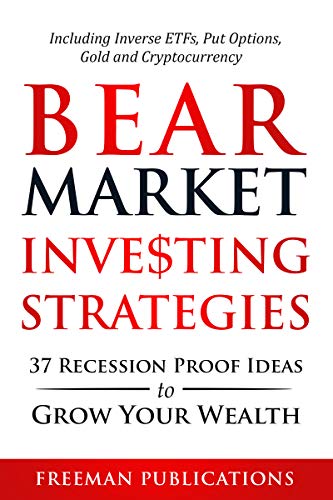
Freeman Publications was founded by an investor weary of hype-filled financial advice, bringing you a grounded approach to recession investing. This team's dedication to straightforward, long-term strategies for all age groups shines through in their practical guide to surviving market downturns. Their collective experience translates into clear advice on protecting and growing your wealth, making this book a valuable companion for anyone serious about navigating economic uncertainty.
Freeman Publications was started by a frustrated investor who was tired of hype-fueled sales pitches. The team is committed to helping individuals achieve financial freedom through intelligent long-term investing, catering to all ages from 18 to 80.
Freeman Publications started this book out of frustration with hype-driven investment advice, aiming instead to offer straightforward strategies for navigating economic downturns. You'll uncover specific tools like inverse ETFs, put options, and gold investments explained in accessible terms, along with warnings about common pitfalls such as gold buying mistakes and fraudulent schemes. The book breaks down 37 recession-proof ideas that anyone with a brokerage account can apply, making it a practical guide for protecting and growing wealth during bear markets. If you're looking for realistic methods to shield your portfolio from recession risks and seize emerging opportunities, this book lays out a clear, no-frills roadmap.
The best Recession books and more, in your inbox each week. No account needed.
Conclusion
The books gathered here highlight three key themes: the importance of proactive leadership during downturns, the necessity of grasping both macroeconomic forces and personal finance resilience, and the value of strategic investment approaches tailored to recession cycles. For entrepreneurs and executives confronting uncertainty, Rock the Recession offers actionable leadership strategies. Investors seeking to safeguard and grow wealth will find Bear Market Investing Strategies and Recession-Proof Real Estate Investing especially practical.
If dissecting economic theory appeals to you, The Holy Grail of Macroeconomics and The Escape from Balance Sheet Recession and the QE Trap deepen your understanding of recession dynamics. Meanwhile, those aiming for personal financial stability can turn to Recession-Proof Living for grounded advice.
Alternatively, you can create a personalized Recession book to bridge the gap between general principles and your specific situation. These books together can accelerate your learning journey and prepare you to navigate the next economic downturn with confidence.
Frequently Asked Questions
I'm overwhelmed by choice – which book should I start with?
Start with Rock the Recession if you're a business leader looking for practical strategies, or The Big Short if you want to understand the financial mechanics behind recessions. Both offer accessible yet deep insights that set a strong foundation.
Are these books too advanced for someone new to Recession?
Not at all. While some books delve into economic theory, titles like Recession-Proof Living and Success Through A Recession offer straightforward advice that’s approachable for beginners.
What's the best order to read these books?
Begin with broader narratives like The Big Short and Rock the Recession for context, then explore specialized books like The Holy Grail of Macroeconomics or Bear Market Investing Strategies depending on your interests.
Should I start with the newest book or a classic?
Balance both. Newer books, like The New Great Depression, address current economic realities, while classics like The Holy Grail of Macroeconomics provide enduring frameworks.
Which books focus more on theory vs. practical application?
The Holy Grail of Macroeconomics and The Escape from Balance Sheet Recession and the QE Trap lean toward theory, while Recession-Proof Real Estate Investing and Success Through A Recession emphasize actionable tactics.
How can I apply these expert insights to my unique situation without reading all the books?
Great question! While these books offer valuable expert knowledge, creating a personalized Recession book can tailor insights to your industry, experience, and goals, bridging general wisdom with your specific needs. Learn more here.
📚 Love this book list?
Help fellow book lovers discover great books, share this curated list with others!