10 Best-Selling Environmental Science Books Millions Trust
Discover Environmental Science books recommended by Alwaleed Talal, David Roberts, and John Elkington—experts who shape the best-selling landscape.
Updated on June 28, 2025·We may earn commissions for purchases made via this page
6 of 10 books have Audiobook versions
We're launchingLaunching on Product Hunt today 🎉We just launchedJust launched on Product Hunt 🎉
Modelpeers, from the BookAuthority teamFrom the BookAuthority team: Modelpeers, a free way to follow AI models and agents like you follow people. We'd love your support.
There's something special about books that both critics and crowds love, especially in Environmental Science where the stakes couldn't be higher. These 10 best-selling books have drawn millions of readers eager to understand our planet's challenges and solutions. Environmental Science is more urgent than ever, touching on climate change, biodiversity, and sustainable futures that demand informed action.
Experts like Alwaleed Talal, chairman of Kingdom Holding Company, resonate with How to Avoid a Climate Disaster for its pragmatic strategies. Meanwhile, David Roberts, an energy politics commentator at Vox, endorses Drawdown for its practical roadmap to reverse global warming. And John Elkington, CEO of Volans, praises Drawdown as a beacon of hope and actionable climate solutions.
While these popular books provide proven frameworks, readers seeking content tailored to their specific Environmental Science needs might consider creating a personalized Environmental Science book that combines these validated approaches with your unique goals and background.
David Roberts, an energy politics commentator at Vox, highlights how this book fills a critical gap for ordinary people seeking to understand their role in climate action. He notes, "There’s been no real way for ordinary people to get an understanding of what they can do and what impact it can have... The public is hungry for this kind of practical wisdom." His endorsement aligns with the widespread embrace of this book, which lays out accessible, research-backed solutions to global warming. This practical perspective, coupled with Jacquelyn Gill’s emphasis on the book's role in climate action, makes it clear why many turn to this as a trusted guide for environmental engagement.
“There’s been no real way for ordinary people to get an understanding of what they can do and what impact it can have. There remains no single, comprehensive, reliable compendium of carbon-reduction solutions across sectors. At least until now. . . . The public is hungry for this kind of practical wisdom.” (from Amazon)
Paul Hawken is an environmentalist, entrepreneur, author, and activist known for his work in sustainability and social justice. He has written several influential books on environmental issues and founded multiple organizations focused on ecological restoration and climate change solutions.
When Paul Hawken gathered insights from scientists and policymakers worldwide, he crafted a detailed roadmap of 100 practical solutions to curb global warming. You’ll find chapters that explore diverse approaches—from clean energy innovations to empowering education for girls—which together outline a path to reduce atmospheric greenhouse gases. This book suits anyone eager to understand concrete actions that communities and individuals can support or initiate, providing a grounded sense of hope rather than abstract fear. It’s not just about theory; it illustrates how these strategies are already in motion across the globe, making the climate challenge more approachable and less daunting.
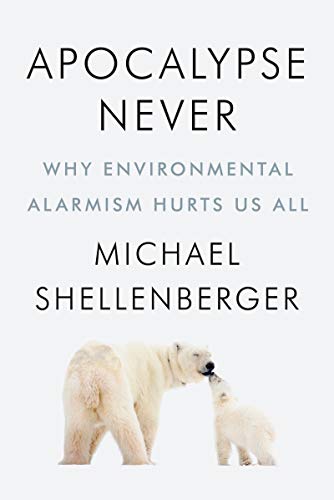
Maxime Bernier, leader of the People’s Party of Canada, recommends this book as a must-read, highlighting its critical stance against mainstream media narratives on climate alarmism. He calls it a veteran environmentalist's apology that challenges unfounded fears, reflecting a perspective that resonates deeply with many readers. Bernier’s endorsement underscores the book’s appeal for those skeptical of exaggerated environmental panic. Similarly, Joseph Kahn appreciates the balanced approach, acknowledging the reality of climate change while disputing extreme doomsday predictions, making this book a valuable read for anyone questioning prevailing environmental rhetoric.
“MUST READ - because the lying mainstream media won’t mention it. Veteran environmentalist apologizes in new book for unfounded climate change alarmism.” (from X)
Michael Shellenberger is the nationally bestselling author of Apocalypse Never and San Fransicko, a Time Magazine “Hero of the Environment,” the winner of the 2008 Green Book Award from the Stevens Institute of Technology’s Center for Science Writings, and an invited expert reviewer of the next Assessment Report for the Intergovernmental Panel on Climate Change (IPCC). He has written on energy and the environment for the New York Times, the Washington Post, the Wall Street Journal, Nature Energy, and other publications for two decades. Michael has broken major stories, including on the Twitter Files, for which he won the 2023 Dao Award for Journalism. He is the founder and president of Environmental Progress, an independent, nonpartisan research organization based in Berkeley, California.
Michael Shellenberger, a seasoned environmental advocate and energy expert, wrote this book to challenge the prevailing narrative of climate doom with grounded facts and decades of experience. You’ll learn why carbon emissions have declined in developed nations, how alarmism can hinder practical solutions like nuclear energy, and the complex social dynamics fueling environmental panic. The book offers a nuanced view, examining issues like deforestation, climate change, and industrial agriculture through scientific evidence and economic realities. If you want an alternative perspective that questions popular environmental alarmism while offering thoughtful insights, this book will engage you.
This AI-created book on climate mitigation is tailored to your environmental science background and specific interests. By sharing your goals and focus areas, you receive a custom guide that concentrates on the climate action methods most relevant to you. This personalized approach ensures you engage deeply with content that matches your knowledge level and ambitions, making your learning both efficient and impactful.
TailoredRead AI creates personalized nonfiction books that adapt to your unique background, goals, and interests. Instead of reading generic content, you get a custom book written specifically for your profession, experience level, and learning objectives. Whether you're a beginner looking for fundamentals or an expert seeking advanced insights, TailoredRead crafts a book that speaks directly to you. Learn more.
This tailored book explores battle-tested climate change mitigation methods designed specifically for readers with an interest in Environmental Science. It combines widely validated knowledge with your unique background and goals, focusing on effective carbon reduction techniques that align with your interests. The book examines practical approaches to minimizing greenhouse gas emissions, adopting sustainable practices, and understanding environmental impacts at both local and global scales. By addressing your specific objectives and skill level, this personalized guide offers a clear path to deepening your understanding of climate action and empowers you to make informed decisions within your field. Its focused content brings the latest, reader-validated insights directly to you, blending established science with your personal context.
Rachel Carson (1907-1964) spent most of her career as a marine biologist with the U.S. Fish and Wildlife Service, gaining recognition as one of America's most respected science writers. Her previous successes with books about the sea set the stage for Silent Spring, which she completed despite significant personal challenges. This book played a pivotal role in sparking the environmental movement and reshaping public awareness and policies regarding pesticide use, making it a foundational work for anyone interested in environmental science.
Rachel Carson (1907-1964) spent most of her professional life as a marine biologist with the U.S. Fish and Wildlife Service. By the late 1950s, she had written three lyrical, popular books about the sea, including the best-selling The Sea Around Us, and had become the most respected science writer in America. She completed Silent Spring against formidable personal odds, and with it shaped a powerful social movement that has altered the course of history.
Rachel Carson, a marine biologist with decades of experience and a celebrated science writer, crafted Silent Spring as a wake-up call about the environmental dangers posed by pesticide use. The book details the ecological and health impacts of chemicals like DDT, using vivid case studies and scientific evidence to challenge prevailing practices of the time. You’ll gain insight into how human actions disrupt natural systems and the importance of safeguarding air, water, and wildlife. This book suits anyone curious about environmental stewardship, policy change, or the origins of modern environmentalism.
Ecology and Applied Environmental Science offers a distinctive perspective by integrating scientific ecology with engineering principles to tackle contemporary environmental problems. The book’s systemic approach highlights energy flow, population dynamics, and chemical cycles, providing a focused yet accessible examination of ecosystems. It addresses pressing issues like pollution, habitat degradation, and climate impacts while exploring practical management and technological solutions. This makes it a valuable resource for those aiming to understand environmental science through a balanced scientific and applied framework, benefiting students and professionals seeking grounded environmental knowledge.
2013·290 pages·Environmental Science, Ecology, Ecosystems, Energy Flow, Population Dynamics
What if everything you knew about environmental challenges was reexamined through an engineering lens? Kimon Hadjibiros brings a systemic approach to ecology, focusing on energy flows, population dynamics, and chemical cycles to unravel complex environmental issues. You’ll gain insight into how ecosystems function and the interplay between organisms and physical processes, alongside practical considerations for managing pollution and conserving biodiversity. This book suits those interested in applying scientific principles to real-world environmental problems without getting lost in dense biology, offering a clear framework for understanding and addressing sustainability challenges.
Peter Egan, a UK actor deeply involved in animal advocacy, found in this book a vision for the future that "we must all share." His endorsement highlights how this witness statement from Sir David Attenborough resonates beyond scientific circles, inspiring a broad audience to follow a path toward planetary restoration. Egan’s reflection underscores the book's role in shaping personal and collective responsibility for the environment. Complementing this, Kirkus Reviews praises Attenborough’s blend of memoir and manifesto, noting his optimistic belief in human problem-solving, making the book a compelling read for anyone invested in the planet’s ecological future.
“Hi another quickie as they say in the trade. If you haven’t already..get a copy of David Attenborough’s remarkable book ‘A Life on Our Planet’ a vision for the future we must all share. It’s a path we must all follow.” (from X)
Sir David Attenborough is a BAFTA and Emmy-Award winning broadcaster and natural historian. He is the internationally bestselling author of over 25 books, including Life on Earth. He also served as controller of BBC Two and director of programming for BBC Television in the 1960s and 1970s, and as the President of the Royal Society for Nature Conservation in the 90s.
What happens when decades of natural history expertise meets urgent environmental concern? Sir David Attenborough, an award-winning broadcaster with over 25 bestselling books, offers a firsthand account of the planet's dramatic decline and a vision for restoring it. You’ll gain insights into how human activity has reshaped ecosystems, supported by personal observations and scientific context, especially in chapters that trace biodiversity loss and climate impacts. This book suits anyone eager to grasp the scale of environmental change and explore hopeful pathways forward, though it leans more toward awareness and big-picture solutions than technical policy details.
Goodreads Choice Award Winner for Best Science & Technology Book
This AI-created book on eco impact is designed around your unique interests and goals. By sharing your current habits and the areas where you want quick environmental improvements, this tailored guide focuses on actions that suit your lifestyle. Instead of generic advice, it delivers a personalized roadmap to help you make meaningful eco-friendly changes within 30 days. This approach ensures your efforts are both effective and aligned with what matters most to you.
TailoredRead AI creates personalized nonfiction books that adapt to your unique background, goals, and interests. Instead of reading generic content, you get a custom book written specifically for your profession, experience level, and learning objectives. Whether you're a beginner looking for fundamentals or an expert seeking advanced insights, TailoredRead crafts a book that speaks directly to you. Learn more.
This tailored book explores actionable steps to rapidly enhance your environmental impact within 30 days. It examines personalized approaches to sustainable living, focusing on practical changes that align with your background and goals. The content covers key areas such as waste reduction, energy conservation, and eco-friendly habits, all crafted to resonate with your interests. Combining widely validated knowledge with your unique priorities, the book reveals how to implement swift, meaningful environmental improvements. By focusing on your specific context, it provides a clear path to sustainable practices that are both achievable and impactful, making the journey to eco-conscious living engaging and manageable.
James Valentine, a guitarist for Maroon 5, found this book compelling for its in-depth exploration of environmental scenarios that resonate beyond typical science narratives. His appreciation for the detailed examination aligns with the widespread acclaim this book has earned among environmental science circles. As he shared, "This book goes into detail on such scenarios and was great…" This perspective highlights how the book bridges expert knowledge and accessible storytelling, making it a thoughtful choice for those seeking to understand humanity’s evolving relationship with nature.
Elizabeth Kolbert is a staff writer at The New Yorker and the author of Field Notes from a Catastrophe: Man, Nature, and Climate Change. She won the Pulitzer Prize for her coverage of climate change and is recognized as one of the most important writers on environmental issues today. Kolbert lives in Williamstown, Massachusetts, with her husband and children.
When Elizabeth Kolbert, a Pulitzer Prize-winning journalist for The New Yorker, examines humanity’s imprint on nature, she challenges you to rethink the future of the environment. In Under a White Sky, she explores how human interventions have not only damaged but now might save ecological systems, from preserving rare fish in the Mojave Desert to engineering climate solutions like carbon capture in Iceland. You’ll gain insights into the complex interplay between technology and ecology, including emerging efforts to create heat-resistant coral and geoengineering concepts. This book suits anyone curious about environmental science’s evolving role in addressing planetary crises, especially those interested in the ethical and practical dilemmas of manipulating nature to safeguard it.
Tim Soulo, CMO at Ahrefs and a respected voice in marketing, brought attention to this book after diving into its economic perspective on climate change. He noted, "Super interesting book about climate change and it's impact on the economy and the Earth," highlighting how the book helped him see climate issues through an economic lens. His endorsement aligns with many readers looking for a critical analysis that balances environmental concerns with economic realities, making it a thoughtful read for anyone interested in the intersection of climate science and policy.
Bjorn Lomborg is the bestselling author of The Skeptical Environmentalist and Cool It. He is president of the Copenhagen Consensus Center and a visiting fellow at Stanford University’s Hoover Institution. Time magazine named him one of the world’s one hundred most influential people, and his work appears regularly in top media across the world. He lives in Sweden.
Bjorn Lomborg, known for his critical approach to environmental issues and leadership at the Copenhagen Consensus Center, challenges prevailing climate change narratives in this book. You’ll explore how alarmist perspectives can lead to costly policies that may overlook more effective investments in human welfare, such as education and immunization. The book provides detailed economic analyses and critiques of climate projections, encouraging you to reassess what constitutes meaningful climate action. If you’re seeking a perspective that questions mainstream environmental urgency and emphasizes cost-benefit reasoning, this book offers a distinct viewpoint worth considering.
Luis Von Ahn, CEO and co-founder of Duolingo and MacArthur Fellow, shares how reading Bill Gates’s book on climate change deepened his appreciation for climate solutions amid growing global urgency. "I started reading @BillGates’s new book on climate change. What an amazing individual." His endorsement reflects the book’s balance of scientific insight and practical pathways, resonating with those seeking realistic approaches. Alongside Charles Mok, a former Hong Kong legislator, whose praise highlights Gates’s engineering precision, their perspectives help frame why this book remains a popular choice for those serious about environmental action.
Bill Gates is cochair of the Bill & Melinda Gates Foundation and founder of Breakthrough Energy. He founded Microsoft in 1975 with Paul Allen and led the company to become the worldwide leader in business and personal software and services. In 2008, Bill transitioned to focus full-time on his foundation’s work to expand opportunity to the world’s most disadvantaged people. As cochair, he leads the foundation’s development of strategies and sets the overall direction of the organization. Through his private office, Gates Ventures, he pursues his work on innovation in clean energy, Alzheimer’s disease and other healthcare issues, interdisciplinary education, and technology. At Breakthrough Energy, he’s putting his experience as an innovator and problem-solver to work to address climate change by supporting the next generation of entrepreneurs, big thinkers, and clean technologies. In 2010, Bill, Melinda French Gates, and Warren Buffett founded the Giving Pledge, an effort to encourage the wealthiest families and individuals to publicly commit more than half of their wealth to philanthropic causes and charitable organizations during their lifetime or in their will.
What if everything you knew about tackling climate change was reconsidered? Bill Gates, leveraging his vast experience in technology and philanthropy, presents a detailed analysis of how the world can realistically achieve net-zero greenhouse gas emissions. You’ll gain insights into existing technologies, the urgent need for breakthroughs, and practical actions governments and individuals can take. Chapters explore sectors like energy production, manufacturing, and agriculture, highlighting both challenges and innovative solutions. This book suits those who want a clear-eyed, scientifically grounded roadmap rather than abstract environmental rhetoric.
Jeff Goodell’s credentials speak volumes: a Guggenheim Fellow and more than twenty years reporting on climate change for Rolling Stone and major news networks. His new book dives into how rising heat is already reshaping the planet, blending scientific insight with compelling storytelling. This background uniquely positions him to unpack the complex, often invisible threat of extreme heat, making this work a critical resource for anyone seeking to understand and respond to our warming world.
Jeff Goodell’s latest book is The Heat Will Kill You First: Life and Death on a Scorched Planet. He is the author of six previous books, including The Water Will Come: Rising Seas, Sinking Cities, and the Remaking of the Civilized World, which was a New York Times Critics Top Book of 2017. He has covered climate change for more than two decades at Rolling Stone and discussed climate and energy issues on NPR, MSNBC, CNN, CNBC, ABC, NBC, Fox News and The Oprah Winfrey Show. He is a 2020 Guggenheim Fellow and a Contributing Writer at Rolling Stone, where he has written about energy and climate change for more than a decade.
What happens when a seasoned climate journalist tackles the threat of rising temperatures? Jeff Goodell, with over two decades covering climate change for Rolling Stone, explores the blunt reality of heat as a driving force behind global crises. You’ll learn how escalating heatwaves reshape ecosystems, affect public health, and expose societal vulnerabilities, with vivid examples like the shifting seasons and intensifying wildfires. The book drills down into why heat is the silent predator changing your world — from food supplies to urban survival — making it essential reading if you want to grasp how climate change impacts daily life and policy.
Raffi Cavoukian, known for her advocacy in ecology and climate emergency, highlights this 2007 book as an engaging, clear explanation of climate tipping points. Her endorsement reflects how the book’s detailed scientific insights helped clarify complex climate risks during her environmental work. "This 2007 climate book is an engaging read, climate tipping points are very well explained. Remarkably clear, insightful," she notes, underscoring why this book remains a valuable guide for those wanting to understand the rapid changes threatening our planet.
What happens when a seasoned environmental journalist dives deep into the fears of climate scientists? Fred Pearce, with nearly two decades covering climate change, pulls back the curtain on the accelerating threats posed by tipping points in Earth's climate system. You’ll learn about the unexpected speed and intensity of natural climate shifts, from melting permafrost in Siberia to disrupted ocean currents, framed through firsthand accounts of scientists grappling with these alarming signals. This book suits anyone wanting to grasp the urgency behind climate models and the potentially irreversible changes looming on our horizon.
The best Environmental Science books and more, in your inbox each week. No account needed.
Conclusion
This curated collection reveals clear themes: the power of actionable climate solutions, the value of critical perspectives questioning alarmism, and the importance of understanding both human impact and natural systems. If you prefer proven methods, start with Drawdown and How to Avoid a Climate Disaster. For validated approaches exploring ecological balance, combine Ecology and Applied Environmental Science with Under a White Sky.
Alternatively, you can create a personalized Environmental Science book to combine proven methods with your unique needs. These widely-adopted approaches have helped many readers succeed in grasping complex environmental challenges and shaping hopeful futures.
Frequently Asked Questions
I'm overwhelmed by choice – which book should I start with?
Start with Drawdown for practical climate solutions or Silent Spring for environmental history. Both offer accessible entry points into Environmental Science with proven value.
Are these books too advanced for someone new to Environmental Science?
No, many titles like A Life on Our Planet and How to Avoid a Climate Disaster are approachable and provide clear insights suitable for beginners.
What’s the best order to read these books?
Begin with broad overviews like Silent Spring, then explore solution-focused books like Drawdown, followed by critical perspectives such as Apocalypse Never for a balanced understanding.
Should I start with the newest book or a classic?
Both have merits. Classics like Silent Spring provide foundational context, while newer works like The Heat Will Kill You First offer fresh insights on today's challenges.
Do these books assume I already have experience in Environmental Science?
Most are written for a general audience and explain key concepts clearly, so prior experience isn’t necessary to gain value from them.
Can personalized Environmental Science books complement these expert recommendations?
Yes! While these books offer popular, proven insights, personalized books tailor content to your specific goals and background, enhancing your learning. Try creating your own for a custom fit.
📚 Love this book list?
Help fellow book lovers discover great books, share this curated list with others!