9 Social Psychology Books That Transform Understanding and Influence
Recommended by Alexis Ohanian, Jim Oshaughnessy, and Paul Bloom — Essential reads to grasp social psychology fundamentals and advanced insights.
Updated on June 27, 2025·We may earn commissions for purchases made via this page
7 of 9 books have Kindle versions
We're launchingLaunching on Product Hunt today 🎉We just launchedJust launched on Product Hunt 🎉
Modelpeers, from the BookAuthority teamFrom the BookAuthority team: Modelpeers, a free way to follow AI models and agents like you follow people. We'd love your support.
What if your understanding of why people say "yes" or how they judge strangers is only scratching the surface? Social psychology unravels the unseen forces shaping human behavior and decision-making. Right now, as society wrestles with trust, influence, and division, these insights couldn't be more crucial.
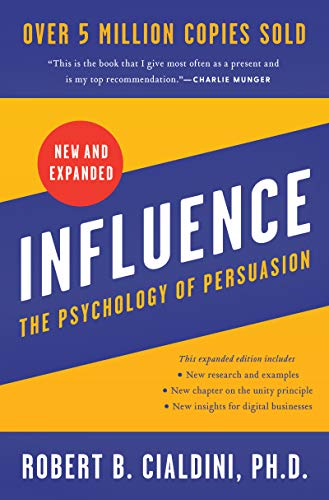
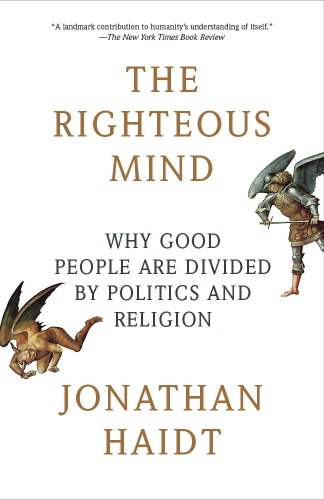
Experts like Jim Oshaughnessy, founder of OSAM LLC, have long praised Robert Cialdini’s "Influence, New and Expanded" for unveiling the subtle mechanics behind persuasion. Meanwhile, behavioral economist Paul Bloom highlights Jonathan Haidt’s "The Righteous Mind" for its revealing look into moral divisions that shape our politics and religion. These authorities underscore the power of social psychology to illuminate complex human interactions.
While these expert-curated books provide proven frameworks, readers seeking content tailored to their specific background, goals, or interests might consider creating a personalized Social Psychology book that builds on these insights for a more customized learning journey.
Jim Oshaughnessy, founder and chairman of OSAM LLC, discovered this book as a key resource for decoding the subtle ways persuasion shapes decisions. Reflecting on his extensive experience in investment and marketing, he shares, "This is a great book that I recommend frequently. Between a yes and a no, there's always a maybe. Here are some of the tricks of the trade people use to try to persuade you." His appreciation for Cialdini’s principles underscores their practical impact on understanding influence in business and life. Likewise, Professor Kalkyl, co-founder of Quartr_App, praises its timeless insights, highlighting its role in explaining mental biases through real-world examples, making it a worthy read for anyone curious about social psychology.
“This is a great book that I recommend frequently. Between a yes and a no, there's always a maybe. Here are some of the tricks of the trade people use to try to persuade you.” (from X)
Robert B. Cialdini, PhD is an award-winning behavioral scientist and author. He is the president and CEO of Influence at Work, focusing on live and virtual keynotes, streaming and online corporate training. In acknowledgement of his outstanding research achievements and contributions in behavioral science, Dr. Cialdini was elected to the American Academy of Arts & Sciences and the National Academy of Sciences. He has over 230 professional and scientific publications. Robert Cialdini is Regents' Professor Emeritus of Psychology and Marketing at Arizona State University. Dr. Cialdini is known as the foundational expert in the science of influence and how to apply it ethically in business and elsewhere, and his Principles of Persuasion have become the cornerstone for any organization serious about increasing their effectiveness in sales, leadership, marketing, management and communication. He is a three-time New York Times bestselling author, with more than 5 million copies sold throughout the world. He is frequently referred to as the “Godfather of Influence.”
The breakthrough moment came when Robert B. Cialdini, an award-winning behavioral scientist and Regents' Professor Emeritus, synthesized decades of research into the principles that govern why people say yes. This book unpacks six core principles of persuasion—such as reciprocation, social proof, and authority—plus a newly added principle called unity, illustrating each with vivid stories and scientific studies. You’ll gain a nuanced understanding of how influence operates in everyday interactions and business contexts, and learn to recognize and ethically apply these tactics. Whether you’re in marketing, leadership, or simply curious about human behavior, this book sharpens your ability to both persuade and guard against manipulation.
Alice Kemper, an award-winning sales and leadership consultant, brings a wealth of experience in guiding professionals to communicate more effectively, making her endorsement of this book highly significant. Her focus on leadership and sales synergy aligns with the book’s deep dive into how pre-suasion techniques can transform influence strategies. Alongside her, Richard H Thaler, a professor renowned for his work in behavioral economics, underscores the scientific rigor behind these persuasion principles. Their combined expertise highlights this book as a valuable resource for anyone serious about understanding and applying social psychology to influence.
Robert Cialdini is recognized worldwide for his inspired field research on the psychology of influence. His books, including Influence, have sold more than three million copies in thirty-three languages. Dr. Cialdini is Regents’ Professor Emeritus of Psychology and Marketing at Arizona State University and the president and CEO of Influence at Work, an international company that provides keynotes and influence training on how to use the lessons in Dr. Cialdini’s books ethically and effectively.
Robert Cialdini's decades of research in social psychology led him to uncover how influence hinges not just on the message itself, but on what happens right before it's delivered. You learn to recognize and harness those critical moments of 'pre-suasion'—how shifting attention and framing context can prime your audience to be more receptive. The book digs into varied examples, from advertising to addiction treatment, illustrating how subtle shifts in focus can change minds without altering beliefs directly. If you're involved in marketing, leadership, or any form of persuasion, this book sharpens your understanding of psychological triggers that prepare people to say “yes.”
This personalized AI book about social psychology mastery is created after you share your background, skill level, and particular interest in influence and persuasion. It focuses on the specific topics you want to explore and aligns with your goals, providing a tailored pathway through complex expert insights. By honing in on what matters most to you, this book offers a unique and practical way to engage deeply with social psychology, guided by your own learning preferences.
TailoredRead AI creates personalized nonfiction books that adapt to your unique background, goals, and interests. Instead of reading generic content, you get a custom book written specifically for your profession, experience level, and learning objectives. Whether you're a beginner looking for fundamentals or an expert seeking advanced insights, TailoredRead crafts a book that speaks directly to you. Learn more.
2026·50-300 pages·Social Psychology, Social Influence, Persuasion Techniques, Attitude Change, Decision Making
This personalized book on social psychology mastery dives into the nuanced dynamics of influence and persuasion tailored to your background and objectives. It explores key concepts such as social perception, attitude formation, and behavioral change, while examining how these principles operate within your areas of interest. By focusing on your specific goals, it reveals pathways to apply social psychological insights for enduring impact in real-world interactions. Carefully tailored content helps bridge comprehensive expert knowledge with your unique learning needs, offering an engaging journey through the science of social influence that is both accessible and deeply relevant.
Jim Oshaughnessy, founder and chairman of OSAM LLC and host of a finance podcast, highlights how "Talking to Strangers" sharpened his perspective on complex social interactions, particularly in high-stakes situations. His insight stems from a deep understanding of behavioral patterns and decision-making, making his endorsement noteworthy for anyone curious about human judgment. He points to Gladwell's examination of real-world cases as eye-opening for grasping why we often misjudge strangers. Alongside him, Nilofer Merchant, an innovation author and TED speaker, provides a thoughtful analysis that complements this view, underscoring the book’s relevance for understanding social dynamics in unfamiliar encounters.
“@JackBristow9802 Yep. @Gladwell's book "Talking to Strangers: What We Should Know about the People We Don't Know" takes a great look at her case.” (from X)
Malcolm Gladwell is the author of seven New York Times bestsellers: The Tipping Point, Blink, Outliers, What the Dog Saw, David and Goliath, Talking to Strangers, and The Bomber Mafia. He is also the cofounder of Pushkin Industries, an audiobook and podcast production company. He was born in England, grew up in rural Ontario, and now lives in New York.
What if everything you thought about interacting with strangers was off? Malcolm Gladwell, known for his bestselling storytelling, challenges the assumptions behind how we judge unfamiliar people. You’ll explore cases like the CIA’s misreading of Fidel Castro and the tragic death of Sandra Bland to see how common strategies in social psychology fail us. This book digs into why misunderstandings happen, revealing patterns in deception, trust, and communication that shape society’s biggest conflicts. If you want sharper insights into human behavior and why we so often misread each other, this book offers a fresh, sometimes unsettling perspective.
Hunter Walk, Partner at Homebrew VC and former YouTube and Google product lead, brings a unique perspective to social psychology through his extensive experience in technology and product leadership. His endorsement signals this book's relevance in understanding complex social dynamics that influence human cooperation and division. With a background that navigates innovation and societal trends, Hunter Walk's recommendation highlights the book's value in decoding political and moral conflicts. Alongside him, Bridget Phetasy, a cultural commentator, praised the book's candid insight, emphasizing its unflinching honesty about human flaws and biases, underscoring its appeal for those seeking deeper self-awareness and societal understanding.
“Jonathan Haidt is one of smartest and most creative psychologists alive, and his newest book, The Righteous Mind, is a tour de force—a brave, brilliant and eloquent exploration of the most important issues of our time. It will challenge the way you think about liberals and conservatives, atheism and religion, good and evil. This is the book that everyone will be talking about.” (from Amazon)
Jonathan Haidt is the Thomas Cooley Professor of Ethical Leadership at New York University’s Stern School of Business. He obtained his Ph.D. in social psychology from the University of Pennsylvania in 1992, and then taught at the University of Virginia for 16 years. He is the author of The Happiness Hypothesis: Finding Modern Truth in Ancient Wisdom, and the co-editor of Flourishing: Positive Psychology and the Life Well-Lived. He lives in New York City.
Jonathan Haidt's decades of research in social psychology led him to challenge how we understand morality, politics, and religion in this book. You learn that moral judgments stem more from gut feelings than reason, explaining why liberals, conservatives, and libertarians have conflicting yet valid perspectives. The book dives into the psychological roots of cooperation and division, offering insights that help you grasp the complexity behind political and religious disagreements. Chapters unpack moral intuitions with examples that illuminate why each side is right about key concerns. If you seek to comprehend the underlying forces shaping societal conflicts, this book offers a rich, nuanced exploration.
Max Levchin, co-founder of PayPal and CEO of Affirm, brings deep experience in technology and business innovation, making his endorsement of this book especially meaningful. His understanding of user behavior and decision-making aligns seamlessly with the book’s focus on the psychology behind why people say yes. For someone engaged in building products or businesses, this book offers foundational insights into persuasion that can shape user acquisition and growth strategies. Alongside him, Daniel Kahneman, a Nobel Prize-winning psychologist, praises the revised edition for enriching an already masterful exploration of subtle power dynamics, underscoring the book’s lasting influence in social psychology.
“Robert Cialdini has done the impossible: he has improved a masterpiece. The new version of Influence is a marvelously rich and engaging account of the subtle power that people exert on each other.” (from Amazon)
Robert B. Cialdini, PhD is an award-winning behavioral scientist and author. He is the president and CEO of Influence at Work, focusing on live and virtual keynotes, streaming and online corporate training. In acknowledgement of his outstanding research achievements and contributions in behavioral science, Dr. Cialdini was elected to the American Academy of Arts & Sciences and the National Academy of Sciences. He has over 230 professional and scientific publications. Robert Cialdini is Regents' Professor Emeritus of Psychology and Marketing at Arizona State University. Dr. Cialdini is known as the foundational expert in the science of influence and how to apply it ethically in business and elsewhere, and his Principles of Persuasion have become the cornerstone for any organization serious about increasing their effectiveness in sales, leadership, marketing, management and communication. He is a three-time New York Times bestselling author, with more than 5 million copies sold throughout the world. He is frequently referred to as the “Godfather of Influence.”
Robert B. Cialdini, a behavioral scientist with decades of research and over 230 publications, presents an insightful exploration into the mechanics of persuasion. You’ll discover six core principles—reciprocation, commitment, social proof, liking, authority, and scarcity—that shape human decisions, backed by rigorous experiments and a three-year field study. This book equips you to recognize influence attempts and to ethically apply these insights in business, marketing, and daily interactions. Particularly useful chapters break down each principle with vivid examples, enabling you to sharpen your persuasion skills while safeguarding against manipulation.
This AI-created book on influence skills is crafted based on your unique background and goals. By sharing which social contexts and persuasion techniques you want to focus on, you receive a tailored guide that matches your experience and learning preferences. This approach ensures you explore influence concepts that matter most to you and practice them in a way that fits your life. It's like having a personal coach for boosting your social impact, made possible through AI customization.
TailoredRead AI creates personalized nonfiction books that adapt to your unique background, goals, and interests. Instead of reading generic content, you get a custom book written specifically for your profession, experience level, and learning objectives. Whether you're a beginner looking for fundamentals or an expert seeking advanced insights, TailoredRead crafts a book that speaks directly to you. Learn more.
2026·50-300 pages·Social Psychology, Social Influence, Persuasion Techniques, Behavioral Psychology, Communication Skills
This personalized book explores the art and science of influence through a tailored, step-by-step journey designed to enhance your persuasion skills in social contexts. It covers essential psychological principles behind how people make decisions and respond to social cues, focusing on practical daily actions that build your ability to connect, persuade, and inspire. By aligning the content with your background and specific goals, this tailored guide fosters deeper understanding and practice of influence techniques relevant to your personal and professional interactions. Engaging and accessible, it reveals how subtle shifts in communication and behavior can generate meaningful impact, matching your interests and pace of learning.
Scott Plous is a renowned psychologist and author, known for his work in social psychology and decision-making. His research has earned him recognition including the William James Book Award. Plous wrote this book to bring psychological insights on judgment and biases to a wider audience, using everyday examples that clarify how social psychology shapes decisions.
Scott Plous is a renowned psychologist and author, known for his work in social psychology and decision-making. He has contributed significantly to the understanding of human judgment and biases, and his books are widely used in academic settings. Plous's research has earned him recognition, including the prestigious William James Book Award.
Drawing from his extensive background in social psychology, Scott Plous unpacks how everyday decisions are influenced by biases and social contexts rather than pure logic. You’ll explore key concepts like perception, memory, and group judgments through engaging examples from law, medicine, and business, making complex research accessible without math-heavy jargon. The book’s unique "Reader Survey" invites you to test your own decision-making tendencies against empirical studies, deepening your self-awareness. This volume suits anyone curious about the quirks behind choices — whether you’re a student, professional, or simply intrigued by why people decide the way they do.
Stephen Hayes, editor and CEO of The Dispatch, brings a sharp perspective to social psychology with his recommendation of this book. He highlights a podcast discussion with Todd Rose, calling it among the best explanations of our current political moment he has encountered. Hayes’s expertise in political commentary deepens the conversation around conformity and decision-making, encouraging you to reconsider how collective illusions influence society and your own judgments.
“NEW: Dispatch Podcast. Fascinating discussion with Todd Rose about his new book, "Collective Illusions." Among the best explanations of our current political moment I've read.” (from X)
Todd Rose is the cofounder of Populace, a think tank dedicated to building a world where all people have the chance to live fulfilling lives in a thriving society. Prior to Populace, Dr. Rose was a faculty member at the Harvard Graduate School of Education, where he founded the Laboratory for the Science of Individuality and directed the Mind, Brain, and Education program. He lives in Burlington, Massachusetts.
2022·304 pages·Social Psychology, Neuroscience, Conformity Bias, Group Behavior, Decision Making
Todd Rose, a Harvard-educated researcher and cofounder of the think tank Populace, explores the deeply social nature of human decision-making in this book. He reveals how our brains are wired to follow social norms so closely that we often misjudge what others truly believe, leading to collective misunderstandings and poor choices. You'll gain insight into the neuroscience and social psychology behind conformity bias, examining everyday examples from politics to consumer behavior. This book suits anyone interested in decoding group dynamics and improving their ability to think independently in social contexts.
National Bestseller
Wall Street Journal Bestseller
Amazon's 2022 Best Book of the Year in Business, Leadership, and Science
Cara Santa Maria, neuroscientist and science communicator known for her podcast "Talk Nerdy," shared her fascination with Brian Lowery's exploration of the self. Discussing his book in depth, she highlights how Lowery’s work reshapes common ideas about identity by framing the self as a social creation. Her engagement with the book reveals how it challenges assumptions and offers fresh perspectives on who we are, inviting you to reconsider your own sense of self through a social psychology lens.
“🚨 Fascinating new #TalkNerdy with @BrianLoweryPhD. 🚨
We discuss what is "self" and his new book, 'Selfless: The Social Creation of “You.”' 🎙📔
🎧 @TalkNerdy_Pod ad-free:” (from X)
Brian Lowery, PhD, is the Walter Kenneth Kilpatrick Professor of Organizational Behavior at Stanford University’s Graduate School of Business. Lowery’s research has been published in major scholarly journals and has been covered by media outlets such as the Washington Post, GQ, Psychology Today, Pacific Standard, Quartz, the Huffington Post, and NPR’s All Things Considered. He also hosts the podcast Know What You See.
2023·272 pages·Social Psychology, Identity, Relationships, Power Structures, Race
Drawing from his extensive experience as a Stanford professor in organizational behavior, Brian Lowery challenges the common notion of a fixed, internal self in this book. You learn how your identity is continuously shaped by social interactions and relationships, shifting your understanding of individuality and connection. Lowery explores how these social constructs influence issues like race, gender, and power, providing frameworks to recognize how status quo dynamics operate beneath everyday interactions. This is particularly insightful if you’re curious about the social roots of identity and want to rethink personal change and societal structures.
Asha Rangappa, former FBI special agent and Yale faculty member, highlights the importance of understanding group psychology through this book. She points to its deep insights on why bystanders remain passive and how moral courage can be cultivated. "Great piece by @SandersonSpeaks on the psychology of mob mentality. I also recommend her book, ‘Why We Act,’ about the psychological underpinnings of passive bystanders and incentivizing moral courage." Her experience analyzing social dynamics lends weight to this recommendation, showing how this book reshaped her view on encouraging individual bravery within groups.
“Great piece by @SandersonSpeaks on the psychology of mob mentality. I also recommend her book, “Why We Act,” about the psychological underpinnings of passive bystanders and incentivizing moral courage” (from X)
Catherine A. Sanderson is a social psychologist known for her pioneering research on student behavior and moral courage. She has authored several influential works that explore the dynamics of human behavior in social contexts, emphasizing the importance of standing up against wrongdoing. Her insights are grounded in extensive research and aim to empower individuals to become moral rebels in their communities.
Drawing from her expertise as a social psychologist focused on moral courage, Catherine A. Sanderson unpacks why people often stay silent in critical moments despite knowing better. She explores how social norms and neuroscience reveal our brain’s resistance to standing out, and how simple shifts—like understanding others’ thoughts or small training techniques—can cultivate bravery. For example, Sanderson examines the tragic case of a student whose life might have been saved by intervention, illustrating the real stakes behind bystander inaction. This book suits anyone curious about human behavior in groups and those wanting to foster courage in themselves or others.
The best Social Psychology books and more, in your inbox each week. No account needed.
Conclusion
This collection highlights key themes: the art and science of influence, the complexity of moral and social judgments, and the power of identity shaped through social interaction. If you’re aiming to enhance your persuasion skills, start with Cialdini’s works for timeless principles. For understanding societal divides, Haidt’s "The Righteous Mind" and Gladwell’s "Talking to Strangers" offer profound perspectives.
When grappling with group behavior and moral courage, books like "Collective Illusions" and "Why We Act" provide nuanced insights into conformity and bravery. For quick application, pairing "Influence" with "Pre-Suasion" sharpens both foundational and strategic influence tactics.
Alternatively, you can create a personalized Social Psychology book to bridge the gap between general principles and your specific situation. These books can help you accelerate your learning journey and deepen your understanding of social psychology’s impact on everyday life.
Frequently Asked Questions
I'm overwhelmed by choice – which book should I start with?
Start with Robert Cialdini’s "Influence" for a solid foundation in persuasion principles that apply broadly across social psychology.
Are these books too advanced for someone new to Social Psychology?
No, many, like "Influence" and "The Psychology of Judgment and Decision Making," are accessible to beginners while still offering depth for experienced readers.
What's the best order to read these books?
Begin with foundational texts like "Influence," then explore specialized topics such as moral psychology with "The Righteous Mind" and social identity with "Selfless."
Do I really need to read all of these, or can I just pick one?
You can pick based on your interests, but reading multiple offers a richer, more nuanced understanding of social psychology’s many facets.
Which books focus more on theory vs. practical application?
"The Psychology of Judgment and Decision Making" leans on theory, while "Influence" and "Pre-Suasion" offer practical strategies you can apply immediately.
How can I get social psychology insights tailored to my specific needs?
While these expert books are invaluable, creating a personalized Social Psychology book lets you focus on the aspects that matter most to you. Explore this option here.
📚 Love this book list?
Help fellow book lovers discover great books, share this curated list with others!