14 Ocean Books That Define Expert Understanding and Discovery
Discover ocean insights from Richard Branson, Jane Goodall, and Carl Safina in these authoritative Ocean Books
Updated on June 28, 2025·We may earn commissions for purchases made via this page
10 of 14 books have Kindle versions
We're launchingLaunching on Product Hunt today 🎉We just launchedJust launched on Product Hunt 🎉
Modelpeers, from the BookAuthority teamFrom the BookAuthority team: Modelpeers, a free way to follow AI models and agents like you follow people. We'd love your support.
What if the ocean could tell you its story? These vast waters cover most of our planet, yet their mysteries are often hidden beneath the waves, shaping climate, biodiversity, and even global power in ways many of us scarcely understand. Today, the ocean's health has never been more critical — from rising seas to surging marine diseases, the stakes ripple across every shore and community.
Richard Branson, founder of Virgin Group, found profound inspiration in Sylvia Earle’s National Geographic Ocean, calling it an "extraordinarily beautiful book by the most extraordinary woman." Meanwhile, Jane Goodall, a primatologist and conservationist, highlights the book’s urgent call to protect marine life. Carl Safina, author of Becoming Wild, echoes this admiration, emphasizing the depth of knowledge and the soulful connection Earle brings to ocean advocacy. Their endorsements reveal how these books offer not just facts, but pathways to understanding and stewardship.
While these expert-curated selections provide proven frameworks and rich insights, your ocean journey might benefit from a personalized approach. For tailored knowledge that fits your background, skill level, and specific interests—from oceanography to marine biology—you might consider creating a personalized Ocean book that builds on these insights and accelerates your learning.
Richard Branson, founder and CEO of Virgin Group, praises this book as an extraordinary tribute by a passionate ocean advocate. His admiration reflects how Sylvia Earle’s extensive experience and dedication reshape understanding of our seas. He calls it an "extraordinarily beautiful book by the most extraordinary woman," highlighting the profound impact her work had on him. This endorsement alone signals the book’s importance for anyone interested in ocean health. Also, Jane Goodall, renowned primatologist and conservationist, emphasizes the hopeful urgency in Earle’s portrayal, reinforcing why this book is essential for those committed to protecting marine life.
Long recognized as one of the world's top experts on ocean science and conservation, Sylvia Earle is the president and chairman of Mission Blue/The Sylvia Earle Alliance and a National Geographic Explorer at Large. Called 'Her Deepness' by The New Yorker and the New York Times, a 'Living Legend' by the Library of Congress, and a 'First Hero for the Planet' by Time magazine, she is an oceanographer, explorer, author, and field scientist. In 1970, told she could not join a crew of men testing an undersea habitat, she was asked to lead an all-female crew, and they lived underwater for weeks, pioneering deep-sea ventures. Since then, she has continued to cross boundaries, always passionately advocating on behalf of Earth's ocean.
Sylvia Earle's decades of ocean exploration and advocacy culminate in this richly illustrated journey through the seas that shape our planet. You’ll gain detailed insights into ocean currents, marine ecosystems, and human impacts such as climate change and overfishing, all woven with scientific clarity and vivid storytelling. Chapters like the gallery of marine creatures and the section on ocean champions reveal the diversity and urgency surrounding ocean conservation. If you want to deepen your understanding of the ocean’s vital role and what can be done to protect it, this book offers a broad yet nuanced perspective that suits both enthusiasts and professionals alike.
Ron Charles, a respected book critic at The Washington Post, discovered this book while exploring ocean-related literature to deepen his understanding of marine life’s cultural and scientific facets. He describes it as "a literal 'beach read' to treasure," highlighting how it beautifully captures the ocean’s most striking objects. His appreciation stems from the book’s ability to blend history, biology, and environmental insight, offering a fresh perspective on seashells. His recommendation encourages you to view this book as both an informative and enjoyable journey into the ocean’s stories. Publisher's Weekly echoes this sentiment, calling it a riveting and entertaining exploration, which further confirms its value for ocean enthusiasts.
Cynthia Barnett is the author of three previous books, including Rain, which was longlisted for the National Book Award and named a finalist for the PEN/E. O. Wilson Award for Literary Science Writing. She lives with her family in Gainesville, Florida, where she is also Environmental Journalist in Residence at the University of Florida.
When Cynthia Barnett first realized seashells could tell stories far beyond their beauty, she set out to explore their cultural history alongside the science of the mollusks that create them. You’ll learn how seashells connect ancient human economies to modern environmental challenges, including ocean warming and acidification, with detailed examples like the origin of Shell Oil and carbon capture research inspired by shells. This book suits anyone curious about marine biology, environmental change, or the intersection of nature and human history, offering insights that broaden your understanding of ocean ecosystems and their delicate balance.
Science Friday Best Science Book of the Year
Kirkus Reviews Best Nonfiction Book of the Year
Library Journal Best Science and Technology Book of the Year
This AI-created book on ocean science is designed around your unique background and interests. You share your current knowledge, the ocean topics you want to explore, and your conservation goals. Then you receive a book tailored specifically to your needs, focusing on the science and environmental challenges that matter most to you. This personal focus helps you engage with complex ocean topics more effectively than one-size-fits-all guides.
TailoredRead AI creates personalized nonfiction books that adapt to your unique background, goals, and interests. Instead of reading generic content, you get a custom book written specifically for your profession, experience level, and learning objectives. Whether you're a beginner looking for fundamentals or an expert seeking advanced insights, TailoredRead crafts a book that speaks directly to you. Learn more.
This tailored book explores ocean science and conservation through a lens crafted specifically for your background and interests. It covers fundamental principles of ocean biology and physics, while also examining pressing environmental challenges affecting marine ecosystems. By integrating diverse scientific perspectives, the book offers a personalized pathway that focuses on the aspects of oceanography and conservation most relevant to you. It reveals how ocean dynamics interact with ecological health, climate factors, and human impact, providing a clear understanding tailored to your goals. This personalized approach ensures you engage deeply with topics that matter to you, making complex ocean science accessible and meaningful.
Tristan Gooley, author of How to Read Water and a leading voice in understanding natural patterns, praises this book for transforming the mechanical aspects of ocean physics into something magical. His appreciation stems from years of studying water in all forms, making his endorsement particularly meaningful. "In Helen Czerski's hands, the mechanical becomes magical. An instant classic," he writes, highlighting how the book deepened his understanding of oceanic forces. Such insight makes this a compelling read for anyone eager to grasp the ocean's complex dynamics. Also noted by Alice Roberts, who admires its poetic melding of science and culture, it’s a book that invites you to see the ocean anew.
Helen Czerski is a physicist and oceanographer at University College London. The author of The Blue Machine and Storm in a Teacup, she is a columnist for the Wall Street Journal, writing regularly about the physics of everyday life. She lives in London.
After analyzing vast ocean systems, physicist Helen Czerski unpacks the complex physics driving Earth's oceans from equator to poles. You’ll gain insights into how sunlight powers ocean currents, the influence of water temperature and salinity, and the interplay of tectonic plates shaping marine life habitats. Through vivid examples like Polynesian navigation and Arctic ice floes, the book reveals both natural wonders and urgent environmental challenges. If you want to understand the ocean’s mechanics and its crucial role in global ecology, this book offers a grounded, richly detailed exploration without fluff.
Carrie Miller is an American-born, New Zealand-based travel writer known for her adventurous spirit, from riding reindeer in Mongolia to diving with great white sharks in Australia. As a contributing editor for National Geographic Traveler, her expertise and passion shine through in this book, where she shares insider knowledge and breathtaking visuals that bring the ocean’s wonders to life. Living with her husband, a dive master, in Lake Hawea, New Zealand, Miller combines personal experience with professional insight to guide you through some of the most extraordinary underwater destinations on the planet.
Carrie Miller is an American-born, New Zealand-based travel writer. She has spent her career riding reindeer in Mongolia and diving with great white sharks in Australia, among other adventures. A contributing editor for National Geographic Traveler, Miller has also been published in Afar and Travel + Leisure, among others. She lives with her husband, a dive master, in Lake Hawea, New Zealand.
Carrie Miller draws on her extensive travel and diving experience to craft a vivid guide through 100 of the world's most remarkable underwater sites. This book teaches you not just where to dive, but how to approach each location based on your certification and skill level, from beginners exploring coral reefs to experts tackling ice dives in Antarctica. Through detailed chapters, you'll gain insights into marine ecosystems, dive planning, and local culture, making it a practical companion whether you're planning your next dive or simply fascinated by oceanic adventures. If you’re passionate about scuba diving or curious about the ocean's hidden treasures, this book offers a well-rounded perspective that balances stunning visuals with expert knowledge.
Chris Hayes, host of MSNBC's All In and a thoughtful commentator on political and social issues, recommends this book for anyone eager to understand climate change’s impact on our future. He highlights how Jeff Goodell’s reporting deepened his grasp of rising sea levels and their implications, noting, "For people who want to learn more about climate change, rising sea levels and what it means for our future, read The Water Will Come." This perspective, drawn from Hayes’ engagement with pressing environmental challenges, underscores why you might find this book essential. Fellow author John Green also praises its gripping and careful research, calling it a thriller where humanity itself is at risk, which further attests to the book's compelling portrayal of ocean-related climate issues.
Jeff Goodell is a contributing editor at Rolling Stone and the author of five books, including How to Cool the Planet: Geoengineering and the Audacious Quest to Fix Earth's Climate, which won the 2011 Grantham Prize Award of Special Merit. Goodell's previous books include Sunnyvale, a memoir about growing up in Silicon Valley, which was a New York Times Notable Book, and Big Coal: The Dirty Secret Behind America's Energy Future.
Drawing from his extensive background as a Rolling Stone contributing editor and environmental author, Jeff Goodell examines the escalating threat of rising seas reshaping cities and coastlines worldwide. You’ll gain detailed insights into the scientific realities behind sea level rise, the limitations of human engineering solutions, and vivid accounts from twelve countries experiencing these changes firsthand. The book explores how communities from island nations to major urban centers confront the growing risk of inundation, blending rigorous research with on-the-ground reporting. If you’re concerned with climate change’s tangible impacts and want to understand the socio-environmental dynamics of coastal transformation, this book offers a clear-eyed, informed perspective.
This AI-created book on ocean exploration is crafted based on your interest and learning goals. Since the ocean’s ecosystems and climate impacts are vast and complex, having a tailored guide helps you focus on what matters most to you. You share your background and specific topics you want to understand, and this book is created to match that exactly. It’s like having a personalized map through the deep and interconnected world beneath the waves.
TailoredRead AI creates personalized nonfiction books that adapt to your unique background, goals, and interests. Instead of reading generic content, you get a custom book written specifically for your profession, experience level, and learning objectives. Whether you're a beginner looking for fundamentals or an expert seeking advanced insights, TailoredRead crafts a book that speaks directly to you. Learn more.
This tailored book offers a step-by-step guide to exploring the rich complexity of ocean ecosystems and the pressing climate challenges they face. It delves into key concepts of marine biology, oceanography, and environmental change, carefully matching your background and interests to foster meaningful understanding. By focusing on your specific goals, it reveals how ocean systems function and interact with climate dynamics, providing a clear pathway through intricate scientific topics. The book's personalized structure encourages active learning and discovery, making the vast and sometimes overwhelming subject matter approachable and relevant to you.
Simon Winchester, a New York Times bestselling author known for his meticulous historical narratives, praised this book for its vast scope and engaging detail. He shared how the book’s rich storytelling brought to life the oceans as living entities shaping human destiny, saying, "Were my caravel ever to be becalmed, lost in some hot oceanic doldrum, I would hope to have David Abulafia's grand book on hand..." This endorsement highlights the book’s ability to deepen your appreciation of maritime history. Alongside Winchester, Peter Frankopan, a professor at Oxford, calls the work a "tour de force," while Simon Sebag-Montefiore emphasizes its blend of storytelling and scholarship, making it a compelling read for anyone curious about the oceans' role in world history.
David Abulafia is Emeritus Professor of Mediterranean History at Cambridge University. He is the author of many books, including The Great Sea: A Human History of the Mediterranean.
David Abulafia's decades of scholarship in Mediterranean history led him to craft this sweeping account of humanity's relationship with the world's oceans. You will gain a nuanced understanding of how the Atlantic, Pacific, and Indian Oceans have acted as dynamic highways shaping global commerce, culture, and migration. The book guides you through maritime networks evolving from primitive canoes to modern supertankers, connecting continents and civilizations across time. If you're fascinated by the intersection of maritime history and world development, this book offers detailed narratives and analyses, such as the transformation of regional trade routes into global arteries, that enrich your grasp of oceanic influence on human history.
The New Scientist, a respected science publication, highlights how this book sheds light on the often-overlooked marine epidemics beyond coral bleaching, calling it a vital read to understand these growing ocean crises. They praise Drew Harvell for inspiring a new generation toward marine epidemiology careers. This perspective, grounded in Harvell's extensive frontline research, reveals the scale and urgency of marine disease impacts. Alongside, Smithsonian notes the book's engaging narrative that brings these underwater diseases to life, making it clear why you should consider this detailed exploration of ocean health.
“Coral bleaching has become something of an everyday apocalypse. Researched, documented and foretold, it is a biotic meltdown to which we have become all too accustomed. But the seas hold other more insidious disasters, as much our fault as the heating of the oceans. They tend, though, to be less covered by the media, which is why Ocean Outbreak is such an important book. . . .[Harvell] does a first-rate job of inspiring readers, and of providing the right kind of proselytising to turn marine epidemiology into a go-to career for a new and concerned generation.” (from Amazon)
Drew Harvell is Professor of Marine Ecology at Cornell University. She has published over 170 scientific articles in leading journals and is a fellow of the Ecological Society of America and the Atkinson Center for a Sustainable Future. Her book A Sea of Glass received a National Outdoor Book Award and was recognized as one of the Smithsonian's Best “Art Meets Science” Books of 2016.
Drew Harvell, a marine ecology professor at Cornell University, draws on over two decades of field research to explore the surge of infectious diseases devastating marine life. You’ll dive into case studies on coral bleaching, starfish die-offs, and salmon diseases, uncovering how warming oceans and pollution contribute to these outbreaks. The book offers a detailed look at the complex relationships within ocean ecosystems and highlights promising policy shifts and nature-based solutions. If you’re interested in marine biology’s intersection with environmental challenges, this book offers a grounded perspective on protecting ocean health.
Javier Solana, president of EsadeGeo Center for Global Economy and Geopolitics, brings deep expertise in global strategy and economics, making his recommendation particularly insightful. He describes the book as "Fascinating book. Highly recommended," reflecting how Bruce Jones’s exploration of maritime power reshaped his understanding of global dynamics. Solana’s perspective underscores the book’s relevance for anyone interested in how control over the oceans dictates economic and military influence worldwide. His endorsement invites you to explore this rich analysis alongside insights from other experts like Evan Osnos, who calls it "Nothing short of a masterwork of illumination," highlighting the book’s depth and clarity.
Bruce D. Jones directs the Project on International Order and Strategy of the Foreign Policy at the Brookings Institution, where for four years he was also vice president for foreign policy. He has lived and worked in Asia, Africa, and Europe, including serving with UN operations in Kosovo and the Middle East. He has documented the changing dynamics of world power in several previous books about international affairs. He has been a senior advisor to the World Bank and has lectured or been a nonresident fellow at Princeton, Stanford, Yale, and New York University.
Bruce D. Jones, drawing on his extensive experience at the Brookings Institution and his international fieldwork, unpacks the nuanced ways control of the oceans influences global power today. You’ll learn how maritime trade routes, naval strategy, and port geopolitics interlink with economic and military dominance, illustrated through detailed case studies like the American Seventh Fleet in Hawaii and major Asian ports. This book benefits anyone seeking a grounded understanding of geopolitical strategy, international commerce, or security studies, especially those interested in how the maritime domain shapes world affairs. It challenges you to rethink the oceans not just as vast waters but as active arenas of power struggle.
Chris Packham, a respected naturalist and broadcaster known for his dedication to wildlife conservation, highlights this guide as a valuable tool enriched with detailed maps and photographs that elevate the experience of identifying Europe’s sea mammals. His endorsement reflects the book's practical use during his own explorations and its integration of ORCA’s extensive survey data. As he notes, this work is a worthy addition to an acclaimed series, providing reliable identification and ecological information that will assist you in understanding and appreciating the diverse cetacean and seal species inhabiting European ocean waters.
“Book recommendation #2 ‘Europe’s Sea Mammals’ by @HughHarrop et al @PrincetonUPress . This is a great addition to this fabulous series - (Spiders is superb) Great maps , photos and text for ID for the 41 cetaceans and 9 seals and includes the @ORCA_web survey data” (from X)
Robert Still, Hugh Harrop, Luís Dias, Tim Stenton(you?)·
About the Author
Robert Still is publishing director of WILDGuides and a prolific natural history author. Hugh Harrop is an award-winning photographer and owner of the ecotourism business Shetland Wildlife. Tim Stenton is a widely traveled whale photographer and the author of Moray Firth Dolphins. Luís Dias is an accomplished photographer and former marine research biologist who runs ocean tours from Madeira.
Unlike most ocean guides that focus solely on broad species lists, this book delivers detailed photographic identification for Europe’s diverse sea mammals, including whales, dolphins, porpoises, and seals. The authors, a team of experienced naturalists and photographers, combine decades of field expertise and survey data collected with the marine conservation charity ORCA, enriching the guide with over 180 high-quality images and precise maps. You’ll gain practical skills to distinguish 48 species across the eastern Atlantic and Mediterranean, alongside insights into their behavior, ecology, and conservation challenges. This guide suits enthusiasts aiming to deepen their observational knowledge and anyone involved in whale watching or marine biology within European waters.
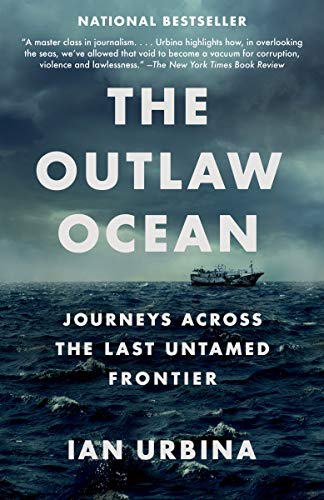
Captain Paul Watson, founder of Sea Shepherd and a relentless advocate for ocean conservation, highlights how Ian Urbina's investigative work exposes the dire state of our oceans. His emotional plea, "If the Ocean dies, we all die!", reflects a deep urgency born from years of activism. Urbina's storytelling brought new clarity to Watson's mission by revealing the vast, unchecked criminality undermining marine biodiversity worldwide. This perspective is echoed by The Washington Post, which praises the book's ability to unpack complex issues through compelling narratives, making it a crucial read for anyone concerned about ocean health.
“@ian_urbina 's best selling book The Outlaw Ocean is getting rave reviews. Hope some of the world's politicians will read it and understand just how precarious biodiversity is. Underscores what I have been saying for years. "If the Ocean dies, we all die!"” (from X)
Ian Urbina is an investigative reporter for The New York Times. He won a Pulitzer Prize for Breaking News and a George Polk Award for Foreign Reporting. Several of his stories have been adapted into major feature films and his reporting for a New York Times Magazine article called The Secret Life Of Passwords was nominated for an Emmy Award. He has degrees in history and cultural anthropology from Georgetown University and the University of Chicago. Before joining the Times, he was a Fulbright Fellow in Cuba and he also wrote about the Middle East and Africa for various outlets including the Los Angeles Times, Harper’s and Vanity Fair. He lives in Washington D.C. with his family.
What happens when a Pulitzer Prize-winning investigative reporter turns his lens to the lawless expanse of the high seas? Ian Urbina spent five years tracking down stories of crime, exploitation, and survival on the oceans, revealing a hidden world where international law fails and human greed thrives. You’ll gain detailed insights into maritime industries riddled with violence and corruption, from illegal fishing to human trafficking, illustrated through vivid accounts of fishermen, vigilantes, and pirates. This book suits anyone interested in maritime law, environmental justice, or global crime networks, offering a rare, unvarnished look at the ocean's dark underbelly without romanticizing it.
Daniell W. Gotshall brings 34 years of marine biology research experience, including extensive work with the California Department of Fish and Game, to this guide. His expertise in sport fishing, rockfish life history, and underwater ecological communities informs the detailed descriptions and vivid photography throughout the book. As a professional underwater photographer whose work has been featured in multiple exhibits and publications, Gotshall provides unique visual insight alongside scientific rigor, making this a valuable resource for anyone interested in the diverse marine life from Baja California to Panama.
Daniell W. Gotshall is a marine biologist with 34 years of research experience with The California Department of Fish and Game. He retired from the department in 1988. During his career, he conducted research on sport fishing, rockfish life history, shrimp, crabs, and baseline ecological underwater and intertidal communities. He is also a professional underwater photographer; his photos have appeared in numerous books, magazines, and newspapers, and have also been in displays at aquariums and museums. In 2007, he retired from diving and underwater photography. His publications include over 50 scientific reports on Pacific Coast fishes and invertebrates. He has also authored and co-authored eight books. Dan and his wife, Ann, for thirty years were co-owners of the publishing company Sea Challengers, Inc., which was based in Monterey, California.
Drawing from more than three decades as a marine biologist with the California Department of Fish and Game, Daniell W. Gotshall offers a detailed guide to the common fishes and invertebrates found from Baja California to Panama. You’ll gain precise skills in identifying 189 fish species and 65 invertebrates through vivid color photographs paired with practical information on habitat, size, distribution, and natural history. This guide caters especially to divers, snorkelers, and marine enthusiasts who want reliable, region-specific knowledge rather than general ocean lore. For anyone eager to deepen their understanding of marine fauna in this rich ecological corridor, Gotshall’s work serves as an accessible yet scientifically grounded companion.
Milton Love, a marine biologist at the University of California, Santa Barbara, highlights this book as a visual and intellectual delight, calling it a "feast for the eye and a tickle for the brain." His expertise in ocean life gives weight to his praise, especially appreciating the stunning imagery paired with engaging text. This blend of art and science impressed him deeply, making it a valuable resource for understanding the Salish Sea's complex fish communities. Similarly, Sylvia Earle, renowned ocean explorer, admires its celebration of diversity and hidden beauty, reinforcing why this work deserves your attention if you're drawn to marine wonders.
Theodore Wells Pietsch, James Wilder Orr, Joseph R. Tomelleri(you?)·
About the Author
Theodore Wells Pietsch is professor emeritus in the School of Aquatic and Fishery Sciences and curator emeritus of fishes at the Burke Museum of Natural History and Culture, both at the University of Washington. He is the author of Oceanic Anglerfishes: Extraordinary Diversity in the Deep Sea and Trees of Life: A Visual History of Evolution. James Wilder Orr is a fisheries biologist at the National Oceanic and Atmospheric Administration, National Marine Fisheries Service, and affiliate professor at the University of Washington. Joseph Tomelleri is a nationally acclaimed fish illustrator.
After decades immersed in ichthyology and marine biology, Theodore Wells Pietsch and James Wilder Orr crafted a detailed portrait of the Salish Sea's aquatic life, enriched by Joseph R. Tomelleri's vivid illustrations. This extensive guide offers you identification keys and ecological insights into 260 fish species from Puget Sound and adjacent straits, blending taxonomy with the history of marine exploration in the region. Chapters move systematically through fish families, helping you grasp their evolutionary relationships while appreciating their diverse life histories. This book suits naturalists, marine scientists, and anyone fascinated by regional ocean biodiversity, though casual readers might find its depth demanding.
Nick Fraser, a specialist at National Museums Scotland, highlights how this book transforms a Victorian expedition into a vivid story for modern readers. He found the blend of historical adventure and scientific discovery compelling, noting "An epic Victorian-age expedition made relevant to the world today by Macdougall’s masterful prose." His appreciation stems from how the book animates the excitement of discovery, making it accessible beyond academic circles. This perspective invites you to experience the voyage not just as history, but as a foundational moment for ocean science.
“An epic Victorian-age expedition made relevant to the world today by Macdougall’s masterful prose. The excitement of discovery is infectiously brought to life in this delightful read. A landmark book about a landmark voyage.” (from Amazon)
Doug Macdougall is emeritus professor of earth sciences at the Scripps Institution of Oceanography at the University of California, San Diego. He is the author of several books, including Nature’s Clocks: How Scientists Measure the Age of Almost Everything and Why Geology Matters: Decoding the Past, Anticipating the Future.
Doug Macdougall, emeritus professor at Scripps Institution of Oceanography, draws on his extensive earth science expertise to narrate the voyage of H.M.S. Challenger, a pivotal expedition that established modern oceanography. You gain detailed insights into 19th-century scientific methods like deep-sea soundings and biological sampling, as well as the expedition's key figures like Henry Moseley and John Murray. Chapters vividly recount the challenges and discoveries at sea, connecting Victorian exploration with today’s oceanographic science. This book suits you if you’re fascinated by maritime history, ocean science, or the evolution of scientific exploration, offering both historical perspective and scientific context without unnecessary embellishment.
Frances Dipper is a marine biologist with extensive experience studying marine organisms worldwide. Her passion for the ocean and deep expertise inform this book, which combines authoritative knowledge with accessible language. This unique background equips you with a well-rounded understanding of ocean life, from microscopic creatures to large mammals, making the complexities of marine ecosystems approachable and engaging.
Frances Dipper is a marine biologist with extensive experience observing and studying marine organisms worldwide. Her work has contributed significantly to the understanding of marine life, and she has authored several books on the subject. Dipper's passion for the ocean is evident in her writing, which combines expert knowledge with accessible language, making complex topics understandable for a wide audience.
Frances Dipper's extensive experience as a marine biologist shines through in this detailed exploration of ocean life, designed for anyone curious about the sea's inhabitants. You’ll dive into richly illustrated sections covering everything from microscopic organisms to large marine mammals, learning about identification, biology, ecology, and conservation challenges. The book balances scientific rigor with accessibility, making it useful both for students seeking expert insights and naturalists or divers eager to deepen their understanding. Chapters on invertebrate phyla, fish, and marine plants provide clear explanations without overwhelming jargon, letting you grasp the complexity of ocean ecosystems and the threats they face today.
The best Ocean books and more, in your inbox each week. No account needed.
Conclusion
This collection of 14 Ocean books converges on three clear themes: the urgent need for conservation, the intricate science behind ocean systems, and the socio-political forces shaping our seas. Whether you're grappling with climate change impacts, fascinated by marine biodiversity, or intrigued by maritime geopolitics, these titles offer a solid foundation.
If you're confronting climate urgency, start with The Water Will Come and Ocean Outbreak to grasp environmental threats. For rapid immersion in ocean science and history, combine The Blue Machine and Endless Novelties of Extraordinary Interest. For hands-on identification and ecology, Europe's Sea Mammals and Fishes of the Salish Sea provide invaluable practical guides.
Alternatively, you can create a personalized Ocean book to bridge general principles with your unique aspirations and pace. These books can help you accelerate your learning journey and deepen your connection to the mysterious and vital ocean world.
Frequently Asked Questions
I'm overwhelmed by choice – which book should I start with?
Start with National Geographic Ocean for a broad, beautifully illustrated overview that sets the stage for deeper dives into ocean science, conservation, and history.
Are these books too advanced for someone new to Ocean?
Not at all. Many, like The Sound of the Sea and 100 Dives of a Lifetime, balance accessibility with expert insight, making them great for beginners and enthusiasts alike.
What’s the best order to read these books?
Begin with broad overviews like The Boundless Sea and National Geographic Ocean, then explore specialized topics such as climate impact with The Water Will Come or marine biology with Ocean Outbreak.
Do I really need to read all of these, or can I just pick one?
You can pick based on your interests, but reading a few across different themes—science, history, conservation—provides a richer understanding of the ocean’s complexity.
Are there any books here that contradict each other?
While perspectives vary, these books complement rather than contradict, offering diverse angles from scientific, historical, and geopolitical views that together deepen your knowledge.
How can I get ocean knowledge tailored to my specific interests or experience level?
Yes! While these expert books offer valuable foundations, creating a personalized Ocean book here lets you focus on your goals, skill level, and topics for targeted, efficient learning.
📚 Love this book list?
Help fellow book lovers discover great books, share this curated list with others!